Ministry of Education to Announce Plan for Neulbom School on 9th
Focused Edu-care Support at Early Stage of 1st Grade Admission
Expansion of AI·SW Future-Oriented New Demand Programs
Diversification of Care Types Including Morning, Evening, and Gap Time
Establishment of Care-Dedicated Operation System Centered on Education Offices
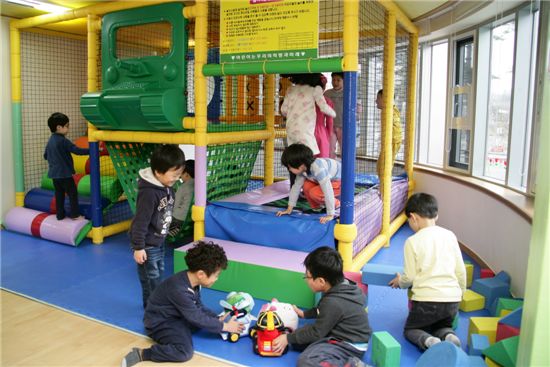
[Asia Economy Reporter Yoo Byung-don] Care services, which were previously only available in the afternoon, will now be accessible at desired times such as morning and evening. Additionally, an EduCare program will be introduced to help newly enrolled first-grade elementary students adapt easily to school life.
On the 9th, the Ministry of Education announced the ‘Neulbom School’ promotion plan at the Government Complex Sejong. The Ministry explained that this plan was prepared to reduce the caregiving burden on parents and to support individualized education and care for all students to eliminate educational disparities at the starting point.
Neulbom School, a key national agenda in the current government’s education sector, is a policy that integrates education and care by enhancing the quality of after-school educational activities and care. Its purpose is to strengthen the national responsibility for education and care through support for after-school activities for elementary students. From this year until 2026, the Neulbom School project is expected to invest about 330 billion KRW in special grants and 1.2 trillion KRW in local government funds.
Providing High-Quality Future-Oriented and Customized After-School Programs
First, the Ministry of Education shifted focus from institution-centered programs to opening programs desired by students and parents, strengthening digital competency and individualized support.
In early March or for up to one semester, the ‘First Grade EduCare Program,’ centered on play and experiential learning, will be operated for students who wish to participate to support stable adaptation to school life. The Ministry plans to concentrate budget and personnel support for the EduCare program in pilot education offices this year, discover excellent models, and provide Neulbom School-related information to parents.
To prepare for the changing future society, after-school programs in new industry fields such as artificial intelligence (AI) and coding will be opened to develop digital competencies, and edu-tech-based teaching methods using advanced technology will also be introduced. Participation from universities, companies, organizations, and individuals will be expanded, and in rural and fishing villages, both online and offline classes will be supported concurrently.
Reflecting demand survey results, programs desired by children will be opened, and popular courses will be added to provide customized services for each student. In particular, programs linked to local resources such as sports and arts will be developed to enhance the quality of after-school programs.
To support after-school activities for students with disabilities, personnel will be assigned, and mentoring for multicultural and North Korean defector students will be activated, strengthening support for vulnerable groups. Depending on regional conditions, the Ministry aims to expand the per-person free course voucher limit for low-income families to create an environment where anyone can participate in after-school activities.
Providing Customized Care Services Considering Desired Time and Place
Care services, which have so far been mainly operated in the afternoon, will be subdivided into morning care, evening care, etc., according to regional and school conditions. Various types of care will be provided, and gap care between after-school programs will also be strengthened.
In particular, the ‘Temporary Care’ service, which provides care after 5 p.m. for a day or a certain period for students who urgently need evening care due to circumstances, those on waiting lists for care classrooms, and participants in after-school linked care, will be pilot operated.
Additionally, the Ministry plans to gradually extend the operating hours of care classrooms to 8 p.m. according to demand, establishing a foundation for students who urgently need evening care, and will support operating costs and additional personnel expenses. To create a solid evening care environment, meals such as dinner and snacks, psychological and counseling programs will be provided, and safety management will be strengthened.
Special grants will also be provided in 2023 for improving the environment of aging care classrooms, creating child-friendly care spaces mainly in lower-grade general classrooms, and supporting the expansion of after-school linked care classrooms. From 2023 to 2027, under the supervision of metropolitan and provincial education offices, 25 hub-type care models (five per year) will be established to jointly respond to care demand from nearby schools, helping to alleviate waiting demand in overcrowded urban areas.
After-School Operation System Reform...Reducing Workload for Schools and Teachers
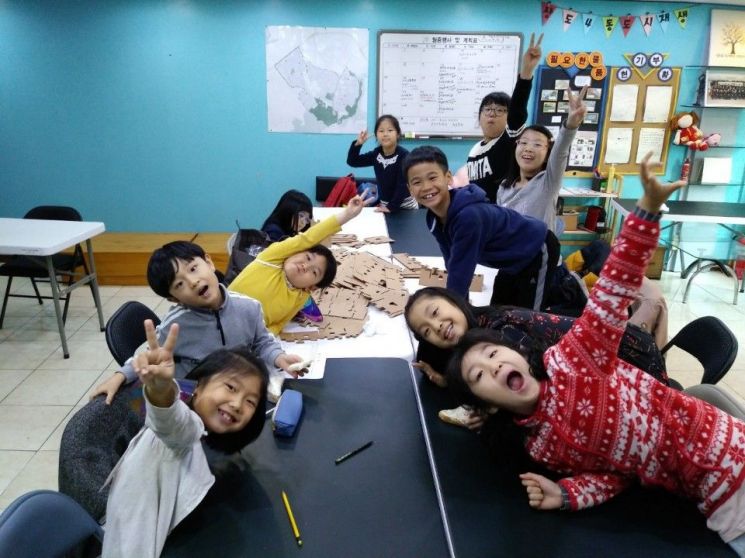
The after-school tasks, which have been operated mainly by individual schools, will be reorganized into a regional unit operation system centered on metropolitan and provincial education support offices to reduce the workload of individual schools and teachers. To this end, the Ministry of Education reorganized the existing metropolitan and provincial education office after-school support centers into After-School & Neulbom Support Centers and reassigned 120 metropolitan and provincial education office officials as dedicated personnel for the centers.
From the second half of this year, the fourth-generation intelligent NEIS (National Education Information System) functions will be improved to support after-school school demand surveys, accounting processing, free course vouchers, and other school tasks through the system, and applications will be used for course registration and satisfaction surveys.
Furthermore, depending on regional conditions, metropolitan and provincial education offices and local governments can jointly operate After-School & Neulbom School Support Centers by sharing resources such as personnel, programs, and budgets.
In addition, the Ministry plans to continuously link and expand village care operated by local governments to respond to excess care demand in regions.
Around Four Pilot Metropolitan and Provincial Education Offices Designated...Seeking Successful Models
The Ministry of Education will select about four metropolitan and provincial education offices with strong will and capability to promote Neulbom School as pilot education offices, concentrate personnel and financial support, and discover excellent models according to regional conditions.
In pilot education offices, about 200 schools will intensively operate tasks such as △establishing a region-centered dedicated operation system △focused support for first-grade early EduCare △expanding future-oriented and customized programs △diversifying care types according to regional conditions.
The pilot education offices will conduct a public contest in mid-January, with confirmation and notification by the end of the month, and pilot operation will begin from the new semester in March.
Lee Ju-ho, Deputy Prime Minister and Minister of Education, stated, “We will continuously communicate with the field and actively cooperate with related ministries, local governments, and education offices to successfully introduce Neulbom School, which strengthens the national responsibility for education and care of elementary students.” He added, “By organically linking regular classes, care, and after-school programs to provide integrated education and care, and expanding private participation, we will provide high-quality programs tailored to individuals to reduce parents’ private education burdens.”
© The Asia Business Daily(www.asiae.co.kr). All rights reserved.

















