Traces of Past Domestic 'Cultural Censorship' Policies
Cultural Exchange Shines Despite Ups and Downs in Korea-Japan Relations
Japan Also Shows Love for K-pop and Dramas
In Korea, he is Kang Baek-ho, but in Japan, he is 'Sakuragi Hanamichi (?木 花道)'.
After the official release of "The First Slam Dunk" (Slam Dunk) on the 4th, the 'Japanese names' of the main characters became a hot topic online. Reactions such as "I had no idea" and "It feels awkward" dominated, showing unfamiliarity.
The manga Slam Dunk, which sparked a basketball craze in Korea, is a Japanese manga drawn by Japanese manga artist and illustrator Takehiko Inoue. Naturally, the setting of the work is Japan, and the characters are Japanese high school students. So why did it have to be 'localized' with Korean-style names in Korea?
'Kang Baek-ho' is a remnant of past cultural censorship policies
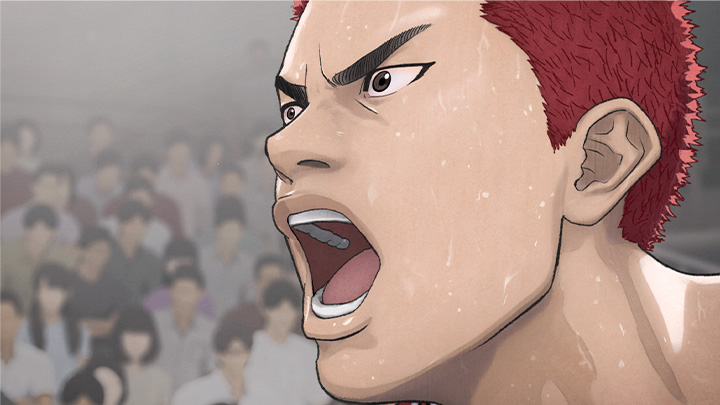
Although Japan is now a 'friendly neighboring country,' just over 30 years ago, cultural exchange between Korea and Japan was not free at all. Although diplomatic relations between the two countries were normalized in 1965, until the mid-1990s, the Korean government tacitly prohibited the influx of Japanese popular culture, considering the history of colonial rule and the public's anti-Japanese sentiment.
Because of this, Japanese culture seeped in 'underground' rather than through official import routes. This included smuggling illegal copies of popular Japanese albums and games on CDs. According to data from the National Archives, in the 1980s, Japanese culture was widely distributed domestically through these unofficial import channels, sparking debates about officially opening up to Japanese popular culture.
Amid this, one of the few 'official' Japanese cultural contents imported into Korea was Slam Dunk. Slam Dunk was serialized in Japan from 1990 to 1996 and distributed in Korea through the comic magazine 'Boy Champ.' At that time, considering the public sentiment wary of the influx of Japanese popular culture, all Japanese language in the work was localized into Korean. In other words, Kang Baek-ho is a product of the era before the opening of Japanese popular culture.
Despite ups and downs... 20 years of remarkable growth in Korea-Japan cultural exchange
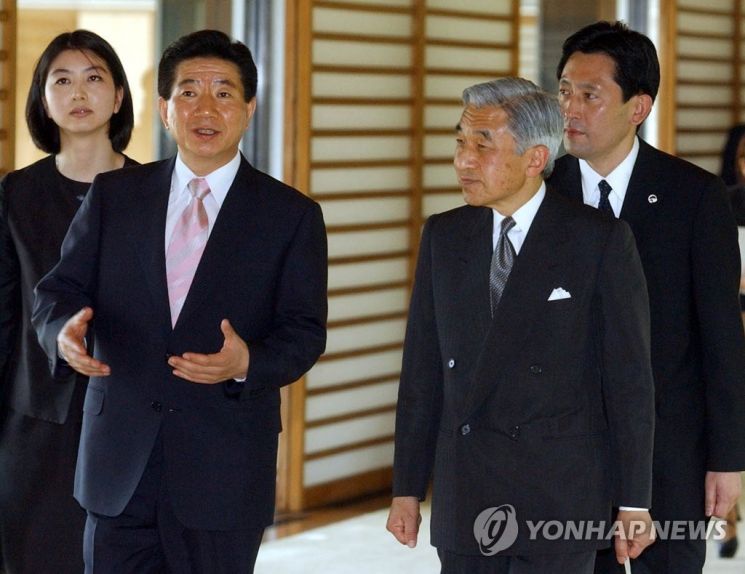 Former President Roh Moo-hyun (left) and former Emperor Akihito during a state visit to Japan on June 6, 2003. / Photo by Yonhap News
Japanese popular culture was gradually opened in four stages starting from 1998. All restrictions on Japanese culture were lifted during the Roh Moo-hyun administration in 2004. This means that the period during which Japanese popular culture could be enjoyed without any censorship has not even exceeded 20 years.
Nevertheless, the two countries quickly grew closer. Koreans have now become the largest group of foreign visitors to Japan. According to the Japan National Tourism Organization, among 498,600 foreign tourists visiting Japan in October last year, Koreans accounted for 24.6% (122,900 people).
In November, the following month, the number was 315,400, accounting for a whopping 33.8%. This means that one out of every three foreign visitors to Japan was Korean.
It is not only Koreans who enjoy Japanese culture. Japan has also emerged as a major player in the domestic cultural content market. In particular, K-pop, a major export content of Korea, grew based on demand from the Japanese market.
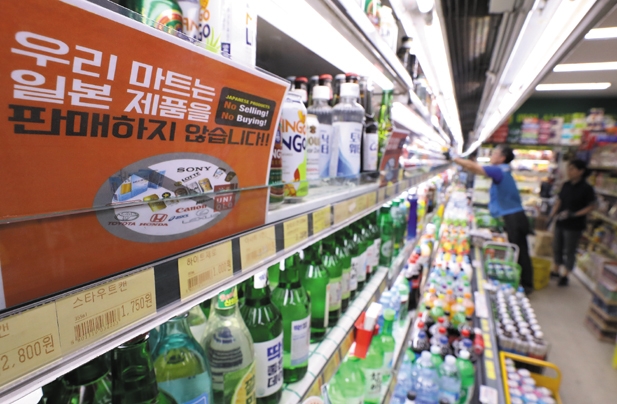 In 2019, as a result of the Korea-Japan trade conflict, a boycott movement against Japanese products called 'No Japan' spread in some parts of South Korea. / Photo by Yonhap News
According to Korea Customs Service data, as of August last year, Japan was the number one global importer of K-pop, accounting for 38.4% of total export value. This amount is larger than the combined total of China (21.5%) and the United States (16.2%), ranked second and third respectively.
Of course, Korea-Japan relations have not always been smooth since the opening of popular culture. In 2019, trade friction between Korea and Japan flared up due to Japan's export restrictions on semiconductor materials to Korea, causing relations to cool rapidly.
At that time, a 'No Japan movement' emerged in Korea, where some people vowed not to consume Japanese tourism or consumer goods, causing significant sales damage to Japanese brands like Uniqlo's Korean branches, and Japanese tourism consumption also slowed down.
However, although Korea-Japan cultural trade volume temporarily stalled, it repeatedly rebounded. Now, the two countries have developed into each other's 'closest country' across the entire cultural industry, including movies, dramas, music, and travel.
Original creator also expresses gratitude in Korean: "Thank you for watching"
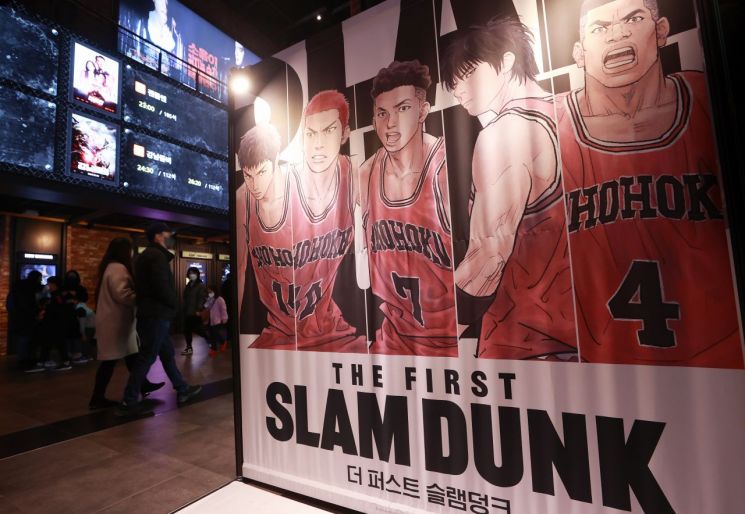 On the 8th, promotional materials for the movie 'The First Slam Dunk' were installed at a movie theater in downtown Seoul. / Photo by Yonhap News
The Slam Dunk movie, released on the 4th, is also attracting high interest from Koreans. From the 4th to the 9th, it drew a cumulative domestic audience of 309,315, ranking third in the overall box office.
Original creator Takehiko Inoue personally posted a thank-you message in Korean on his Twitter account. In this post, he said, "The screening started in Korea from today. I am happy that so many people are already watching."
© The Asia Business Daily(www.asiae.co.kr). All rights reserved.



















