[Asia Economy New York=Special Correspondent Joselgina] "The era of high inflation and high interest rates may last longer. (Larry Summers, Harvard University Professor)"
"The foundation supporting the global trade order is collapsing, and previous tools will no longer work. (Joseph Stiglitz, Columbia University Professor)"
"Even if inflation falls, it is doubtful that interest rates will return to previous levels. (Kenneth Rogoff, Harvard University Professor)"
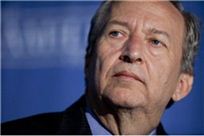 Larry Summers, Harvard University Professor
At the annual meeting of the American Economic Association (AEA), where leading global economists gathered, there was a flood of diagnoses that the global economy has reached a structural turning point after the COVID-19 pandemic. Amid demands for new international order rules different from before, warnings were issued that high inflation, high interest rates, and high debt will become entrenched. Concerns about the slowdown of the Chinese economy, one of the two major powers (G2), also continued.
According to MarketWatch and others, Larry Summers, a Harvard University professor who served as U.S. Treasury Secretary during the Bill Clinton administration, stated at the AEA annual meeting held on the 7th (local time) in New Orleans, Louisiana, during the session on 'Economic Shocks, Crises, and Spillovers' that the era of low inflation has ended. He said, "COVID-19 changed everything," and predicted that the global economy will face the "three highs" of high interest rates, high inflation, and high debt going forward.
Professor Summers explained, "During the COVID-19 crisis response, fiscal spending by countries surged," adding, "(Going forward) tensions between the U.S. and China will increase defense spending, and transitioning the economy to be environmentally friendly will also lead to more spending." As a result, fiscal deficits will increase, and even if high inflation calms down in the future, many countries will have no choice but to maintain high interest rates, according to Professor Summers' diagnosis.
He emphasized, "This year will be a 'V' year recognizing that we are heading toward a different financial era with a different interest rate pattern than before," stressing that the structural long-term stagnation characterized by low growth, low interest rates, and low inflation will never return. He also added that the Federal Reserve's (Fed) inflation target of 2% should be realistically adjusted.
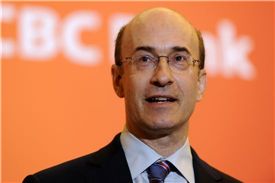 Kenneth Rogoff, Professor at Harvard University
Another economic scholar, Kenneth Rogoff, a Harvard University professor, also made similar remarks in a separate conference session. He saw that U.S. defense spending could surge due to conflicts between the U.S. and China. Furthermore, he mentioned that real interest rates could rise higher due to China's influence, stating, "Even if inflation eases, it is doubtful that interest rates will return to previous levels."
In particular, Professor Rogoff warned of the so-called 'China risk,' saying that China's growth slowdown, along with high interest rates, could influence the future global economy. He diagnosed, "The single variable that has had the greatest impact on global economic growth rates, inflation, and interest rate policies over the past 40 years is China," adding, "The housing and related sectors, which account for 26% of China's GDP, are slowing rapidly, increasing uncertainty in the global economy."
Barry Eichengreen, a professor at UC Berkeley, cited rising tensions between the U.S. and China as one of the threats to the global economy. He pointed out the reality that the existing international order is collapsing as free trade and globalization trends disappear amid hegemonic competition, calling this a tail risk (a low-probability but high-impact trigger).
Joseph Stiglitz, a Columbia University professor, also stated, "The world has entered a new geopolitical era where cooperation is increasingly difficult," pointing out that previous tools no longer work. He expressed concern that if new international order rules are not found, these conflicts will intensify further. Additionally, Professor Stiglitz mentioned that the U.S.'s rapid interest rate hikes have caused other countries to face difficulties such as high interest rates, high exchange rates, and debt crises. Having consistently studied inequality, he also pointed out that monetary tightening is worsening economic inequality.
The AEA annual meeting, held every early January in major U.S. cities, is one of the largest events in the economics community where leading global economists gather. This year, it was held as an in-person event for three days from the 6th in New Orleans, Louisiana.
© The Asia Business Daily(www.asiae.co.kr). All rights reserved.
![Clutching a Stolen Dior Bag, Saying "I Hate Being Poor but Real"... The Grotesque Con of a "Human Knockoff" [Slate]](https://cwcontent.asiae.co.kr/asiaresize/183/2026021902243444107_1771435474.jpg)















