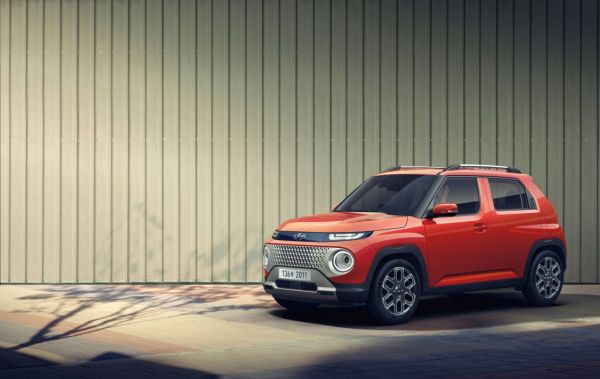
 Domestic sales of compact cars have exceeded 100,000 units again after three years. This is interpreted as a result of the new car effect combined with factors such as reduced consumer spending due to interest rate hikes and high oil prices.
[Asia Economy Reporter Hyunseok Yoo] Domestic sales of compact cars have exceeded 100,000 units again after three years. This is interpreted as a result of the combined effects of new car launches, consumption contraction due to interest rate hikes, and high oil prices.
According to statistics compiled from the completed car industry on the 5th, last year's compact car sales totaled 132,911 units, an increase of about 40% compared to the previous year. Last year's compact car sales were the highest in the past five years. Compact car sales recorded 126,448 units in 2018, fell below 100,000 units to 96,503 units in 2020, and further decreased to 95,305 units last year.
One of the reasons for the rebound in compact car sales is the new car effect. Hyundai's Casper sold 48,002 units last year, making it the best-selling compact car overall. This was more than four times the sales in 2021. The Casper was launched in September 2021 and ranked 10th in sales among all domestic cars this year.
The Casper is also praised for accurately understanding market demand. This vehicle belongs to the mini Sports Utility Vehicle (SUV) segment, benefiting from the recent surge in SUV demand as more people engage in camping and car camping. Since domestic consumers tend to prefer larger cars, automakers had not focused much on compact car models, but with more options available, the compact car market has expanded.
Kia Ray sold 44,566 units, a 24% increase from a year earlier. Ray benefited from a facelift (partial update) in August last year. On the other hand, Kia Morning sales decreased by 4% to 29,380 units, and GM Korea's Spark sales dropped by 39% to 10,973 units. In the case of the Spark, which is the successor model to Daewoo's Tico and Matiz, sales sharply declined after it was discontinued in the second half of last year.
Concerns over an economic downturn also had an impact. Compact cars tend to see increased sales during economic recessions. In particular, the rise in the base interest rate caused auto installment loan rates to multiply within a year, increasing the burden of vehicle purchases. Additionally, rising fuel prices have increased maintenance costs, leading more consumers to seek the economic benefits of compact cars.
Senior Researcher Hanggu Lee of the Korea Automotive Research Institute said, "When using vehicle purchase patterns as an economic indicator, we usually look at 1-ton trucks and compact cars," adding, "As the economy worsens, consumption is reduced, and relatively affordable compact cars are purchased."
Opinions are divided on whether compact car sales will continue to perform well this year. Although the car price inflation (carflation) caused by rising raw material prices has raised the threshold for vehicle purchases, preference for mid- and large-sized cars remains strong. The number of domestic compact car models has decreased, and the new car effect of the Casper is expected to be less significant than in previous years. Professor Pilsoo Kim of Daelim University said, "Compact cars lack diversity, so the new car effect is unlikely to last long."
© The Asia Business Daily(www.asiae.co.kr). All rights reserved.

















