[Asia Economy Reporter Cha Wanyong] #1. Mr. A (53), a multi-homeowner who owns two apartments and two officetels in Seoul, has been unable to sleep well these days. He is almost at the limit of housing mortgage loans and credit loans due to gap investment. He has to return the jeonse deposit (Seoul Yangcheon-gu K Apartment) next month. He lowered the jeonse price by 120 million KRW (from 470 million to 350 million KRW) and is also trying to sell the property, but no one is coming to see the house. It has already been four months. Mr. A is busy borrowing money from acquaintances these days.
#2. Mr. B (42), who owns one apartment each in Gwangmyeong, Gyeonggi-do (residence) and Incheon (jeonse), recently took annual leave from work and toured the local real estate market. This was to dispose of whichever apartment sells first between the Gwangmyeong and Incheon apartments. This decision was made because there are forecasts that house prices will fall further, and the jeonse for the Incheon apartment, which matures at the end of February, shows no sign of being rented out. Although the jeonse price was lowered from 250 million KRW to 170 million KRW, the surrounding jeonse market price dropped to 150 million KRW, and even that has accumulated listings.
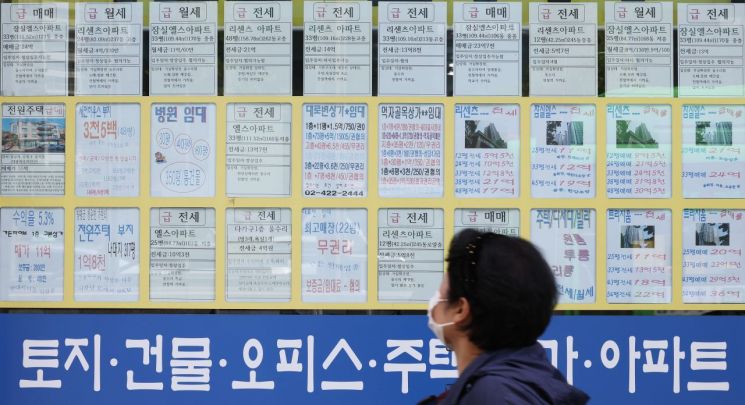 The phenomenon of 'reverse jeonse crisis' is occurring in Seoul and the metropolitan area. The photo shows a real estate agency in Seoul city that has listed many short-term jeonse properties.
 [Image source=Yonhap News]
Cases of 'reverse jeonse crisis,' where landlords cannot find tenants, are occurring frequently. This is the combined effect of soaring interest rates, falling house prices, and a flood of new housing supply. Landlords who urgently need to return jeonse deposits, especially those who own multiple houses through gap investment, are often seen putting not only their jeonse-listed properties but also the apartments they live in on the market.
Reverse Jeonse Crisis Confirmed by Indicators Such as Increased Listings and Decreased Transaction Volume
According to the Seoul Real Estate Information Plaza on the 8th, the number of apartment jeonse transactions in Seoul last month was 7,405. Compared to 12,621 jeonse transactions in December 2021, a year earlier, this is a 41% decrease. In Gyeonggi-do (Gyeonggi Real Estate Portal), apartment jeonse transactions decreased by 36% during the same period (from 17,057 to 10,983).
On the other hand, jeonse listings are surging. As of the 7th, the number of Seoul apartment jeonse listings registered with the real estate big data company Asil is 55,287. This is the largest scale since tracking jeonse listings began in 2020. Compared to 31,376 listings a year ago (January 7, 2022), it increased by 76.2%. The situation is even more severe in Gyeonggi-do. Jeonse listings surged by 124% during the same period (from 30,566 to 68,326 listings).
Supply is overflowing, but demand is not keeping up, causing prices to fall rapidly. According to Real Estate R114, the nationwide apartment jeonse price change rate last year recorded -2.79%, marking a decline for the first time in four years. Especially, Seoul apartment jeonse prices, which had been rising continuously since 2008, plunged by -5.45% last year, placing Seoul at the center of the reverse jeonse crisis.
Gap investment, which was rampant during the housing price frenzy in 2020 and 2021, has been a decisive factor causing the reverse jeonse crisis. Gap investors who purchased apartments by only paying the difference between the sale price and the jeonse price are struggling to prepare the deposit difference as jeonse prices have fallen below the purchase price.
According to real estate transaction report data submitted by the Korea Real Estate Board to Representative Kang Daesik of the People Power Party, in 2021, there were 6,990 reports in Seoul where the sum of housing mortgage loans and rental deposits in the funding plan exceeded 100% of the house price. This is more than three times the 2,258 cases in 2020.
Simultaneous Jeonse and Sale Transactions as Jeonse Maturity Approaches
Many gap investors whose jeonse maturity is approaching are forced to put their houses on the market as urgent sales due to cash flow problems caused by the reverse jeonse crisis. The head of C Real Estate Agency in Gangseo-gu, Seoul said, “Since the second half of last year, we have been receiving several calls a day from landlords asking about urgent sale options,” adding, “Most of these are owners facing jeonse maturity who, unable to find tenants, are trying to sell their houses.”
The head of D Real Estate Agency in Incheon explained, “Since the end of last year, the number of landlords conducting jeonse and sale transactions simultaneously has increased significantly,” and added, “Most of them are gap investors who purchased houses within the last four years. As the jeonse maturity approaches but tenants are not found and loan interest is burdensome, they are trying to dispose of their houses by any means.”
Meanwhile, as the reverse jeonse crisis worsens, cases of tenants seeking courts are also increasing. This phenomenon occurs as landlords fail to prepare the deposit to return to tenants upon contract expiration. According to the Supreme Court, the number of applications for tenant registration orders in Seoul last year was 4,822, a 49.4% surge compared to 3,226 cases in 2021.
© The Asia Business Daily(www.asiae.co.kr). All rights reserved.
![Clutching a Stolen Dior Bag, Saying "I Hate Being Poor but Real"... The Grotesque Con of a "Human Knockoff" [Slate]](https://cwcontent.asiae.co.kr/asiaresize/183/2026021902243444107_1771435474.jpg)
















