[Asia Economy New York=Special Correspondent Joselgina] On the third day of the U.S. House of Representatives session, on the 5th (local time), the 11th vote still failed to confirm the Speaker of the House. Kevin McCarthy, the Republican House Majority Leader who was considered the likely winner, failed to secure a majority in five additional re-votes held that day due to a rebellion led by hardline Republicans. As the congressional deadlock continued, attention was drawn to a vote cast for former President Donald Trump.
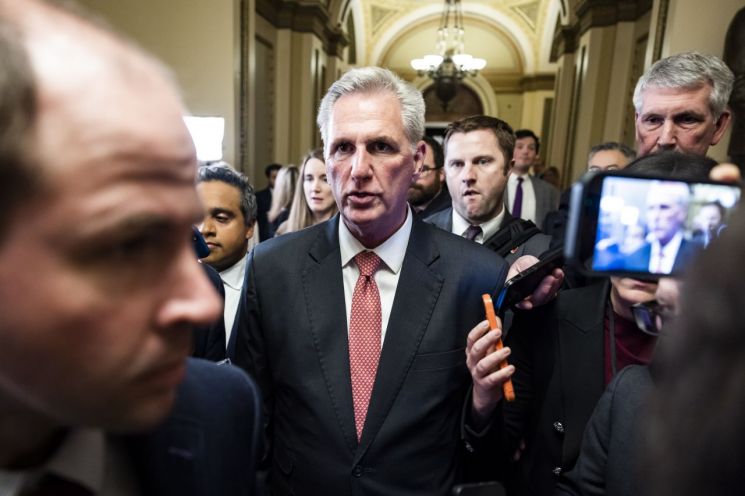
According to the Washington Post (WP) and others, the House held the 7th, 8th, 9th, 10th, and 11th votes to elect a new Speaker during the plenary session that day, but no candidate received the majority of 218 or more votes. Despite a total of 11 votes over three days since the opening of the 118th Congress on the 3rd, no final winner was confirmed.
This is the first time in 100 years that the Speaker election in the U.S. House of Representatives has not been decided in a single vote. Also, it is the first time in 164 years that more than 10 rounds of voting have taken place.
On the third day, the Republicans nominated Kevin McCarthy as their candidate, and the Democrats nominated Hakeem Jeffries as theirs. However, the hardline faction leading the rebellion within the Republican Party put forward Byron Donald as a separate candidate instead of supporting McCarthy. In the 7th vote, McCarthy received only 201 votes, falling short of the majority.
Since the Republicans hold 222 seats in the House, McCarthy needs fewer rebellion votes to be elected Speaker. However, on this day, the hardline Republicans cast 19 votes for Donald. Republican Representative Matthew Gates cast a vote for former President Trump. There was also one abstention within the Republican Party. This internal division contrasts with the Democrats, who unanimously cast all 212 votes for their candidate, Hakeem Jeffries, throughout the 11 rounds of voting. Jeffries continued to receive full Democratic support that day.
Starting from the 10th vote, which was the first in 164 years, McCarthy’s support dropped to 200 votes. Twenty-two Republicans voted for other candidates including Donald, or were absent or abstained. Eventually, the House passed a recess motion to continue the Speaker election voting from noon the next day.
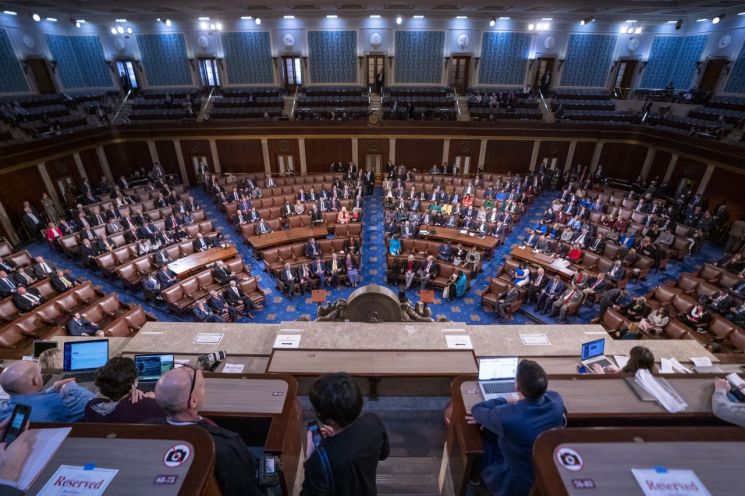
As a result, concerns have arisen that the political turmoil within the House may be prolonged. The Speaker must be elected before key House activities such as standing committee formation and bill voting can proceed. In effect, the legislative process is at a standstill. The New York Times (NYT) pointed out that "the House has been deadlocked for three days and unable to conduct other business." Previously, former President Donald Trump appealed for support for McCarthy the day before, and McCarthy also negotiated with hardline members, accepting some of their demands and proposing additional concessions, but ultimately failed to achieve results.
McCarthy’s camp is reported to be continuing behind-the-scenes negotiations with the hardliners. Local media analyzed that McCarthy would have to make greater concessions to appease the hardliners. McCarthy said as he left the House that the negotiations had led to "some movement." However, he rejected criticism that such concessions would weaken his position and qualifications as future Speaker.
© The Asia Business Daily(www.asiae.co.kr). All rights reserved.
![User Who Sold Erroneously Deposited Bitcoins to Repay Debt and Fund Entertainment... What Did the Supreme Court Decide in 2021? [Legal Issue Check]](https://cwcontent.asiae.co.kr/asiaresize/183/2026020910431234020_1770601391.png)
















