Omission of 'Economic Achievements' in Plenary Report
North Korea Sanctions, COVID-19, Disasters... 'Worst Food Crisis'
"Plenary Meeting to Reopen for Further Discussion Expected"
[Asia Economy Reporter Jang Hee-jun] Various observations have been raised regarding North Korea's economic situation, which is known to be experiencing the 'worst food crisis.' In particular, as Chairman Kim Jong-un significantly reduced mentions of the economic sector at the year-end plenary meeting, there are also prospects that an additional plenary meeting will soon be held to devise countermeasures.
Lee Hyo-jung, Deputy Spokesperson of the Ministry of Unification, stated at the regular briefing on the 6th that in response to the question about "the reason for the few mentions of the economic sector in North Korea's plenary meeting report," "North Korea drastically reduced references to achievements compared to previous years, except for construction projects and rural household dwellings, regarding the 2022 performance," adding, "It is expected that even in this year, the third year of the five-year economic development plan, it will still be difficult to expect significant economic growth and improvement in people's livelihoods."
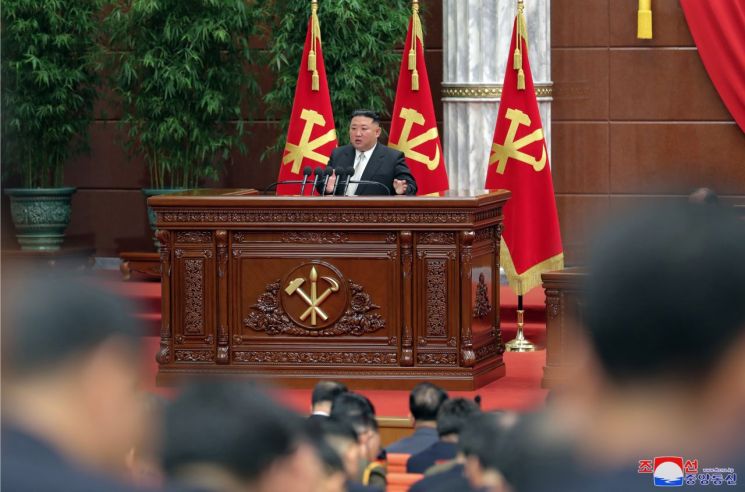 North Korean State Affairs Commission Chairman Kim Jong-un Reporting at the Plenary Meeting
 [Photo by Yonhap News]
According to diplomatic and security authorities, Chairman Kim mentioned economic-related achievements at the 8th Central Committee 6th Plenary Meeting of the Workers' Party held from December 26 to 31 last year, stating, "2022 was by no means meaningless, and we have advanced."
There is a noticeable difference in tone compared to the past when North Korea packaged its achievements as 'glorious victories'; this time, it referred to having achieved a 'costly victory.' This is interpreted to mean that various difficulties were encountered and a price was paid during the implementation of various policies. The party organ Rodong Sinmun also emphasized difficulties in its report on the plenary meeting results, using expressions such as "unprecedented challenges and threats," "the most difficult hurdle," and "a perilous and urgent crisis."
Above all, this year marks the midpoint of North Korea's national economic development five-year plan, a time when concrete results must be produced. Since Chairman Kim emphasized this, it is unusual that the plenary meeting report, which presents achievements and goals by industrial sector, reduced related mentions. Yang Moo-jin, a professor at the University of North Korean Studies, analyzed, "In the economic sector, there was no great self-praise of achievements, limited to some areas including construction and household dwellings," adding, "This indirectly reveals that there were no significant achievements."
'Unable to Speak of Economic Achievements in North Korea... Will They Hold Another Plenary Meeting?'
However, a noteworthy point in this plenary meeting was the session where Premier Kim Tok-hun's 'special proposal' was heard. Although the details were not disclosed, this was not present in past plenary meetings.
There is speculation that North Korea may soon hold an additional plenary meeting to discuss the Premier's 'proposal' in more detail. In North Korea, the Premier oversees the economy, and Kim Tok-hun is an 'economic expert' who has held major positions. Therefore, if an additional plenary meeting is held, the main topic of discussion is likely to be the 'economic sector.'
Senior Research Fellow Park Young-ja of the Korea Institute for National Unification said at a discussion on the analysis of the plenary meeting held the previous day, "North Korea has previously reconvened plenary meetings and made major personnel reshuffles," adding, "The 6th plenary meeting only set the framework and conducted internal adjustments, so it is possible that the 7th meeting will be held around February."
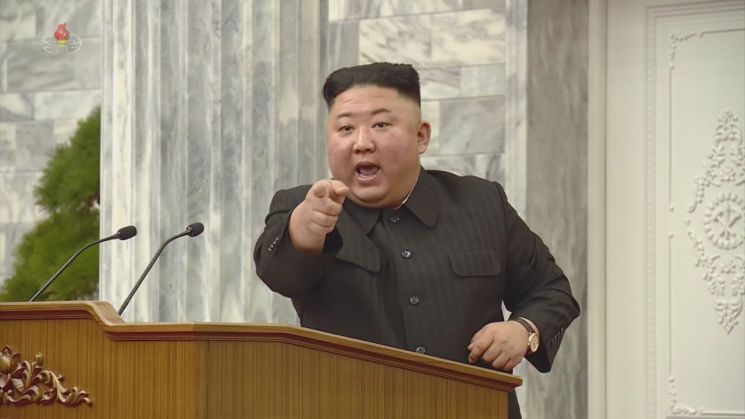
In fact, North Korea held consecutive plenary meetings twice in January and February 2021 during the 8th Workers' Party Congress. At that time, the party's economic director was dismissed one month after appointment, and footage showing Chairman Kim scolding officials with finger-pointing was released, confirming that economic discussions were underway in North Korea.
North Korea has announced the Supreme People's Assembly, equivalent to our National Assembly, scheduled for the 17th, through which it may reorganize overall economic issues. Hong Min, head of the North Korea Research Division at the Korea Institute for National Unification, predicted, "Whether it is the Supreme People's Assembly or a plenary meeting, it seems necessary to discuss economic matters further."
The Return of the 'Arduous March'... North Korea Seeks Solutions Through China
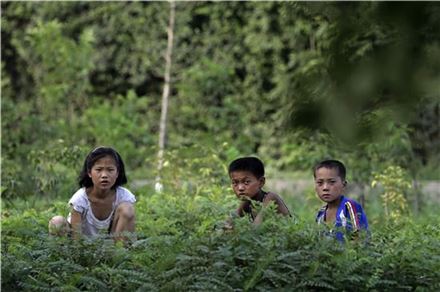 North Korean children suffering from famine [Image source=AP Yonhap News]
North Korea is understood to have been suffering from food and economic crises comparable to the 'Arduous March' period in recent years. This is analyzed to be due to the prolonged sanctions against North Korea, the impact of COVID-19, and consecutive natural disasters such as drought in spring and floods in summer last year. Except for China and Russia, North Korea has effectively maintained border closures, leaving little room to overcome the economic crisis this year as well.
According to the Rural Development Administration, the food crop production in North Korea last year was estimated at 4.51 million tons, a decrease of 180,000 tons (3.8%) compared to 4.69 million tons the previous year.
As crop production has been disrupted, North Korea has been continuously increasing imports of 'Chinese rice' through trade with China. According to data from the General Administration of Customs of China, North Korea imported 30,172 tons of rice from China in November last year, which amounts to 12.83 million USD (approximately 16.5 billion KRW). This is the highest monthly rice import value since September 2019, when it was 16.16 million USD.
Meanwhile, the government plans to closely monitor whether specific plans, achievements, and goals for the economic sector will be presented through the upcoming Supreme People's Assembly and other events.
A Ministry of Unification official said, "Since a rally was held in Pyongyang yesterday (the 5th), rallies are expected to continue across North Korea," adding, "Considering past cases, it is anticipated that this year as well, activities to promote nationwide learning and struggle to implement plenary meeting decisions will be carried out for about a month."
© The Asia Business Daily(www.asiae.co.kr). All rights reserved.
![Clutching a Stolen Dior Bag, Saying "I Hate Being Poor but Real"... The Grotesque Con of a "Human Knockoff" [Slate]](https://cwcontent.asiae.co.kr/asiaresize/183/2026021902243444107_1771435474.jpg)












