[Asia Economy Reporter Yujin Cho] In the United States, online shopping sales during the year-end shopping season from Thanksgiving to Christmas last year reached an all-time high. Predictions that the year-end shopping boom would disappear due to the worst inflation in over 40 years were proven wrong. Companies that held large-scale discount events to clear year-end inventory employed a 'push strategy' that encouraged American consumers to open their wallets wide.
On the 5th (local time), Adobe Analytics, which collects and analyzes sales data from U.S. retail companies, announced that online shopping sales in the U.S. from November to December last year amounted to $211.7 billion (approximately 270 trillion won), a 3.5% increase compared to the same period the previous year. This not only significantly exceeded the market forecast of $209.7 billion but also set the highest record for online sales during the year-end shopping season.
Among these, consumer spending was concentrated during the five-day Cyber Week from Thanksgiving through Black Friday and Cyber Monday, with online shopping sales during this period reaching $35.3 billion (17%).
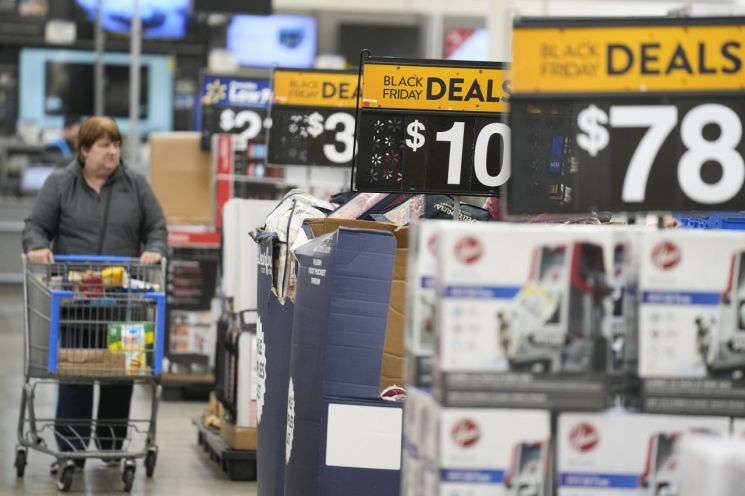
U.S. economic media CNBC analyzed that companies holding larger-than-usual discount events led consumers to open their wallets. Large retailers launched bold discount promotions to push out massive inventory volumes, which drove performance growth.
In particular, electronics, toys, and clothing attracted shoppers with record-breaking discount events. Electronics were sold at discounts of up to 22%, significantly increasing from 8% a year earlier, and toys, which offered up to 19% off the regular price in 2021, were sold at discounts of up to 34% last year. Clothing also recorded an all-time high discount rate, with sales at up to 19% off.
According to Adobe’s Digital Price Index, which tracks online prices for 18 items, online selling prices showed a downward trend since September last year. While consumption of essentials such as food increased, sales of luxury goods like jewelry and high-priced items such as electronics decreased. Vivek Pandya, senior analyst at Adobe Digital Insights, said, "Holiday season discounts were strong enough to support consumer spending during a time when consumers were grappling with rising grocery, gasoline, and rent costs."
Not only online but also offline, American shoppers were found to have spent generously. According to Mastercard, consumer spending combining in-store and online shopping (excluding automobile sales) from November 1 to December 24 last year increased by 7.6% compared to the same period the previous year.
Meanwhile, foreign media evaluated that expectations for inflation slowdown and a moderation in the pace of interest rate hikes this year have rather diminished due to the year-end consumption boom. The thriving consumer sector, which accounts for 70% of the U.S. economy, could stimulate inflation that was showing signs of peaking, potentially causing a vicious cycle in the global economy. The U.S. Consumer Price Index (CPI) inflation rate was 7.1% in November last year, down from the peak of 9.1% in June but still far from the Federal Reserve’s target of 2%.
© The Asia Business Daily(www.asiae.co.kr). All rights reserved.

















