April Apgujeong, Yeouido, Mokdong, Seongsu Designation Period Expiry
June Samsung, Cheongdam, Daechi, Jamsil Expiry Approaching
Seoul City "No Discussions Yet"
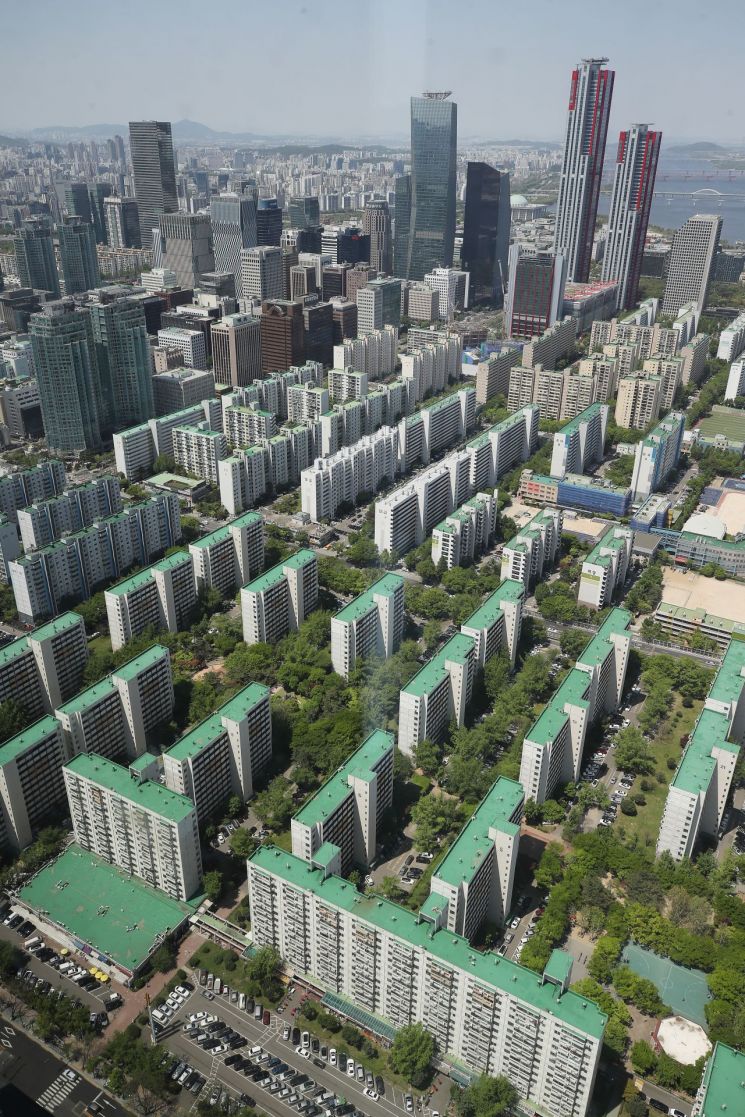
[Asia Economy Reporter Onyu Lim] As the government embarks on large-scale deregulation to prevent a hard landing in the real estate market, attention is focused on whether Seoul will lift the designation of land transaction permission zones. While these zones effectively block speculative demand, they have been criticized for causing a severe transaction freeze during real estate downturns.
According to Seoul City on the 6th, the designation period for land transaction permission zones in major reconstruction complexes such as Apgujeong, Yeouido, Mokdong, and Seongsu will expire on April 27. Two months later, on June 22, the designation period for the international exchange complex districts and nearby areas including Samsung, Cheongdam, Daechi, and Jamsil is scheduled to expire.
Land transaction permission zones require approval from the local government head when purchasing land above a certain size. In the case of apartments, owners must reside for two years, making gap investment (purchase with a lease deposit) impossible. This system has been used as a means to block speculative demand arising from various development projects and to protect genuine buyers. As of last year, land transaction permission zones in Seoul cover 9.2% (5.99㎢) of the total area.
The market’s eyes are on Seoul’s Land Management Division. Since the government has recently continued a strong deregulation stance to resolve the transaction freeze, the possibility of Seoul reducing land transaction permission zones has increased. On the 5th, the government lifted regulatory designations for all areas except the Gangnam 3 districts and Yongsan-gu.
In the past, during periods of rapid house price increases, land transaction permission zones helped stabilize the real estate market by blocking speculative demand. However, with recent interest rate hikes causing transactions to halt and house prices to fall sharply, residents are demanding the lifting of these zones that deepen the transaction freeze. A representative from a real estate agency in Jamsil-dong, Songpa-gu, said, "House prices in Songpa have plummeted, and there is a chaos of reverse jeonse (lease) problems, but owners are suffering because the area is tied up in a land transaction permission zone."
Seoul City is taking a cautious stance. While it is true that land transaction permission zones deepen the transaction freeze, they are the only means to block speculative demand for reconstruction projects. A senior Seoul City official told Asia Economy in a phone interview, "There have been reports that some land transaction permission zones will be lifted, but at this point, no discussions have been held on this matter," adding, "We will make a decision by comprehensively assessing market trends at the time the designation expires."
If Seoul decides to extend the designation of land transaction permission zones, it must hold an urban planning committee meeting around mid-April to propose the extension for major reconstruction complexes such as Apgujeong, Yeouido, Mokdong, and Seongsu. Conversely, if the decision is to lift the designation, there is no need to propose an agenda. The regulation will be automatically lifted upon expiration.
Park Won-gap, Senior Real Estate Specialist at KB Kookmin Bank, said, "While land transaction permission zones are a strong tool to block reconstruction investments, if house prices continue to fall, the possibility of carefully discussing whether to reduce or lift these zones to prevent a hard landing in the market can be considered."
© The Asia Business Daily(www.asiae.co.kr). All rights reserved.

















