"Foster to Lead Manufacturing and Service Industries"
Export Target of 15 Billion Dollars... Extensive Policy Financial Support
'Year of Visit Korea'... Blue House Internal Use "Not Yet..."
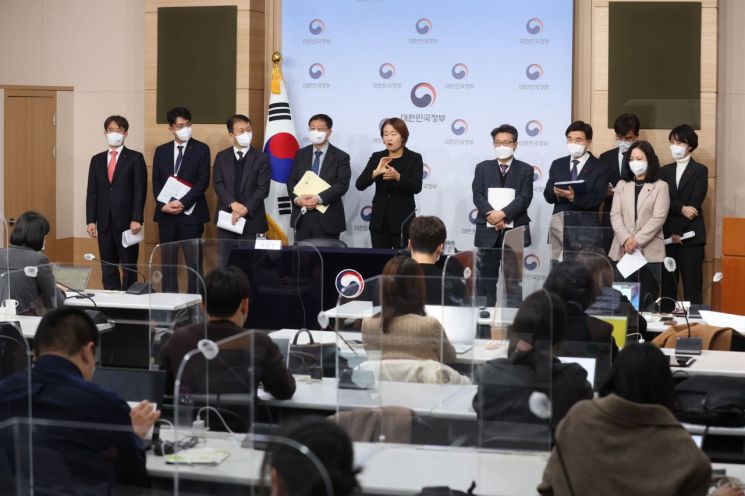
The Ministry of Culture, Sports and Tourism is focusing its efforts on expanding exports of K-content. It aims to boldly support and develop it into a flagship project representing the Republic of Korea.
On the 5th, Minister Park Bo-gyun reported to President Yoon Suk-yeol at the Blue House State Guest House on the work done over the past eight months and announced plans to nurture K-culture and tourism as strategic industries. In particular, he defined K-content as a "game changer" that will transform the export landscape and promised to develop it to a level that leads the manufacturing and service industries.
At a press briefing held the same day at the Seoul Government Complex annex, he said, "K-content has become a rising powerhouse in our export market," and added, "We plan to intensively nurture it to the extent that it can change the export landscape." Its value as a vanguard was proven by last year's analysis from the Export-Import Bank of Korea. When exports increased by $100 million, exports of consumer goods such as cosmetics and food also increased by $180 million. According to the '2021 Content Industry Survey' announced by the Ministry of Culture, Sports and Tourism the day before, content industry exports in 2021 reached a record high of $12.45 billion (14.3 trillion KRW).
The ministry's goal for this year is $15 billion. Through large-scale policy financial support and fostering of prospective entrepreneurs, startups, and ventures, it aims for $22 billion by 2027. The former amounts to 790 billion KRW. It will invest 410 billion KRW in the K-content fund, including an intellectual property (IP) fund of 150 billion KRW, 220 billion KRW in completion guarantees to facilitate smooth financing of production costs by financial institutions, and 160 billion KRW in interest support. The latter focuses on turning innovative plans into startups and commercialization. It will provide 5 billion KRW for games, 7 billion KRW for films, 1.8 billion KRW for broadcasting, 3.3 billion KRW for webtoons, and 400 million KRW for fashion. It will spend 56.4 billion KRW on on-site education such as the New Technology Content Convergence Academy. The plan is to nurture 10,000 future talents over three years.
Content competitiveness will be strengthened through tailored support by genre. Support for producing content specialized for online video services (OTT) will be expanded to 45.4 billion KRW, and 30 billion KRW will be invested in newly established post-production support such as subtitles and dubbing. In March, an OTT operator self-rating classification system will be introduced, and in July, movie ticket prices will be included in cultural expense income tax deductions. For the first time, multi-year production support will be promoted for games, which account for 70% of content exports, with a budget of 9 billion KRW. The ministry will continue the K-pop craze by allocating 8 billion KRW for online K-pop performances and 8.2 billion KRW for combining music with information and communication technology (ICT). The webtoon and web novel growth trend is expected to be driven by the Webtoon Convergence Center, opening in June with a budget of 50 billion KRW. It will also nurture many 1 billion-view creators with an investment of 1 billion KRW.
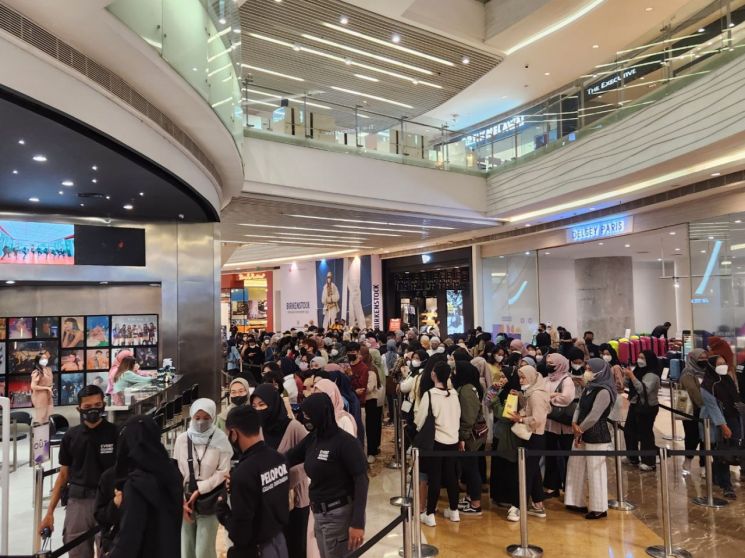
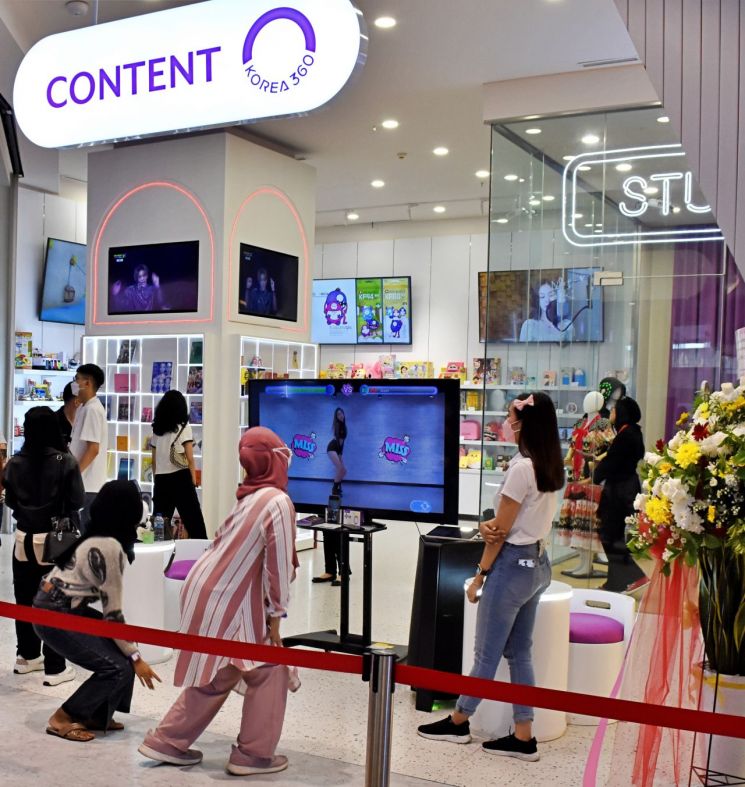
The ministry is also focusing on exports of related industries centered on K-content. It will increase overseas bases for content companies from ten to fifteen this year (8.05 billion KRW) and support the Indonesian K-brand promotion center with 4 billion KRW to promote consumer goods such as cosmetics and food. It will establish a Hallyu Data Center (1.5 billion KRW) and create a dedicated export organization, the Hallyu Support Headquarters, at the Korea Creative Content Agency. Minister Park said, "Enhancing the image of the Republic of Korea through K-content affects all industries, including other infrastructure industries and defense," and expressed confidence that "it will become the most important field to strengthen our capabilities and boost export momentum going forward."
In tourism, the ministry is pursuing a 3C strategy with goals of 10 million foreign tourists and $16 billion in tourism revenue. The 3Cs are Convergence with K-culture, Charming attractions with stories, and Convenience with comfortable and easy tourism. This year is declared the 'Year of Visit Korea,' and K-tourism roadshows will be held in fifteen cities worldwide. Minister Park said, "I introduced to President Yoon plans to integrate K-content into the tourism industry."
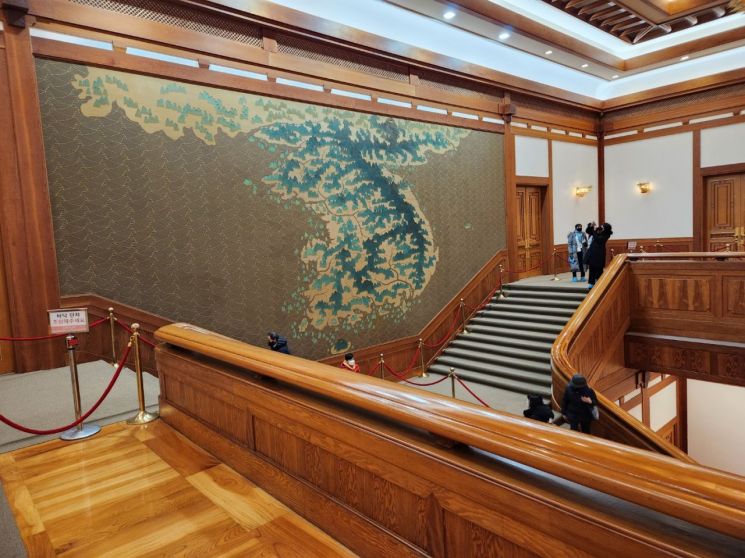
At the center is the Blue House, which opened to the public last May. It will be linked through storytelling with nearby historical, cultural, and tourism resources such as museums, art galleries, Tongin-dong, and Seochon to create a 'Historical and Cultural Tourism Cluster.' It will be developed into a themed complex with historical traditional districts, night tourism, K-food, exhibitions, and walking trails, and nurtured as a tourism brand. However, no clear plans were presented regarding the internal use of the Blue House, which was intended to be operated like the Palace of Versailles. The presidential office advisory group will announce the results of discussions, and plans will be adjusted accordingly. Minister Park said, "President Yoon did not mention related matters."
Policies expected to have immediate effects include improvements to the entry system. The Electronic Travel Authorization (K-ETA) system will be improved to enhance convenience, and foreigners wishing to learn Korean culture will be provided with a 'K-Culture Training Visa' allowing a stay of up to two years. Demand-responsive transportation for tourists and immediate refund duty-free shops will be installed to encourage repeat visits. The ecosystem, which was hit hard by COVID-19, will recover through regulatory improvements such as extending VAT refunds on foreigner accommodation fees and expanding the tourism enterprise development fund (300 billion KRW). The ministry plans to actively respond to future tourism demand by creating smart tourism cities and expanding international conference complex districts. It will also create a 'K-Tourism Leisure Belt' connecting the southern regions of Busan, Gwangju, Ulsan, Jeonnam, and Gyeongnam. The plan is to invest about 3 trillion KRW by 2023 to revitalize the regional economy.
In K-art, efforts will focus on creating a creative environment and strengthening the foundation for nurturing future talents. Support will shift from single-year to multi-year and phased support, and a voucher system (2.1 billion KRW) will be introduced to support the use of technology, space, and equipment. Additionally, a gifted education center of the Korea National University of Arts will be established in Gwangju, and Art Korea Lab, a platform that comprehensively supports artistic activities, will be completed in June. Infrastructure in various fields will also be strengthened, including the Seogye-dong National Performing Arts Complex (design this year), Paju Stage Performance Comprehensive Art Center (completion in May), Jeongdong Theater reconstruction (construction starts this year), Busan International Art Center (construction this year), Pyeongtaek Peace Arts Center (design this year), Dangin-ri Cultural Space (construction starts this year), National Design Museum (design this year), and National Hangul Literature Museum (construction this year). Investment in the art market will not be spared. By 2026, 150 artists will be intensively promoted at art fairs, and a literary distribution platform called 'KL Wave' will be newly established and operated. The establishment of a graduate school for translation is also planned by 2025.
The 'Disability-Friendly Policy,' which was fully launched last year, will be further detailed. Digital and barrier-free viewing environments will be established in private museums and art galleries, and twenty open tourist sites accessible for barrier-free tourism will be created. In June, a standard performance hall and exhibition hall for disabled artists will be prepared in Seodaemun-gu, Seoul, laying the foundation for equal cultural, artistic, and sports activities for all citizens.
Notable changes in sports include the 'Incentive Project for Exercising Citizens,' which supports up to 50,000 KRW per person, and the additional introduction of income tax deductions for sports facilities. The number of designated sports clubs, which is only sixty-nine, will be increased to 120. Benefits for elite athletes will also be improved. The national team training allowance will be raised from 70,000 KRW to 80,000 KRW per day, and training facilities such as the Pyeongchang Winter Training Center (3.1 billion KRW) and Jincheon Athlete Village Special Training Center (6 billion KRW) will be expanded. Ten billion KRW will be provided to twenty schools that establish sports teams. The attendance requirements for student athletes will be relaxed to ensure a harmonious balance between sports and academic rights.
© The Asia Business Daily(www.asiae.co.kr). All rights reserved.



















