Gogung Museum's 'Sajagwancheong Deungnok' First Translation
Reveals Organizational Culture Tied by Kinship
Qualifications Granted by Lowering Exam Thresholds...
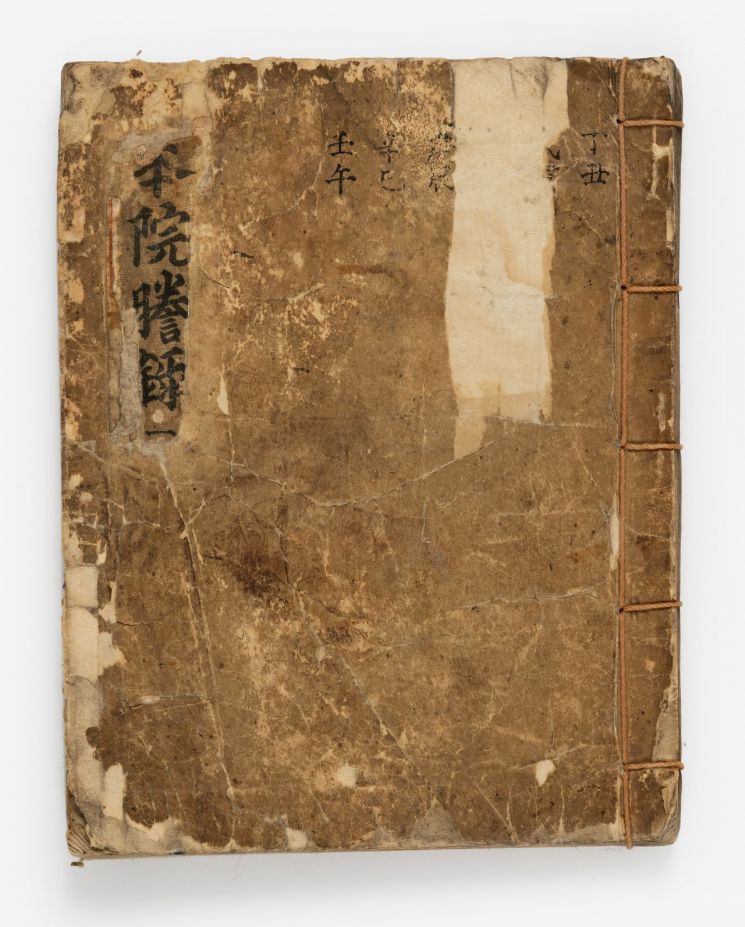
Sajagwancheong (寫字官廳) was a government office under the Seungmuwon (承文院) responsible for diplomatic documents during the Joseon Dynasty. It was introduced and operated during the reign of King Jungjong in the mid-Joseon period. The officials were called Sajagwan (寫字官). Their main task was drafting diplomatic documents. They also produced various royal-related literature. Due to a lack of historical records, detailed activities remain unknown. Their organizational structure and calligraphy styles were only confirmed through legal codes such as the Sokdaejeon and Yukjeon Jorye, as well as royal archives like the Eoramgeon Uigwe and royal genealogies.
On the 5th, the National Palace Museum laid the foundation to continue stagnant research by publishing the first-ever translated edition of the Sajagwancheong Deungnok (寫字官廳謄錄) titled National Translation of Sajagwancheong Deungnok, which was acquired in 2021. A deungnok (謄錄) is a record book documenting important matters handled by a government office. The Sajagwancheong Deungnok vividly records various events that occurred at Sajagwancheong over six years (1877?1882) during the late Joseon period, organized by date. It serves as an invaluable primary source for understanding the office’s duties and the activities of Sajagwan. Kim In-gyu, director of the National Palace Museum, stated, “It contains detailed records of the Sajagwancheong’s hierarchical structure, the process of drafting diplomatic documents, and royal records. It holds great value in revealing the previously little-known operation of the Joseon royal Sajagwancheong and the roles of Sajagwan.”
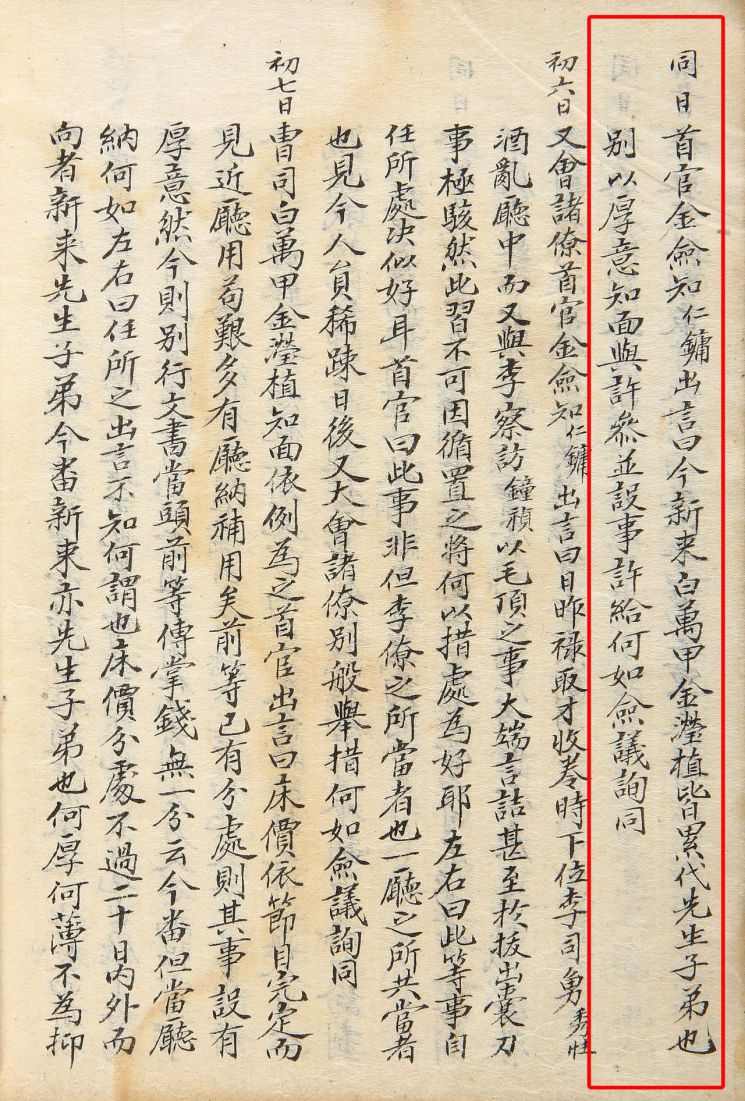
The Sajagwancheong Deungnok includes 671 entries related to events at Sajagwancheong. It records information from the admission to the Saengdobang (生徒房) to death, providing not only personal data about Sajagwan but also detailed insights into the organizational culture, where positions were inherited across generations and familial ties were intertwined. Saengdobang was a training space where individuals learned the academic and technical skills of their affiliated office before official appointment. The admission process is presumed to be similar to the recommendation (완천, 完薦) procedure of the Sayogwon, which handled foreign language interpretation and translation at the time. Applicants to Sayogwon submitted Sajodanja (family name, birth date, official rank, etc.) and Bogeodanja (list of recommenders). Candidates were eligible to take the exam only if they received no more than two rejections (“결,” 結) during the screening. The National Palace Museum noted, “Since the Sajagwancheong Deungnok records the term ‘완천’ and ‘결’ under candidates, it is highly likely that the admission to Dongmong (童蒙) followed a procedure similar to that of the interpreters.” Dongmong refers to the training stage before becoming a Sajagwan.
The Sajagwan examination was not very fair. Like other technical officials, it was common for positions to be inherited within families. Assistant Professor Lee Sang-baek of the Department of Library and Information Science at Pusan National University wrote in the commentary, “This was a long-established culture within Sajagwancheong, and family members working in the office seemed to receive certain benefits.” Several specific cases are confirmed in the Sajagwancheong Deungnok. Some Sajagwan’s children took the exam despite receiving three or more rejections during the recommendation process. Notably, in March 1879, when only one candidate qualified, the Seungmuwon Jejo (提調, an official overseeing office affairs) lowered the exam threshold altogether.
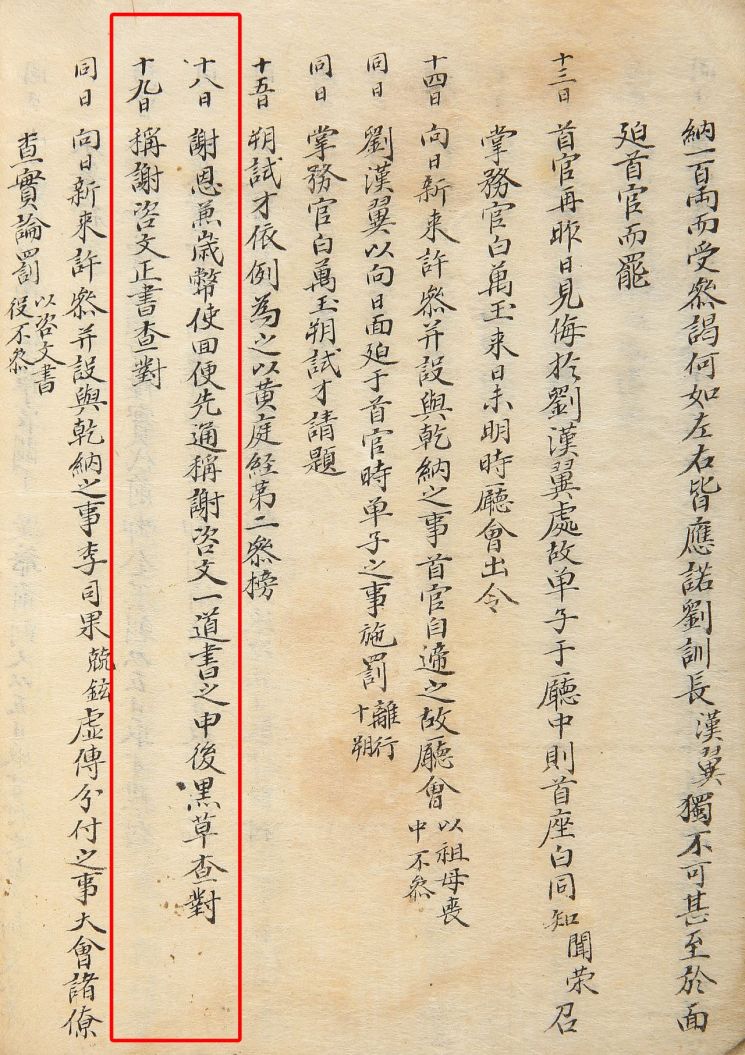
There were also cases where the Halbong (割封, the official unsealing of exam papers by the supervising officer) was not conducted for three years during the Nokchwijai (녹취재), a mandatory examination for officials with a salary rank. This meant that personal information sections were not cut out and stored separately. The National Translation of Sajagwancheong Deungnok interprets this as, “If Halbong had not been done, the candidate’s personal information would have been exposed on the exam paper. The absence of Halbong for three years indicates that benefits were given among Sajagwan connected by family ties over a long period.” It further states, “It appears that members of the same family continuously served as Sajagwan across generations.”
The Sajagwancheong Deungnok also details the activities of Sajagwan in drafting diplomatic documents and royal records. Some entries are linked to extant documents from 1882 held in the Jangseogak archives, including 51 Daechung documents. The National Palace Museum commented, “Although this is a short-term office diary from the late Joseon period, it is a highly meaningful source amid the previous lack of materials, which hindered research on Sajagwan. We hope this translated publication will lead to active research on Sajagwan.” The published book will be distributed to national and public libraries and related research institutions. It is also accessible on the Cultural Heritage Administration and National Palace Museum websites.
© The Asia Business Daily(www.asiae.co.kr). All rights reserved.
![Clutching a Stolen Dior Bag, Saying "I Hate Being Poor but Real"... The Grotesque Con of a "Human Knockoff" [Slate]](https://cwcontent.asiae.co.kr/asiaresize/183/2026021902243444107_1771435474.jpg)


















