188 Cold-Related Illness Cases and 8 Deaths This Winter
15.4% Occurred Indoors... Elderly in Their 80s in Chungbuk Dies
Incheon Human Rights Commission: "Vulnerable Groups to Climate Crisis Must Be Categorized"
[Asia Economy Reporter Yoon Seul-gi] As the nationwide severe cold wave that began in early December last year continued into the New Year's cold snap, cold-related illnesses have surged. Cold-related illnesses can occur in homes without heating, and with this year's record-breaking cold hitting the Korean Peninsula due to climate change, concerns are growing about how energy-vulnerable groups will endure the winter.
According to the preliminary results of the Korea Disease Control and Prevention Agency's '2022-2023 Cold-Related Illness Emergency Room Surveillance System' operation on the 7th, an estimated 188 cases of cold-related illnesses occurred from December 1 last year to January 3, with 8 deaths reported.
The highest proportion of cold-related illness patients were aged 65 and older, accounting for 42.0%. Specifically, those aged 80 and above made up 24.5%, 50-59 years 17.0%, 60-69 years 15.4%, 70-79 years 10.6%, 30-39 years 9.0%, 20-29 years 8.5%, 10-19 years 6.4%, and 0-9 years 0.5%.
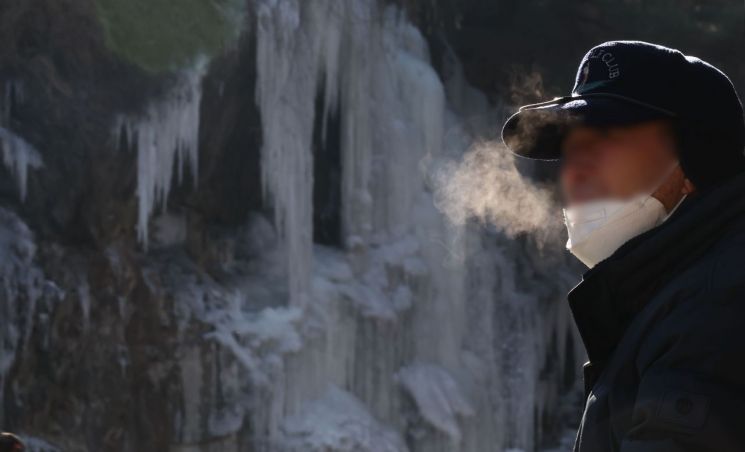 On the 3rd, as the cold wave continues into the new year, a citizen is sitting on a chair resting in front of the artificial waterfall at Hongjecheon, Seodaemun-gu, Seoul. The photo is not related to any specific expression in the article. Photo by Yonhap News.
The most common cold-related illness was hypothermia (63.8%). This was followed by frostbite (superficial 14.9%, tissue necrosis 2.1%, multiple body parts 16.0%), non-freezing injuries (immersion foot and trench foot 0.5%, chilblains 0.5%), and others (2.1%).
Cold-related illnesses mostly occur outdoors (77.1%) where people are directly exposed to the cold, but about 23% of cases happen indoors. Specifically, these occurred at ▲homes (15.4%) ▲buildings (4.8%) ▲workplaces (1.1%) ▲others (1.6%).
In particular, the 'Arctic cold wave' caused by global warming this winter is exacerbating the difficulties faced by vulnerable groups during winter. According to Chungbuk Province, on the 4th, an elderly person in their 80s died from a cold-related illness inside their home in Yeonpung-myeon, Goesan-gun, where heating was reportedly inadequate.
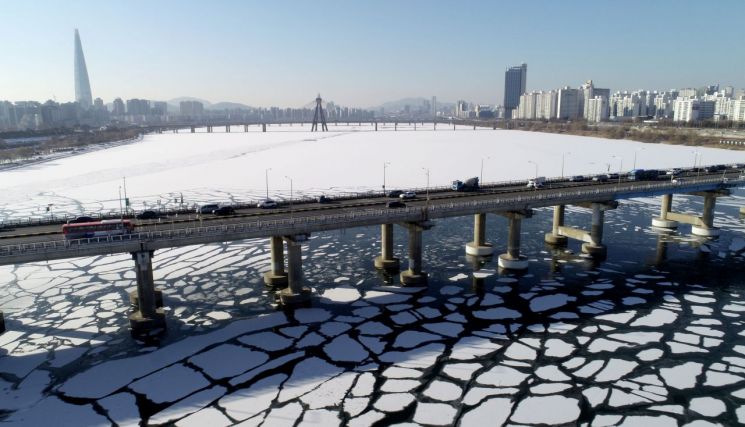 On the 28th of last month, when the cold wave continued, the Han River around Gwangnaru Hangang Park in Seoul was covered in white due to snow that fell in the central region during the early morning. Photo by Yonhap News
Exposure to low temperatures can cause not only cold-related illnesses such as hypothermia but also worsen underlying diseases, leading to health damage. Therefore, there are calls for measures to support vulnerable groups amid climate change.
On the 4th, the National Human Rights Commission of Korea (NHRCK) stated that the government should recognize protecting and promoting human rights in the context of the climate crisis as a fundamental obligation. This is the first time the NHRCK has issued an official opinion regarding the climate crisis and human rights.
The NHRCK said, "The climate crisis has direct and indirect widespread impacts on human rights such as the right to life, food, health, and housing," and conveyed to the government that "the government should recognize protecting and promoting human rights from the climate crisis as a basic duty and improve laws and systems to approach and respond to the climate crisis from a human rights perspective."
The NHRCK also emphasized the need to identify and respond to types of vulnerable groups arising from the climate crisis. The commission stated, "We must classify climate crisis vulnerable groups by reflecting the patterns of climate change in our country and social and geographical characteristics, analyze the threats climate change poses to their employment, labor conditions, housing, health, and hygiene, and prepare measures to protect them and enhance their adaptive capacity."
© The Asia Business Daily(www.asiae.co.kr). All rights reserved.


















