Including Mid-sized and Small Businesses
Welcoming Strengthening of Domestic Supply Chain
The government has significantly raised the tax credit rate for national strategic industries. Semiconductors, secondary batteries, and displays are considered national strategic industries. After the government’s announcement, related companies issued statements welcoming the move in unison. However, the true feelings about this measure vary by industry. Secondary battery companies are quietly cheering inside while trying to manage their expressions to avoid showing too much excitement. Thanks to the implementation of the U.S. Inflation Reduction Act (IRA), their business environment has improved, and they can now receive more tax credits. Showing too much happiness would reveal their true feelings.
The display industry is the loudest in cheering. It is not because they are the happiest, but because they need to appear favorable to the government to secure certain benefits. Although the government declared the display business a national strategic industry last year, strictly speaking, display is not yet a national strategic industry. There remains a legislative process to revise related laws and officially include display as a national strategic industry. The government must expedite the legislative amendment to enable the industry to receive benefits.
The semiconductor industry is applauding but their expressions are not very positive. Yang Hyang-ja, a member of the National Assembly who proposed the K-Chips Act and serves as the chairperson of the People Power Party’s Semiconductor Special Committee, stated that while it is regrettable, they welcome the measure. With this measure, the tax credit rate for large corporations will increase up to 25%, with a base rate of 15%. Semiconductor companies believe it will be difficult to actually receive the full 25% credit. However, the U.S., a competing country, offers a 25% credit rate, and China offers up to 100%. They see the situation as challenging and not something to be simply pleased about. An in-depth analysis of each industry’s situation follows.
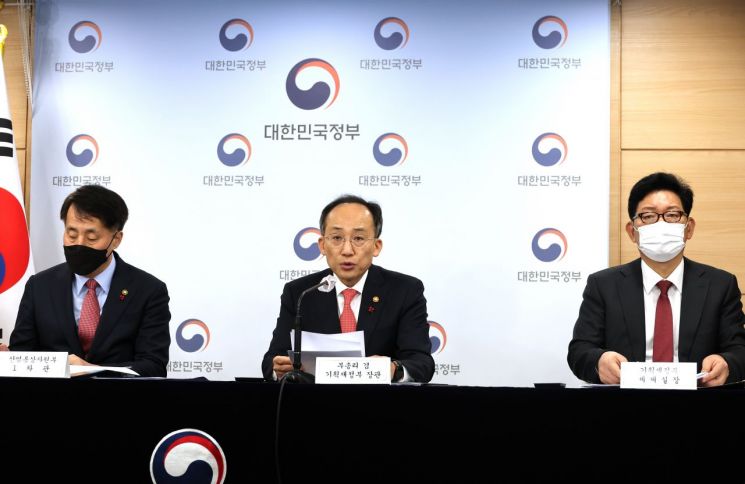 Deputy Prime Minister and Minister of Economy and Finance Choo Kyung-ho announced measures to strengthen tax support for semiconductors and other sectors on the 3rd at the government Seoul office briefing room, with Jang Young-jin, the 1st Vice Minister of the Ministry of Trade, Industry and Energy, in attendance. (Photo by Yonhap News)
[Asia Economy Reporter Moon Chae-seok] Three days after the government announced the increase in tax credit rates for national strategic industries, the battery industry appeared outwardly calm. Thanks to the U.S. Inflation Reduction Act (IRA), which serves as a countermeasure against China, the industry has benefited, and companies are expected to continue aggressive investments this year while managing risks appropriately. The association representing these companies also showed a calm response, stating that "there will be no disruption to long-term investment execution."
The government’s announced 'Strengthening Tax Support Measures for National Strategic Technologies' is widely regarded as a semiconductor-focused policy under President Yoon Seok-yeol’s directive, but the biggest beneficiaries are considered to be the secondary battery industry. Secondary batteries, along with semiconductors and vaccines, are officially recognized as national strategic technologies. Unlike the display industry, which must undergo legislative procedures to be recognized as a national strategic technology, secondary batteries are already recognized, placing them in a relatively comfortable position. Moreover, secondary battery companies are beneficiaries of the IRA. The consensus is that they were not as desperate for tax benefits as the semiconductor industry. Secondary battery companies seem to be cheering quietly inside while managing their expressions to avoid showing it.
Within the battery industry, the government’s official announcement to raise tax credit rates at once by about 7-9 percentage points?from 6% to 15% for large corporations, 8% to 15% for mid-sized companies, and 16% to 25% for small and medium enterprises?is considered meaningful. There is a particularly positive atmosphere regarding the 9 percentage point increase for SMEs. Considering additional benefits for increased investments, the tax credit rate for facility investments rises to a maximum of 25% for large corporations and 35% for SMEs.
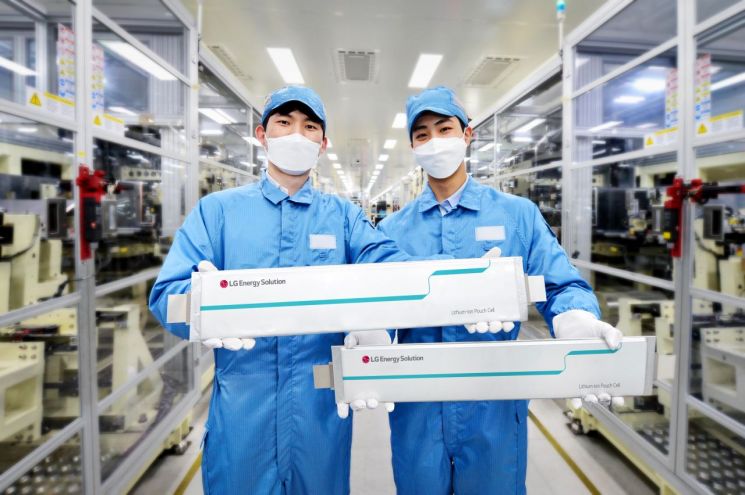
The characteristic of Korea’s secondary battery value chain is that large corporate affiliates and mid-sized companies supply individual materials to battery cell companies such as LG Energy Solution, SK On, and Samsung SDI. There are also many mid-sized companies like Ecopro BM and L&F, which are leading cathode material companies. If these companies receive direct benefits, it is analyzed that the fundamental strength of Korea’s battery industry will be reinforced. The Korea Battery Industry Association stated, "Proactive investments by major companies utilizing investment tax credits will lead to expanded research and development (R&D) facilities and capital investments by small and medium battery material, parts, and equipment companies linked to the value chain, thereby further solidifying the domestic industrial ecosystem."
There is also a sense that this benefit is being accepted as a means to mitigate investment risks on the path to achieving a 'global super-gap.' The IRA is not simply seen as a positive factor but is interpreted as increasing uncertainty. The IRA stipulates that a subsidy of $7,500 (approximately 10 million KRW) per vehicle is provided as a tax credit for electric vehicles using batteries made or produced locally in North America. Electric vehicles using Chinese-made batteries are excluded. Subsidies are only given to countries with free trade agreements (FTA) with the U.S. For this reason, the regulation is considered not unfavorable to the Korean battery industry.
The association notes that while the IRA favors Korean battery cell companies by countering China, there are simultaneous movements such as the European Union’s Raw Materials Act, which weaponizes resources, so it cannot be viewed solely as a positive development. Considering these aspects, the response to the tax benefits can be interpreted as somewhat more reserved compared to the display industry, which demands the government to promptly proceed with the legislative process for national strategic industries, and the semiconductor industry, which faces increased investment concerns despite the government’s goodwill.
The battery industry expects that with the government’s tax support, they will be able to proceed as planned with their goal of promoting over 50 trillion KRW in domestic investments by 2030, as presented in the 'Secondary Battery Industry Innovation Strategy' announced last November. The association said, "Our goal is to establish Korea as the 'mother factory,' the global center for developing and applying world-first technologies, and to expand domestic production facilities to secure a 'global super-gap.' The government’s decision to expand investment tax credits will be a great help for the industry to carry out planned investments without disruption despite ongoing external uncertainties such as high interest rates and inflation."
© The Asia Business Daily(www.asiae.co.kr). All rights reserved.


















