Reborn as the Representative Landmark Space of Gwanaksan Mountain
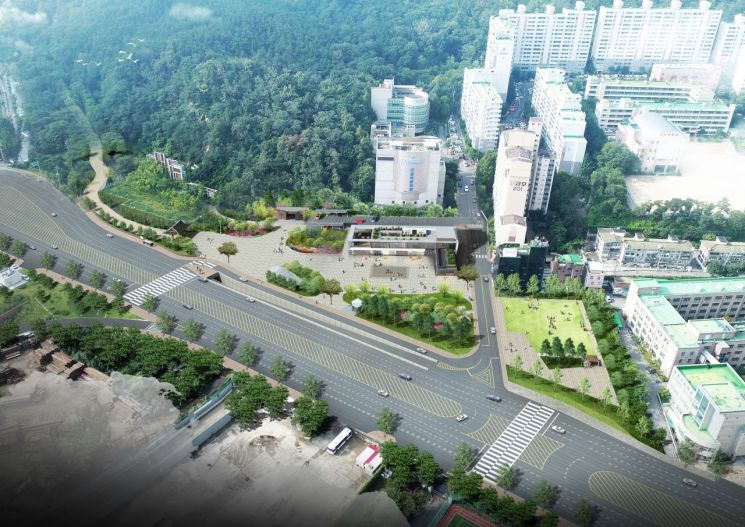
Entrance of Gwanaksan Mountain, Completion of Eviction and Demolition of Old Rest Area, Construction of New Building Commences
Creation of a Complex Cultural Space Including Cafeteria and Book Cafe & Open Plaza Park for Large-scale Cultural Events
Restoration of Byeolbitnaerincheon Ecological Stream, Establishment of Bicycle Paths and Walking Trails Connecting Gwanaksan to Yeouido
[Asia Economy Reporter Park Jong-il] Gwanak-gu (Mayor Park Jun-hee) is actively promoting the ‘Gwanaksan Entrance Prime Park Development Project’ to transform the entrance of Gwanaksan Mountain into a representative landmark befitting the mountain’s reputation and a flagship park of Seoul.
The entrance area of Gwanaksan (around Daehak-dong 211) is well connected to public transportation and frequently visited by many citizens who enjoy Gwanaksan, but it currently lacks meeting places and cultural rest areas. Additionally, the existing rest area was inconvenient due to aging facilities.
Initially, 9.5 billion KRW of Seoul city budget was secured to coincide with the opening of the Sillim Line light rail in May, aiming to build a new Gwanaksan Rest Area and develop the Prime Park, but the schedule was delayed due to difficulties in the eviction process of the old rest area building.
Currently, demolition of the old Gwanaksan Rest Area has been completed, and excavation work for the new building is underway, progressing smoothly with a target completion date of November 2023.
A district official stated, “We are promoting the Gwanaksan Entrance Prime Park in connection with the Sillim Line light rail, creating a rest area and plaza park to establish it as a representative park of Seoul.”
The new Gwanaksan Rest Area will be a complex cultural facility with a total floor area of 1,960㎡, consisting of one basement floor and two above-ground floors, equipped with cultural and relaxation spaces such as a cafeteria and book cafe for visitors.
Along with the new rest area, Gwanak-gu will create its first ‘open plaza-style’ Prime Park.
The park will be transformed into a large plaza space of 6,500㎡ capable of hosting various cultural events and large-scale festivals, providing citizens with cultural rest areas and improving convenience for visitors by rearranging circulation routes including meeting places and entrances.
Additionally, parking facilities will be provided with 13 spaces on the first basement floor and 37 spaces on the ground behind the Gwanaksan Rest Area building.
Meanwhile, the district is also preparing various initiatives to create a healing space representing Seoul by linking Byeolbitnaerincheon Stream and Gwanaksan Mountain along with the ‘Gwanaksan Entrance Prime Park Development’.
By 2024, 33.1 billion KRW of city funds will be invested to restore the un-restored section of Byeolbitnaerincheon from the main gate of Seoul National University to Dongbang 1 Bridge into an ecological stream with flowing water, establish bicycle paths and walking trails, install nighttime lighting, and complete it as a healing space for residents.
Park Jun-hee, Mayor of Gwanak-gu, said, “With improved accessibility due to the opening of the light rail and the newly created plaza park, we expect to attract large-scale cultural events at the entrance of Gwanaksan. We will do our best to transform the Gwanaksan entrance into a landmark space that truly represents Gwanaksan.”
Gangdong-gu Secures 39.4 Billion KRW in 2023 City Budget, Boosting Key Projects of the 8th Term Administration
2 Billion KRW Secured for Preliminary Feasibility Reassessment of Subway Line 5 Direct Connection, a Long-standing Resident Demand
City Budget Support Secured for Large-scale Investment Projects Including 3.9 Billion KRW Compensation for Amsa History Park
Gangdong-gu (Mayor Lee Soo-hee) announced that it secured 39.4 billion KRW in the 2023 Seoul city budget by requesting support from the Seoul Metropolitan Government and Seoul City Council to promote key projects of the 8th term administration and fund large-scale investment projects.
The secured budget includes 2 billion KRW for the preliminary feasibility reassessment study of the direct connection of Subway Line 5, a long-standing resident demand. Subway Line 5, which connects Gangdong-gu and downtown Seoul, branches at Gangdong Station towards Hanam Geomdansan and Macheon, effectively operating as a half-line. This results in more than twice the interval between trains compared to other subway lines and increased congestion, causing inconvenience to residents.
The district is actively promoting the Line 5 direct connection project to resolve this issue. Although the project faced difficulties after not being selected as a preliminary feasibility study target by the Ministry of Economy and Finance’s Fiscal Project Evaluation Committee in August, the recent inclusion in the city budget has revitalized the project’s momentum.
Additionally, 1 billion KRW was secured for a feasibility study on the Han River Skywalk (waterfront promenade) project. Gangdong-gu’s Han River waterfront, which boasts an ecological environment comparable to Bamseom Island, is best appreciated from the river. Accordingly, the district plans to promote eco-friendly development by constructing a skywalk and observatory along the Han River waterfront to allow views of Gangdong-gu from the river.
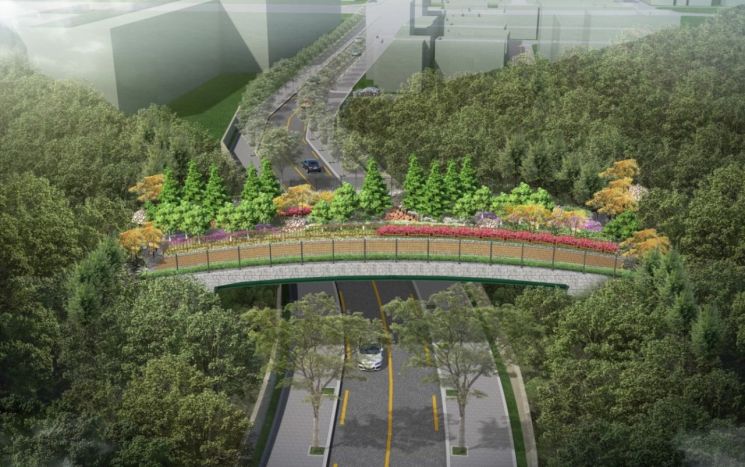
Other city budget inclusions include 2.9 billion KRW for the ‘Saemteo-gil Green Axis Connection Project’ (photo), which creates a green corridor connecting Saemteo Park (Dongnam-ro 990) and Bangjuk Park (Godeok-ro 285) via the Godeok Overpass, and 1.4 billion KRW for the restoration and greening of Godeokcheon Stream (planting of herbaceous plants and trees around Godeok-dong 108-4).
Budget for smooth progress of ongoing large-scale investment projects was also reflected in the city budget. This includes 3.9 billion KRW for compensation related to Amsa History Park, targeted for completion in June 2026, 1.8 billion KRW in city subsidies for the construction of Gangdong-gu Comprehensive Welfare Center for the Disabled, 3 billion KRW in city subsidies for the construction of the 2nd Gangdong-gu Citizen Sports Center, and 2.5 billion KRW in city subsidies for the construction of Gangdong Forest Library.
Lee Soo-hee, Mayor of Gangdong-gu, said, “To secure the budget, I actively explained the necessity of the projects to related city departments and the city council from the budget planning stage to the council’s review. I sincerely thank the Seoul Metropolitan Government and Seoul City Council for their cooperation in reflecting budgets essential for the development of Gangdong-gu in the city budget.”
Two of Four Recommended Sites in Guro-gu, Garibong-dong and Gocheok 2-dong, Selected as Seoul City Rapid Integrated Planning Housing Redevelopment Project Candidates
Planning Study Initiated Early This Year, Rapid Integrated Planning to be Completed Within 2023
Redevelopment projects in Guro-gu have gained momentum.
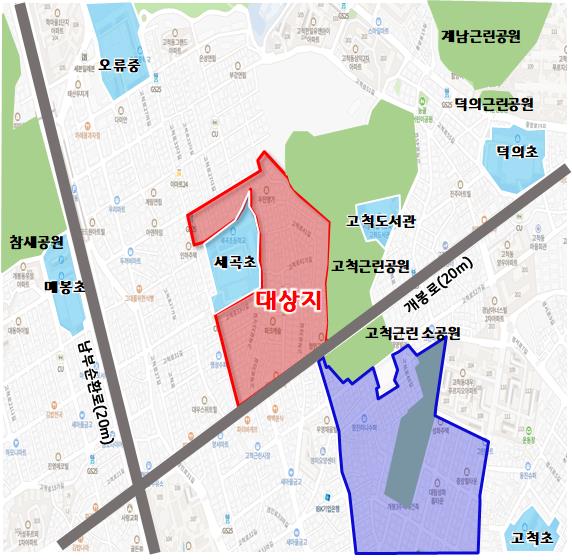
Guro-gu (Mayor Moon Heon-il) announced that Garibong-dong and Gocheok 2-dong were finally selected as candidates for the Seoul City Rapid Integrated Planning Housing Redevelopment Project in 2022.
Rapid Integrated Planning is a system by Seoul City aimed at shortening the duration of private redevelopment projects by supporting various planning and procedures from the early stages of the project.
According to the district, in the second public recruitment held in August, four sites were recommended, and two sites?Garibong Central 1 District (around Garibong-dong 115) and Gocheok 2-dong 253 area?were finally selected as candidates for the Rapid Integrated Planning Housing Redevelopment Project.
The district has started the planning study for these two selected sites early this year and plans to complete the Rapid Integrated Planning within 2023, followed by sequential designation of redevelopment zones starting in 2024.
Moon Heon-il, Mayor of Guro-gu, said, “Redevelopment and reconstruction projects are essential to breathe new life into the area and secure future growth engines. We will do our utmost to accelerate redevelopment projects in the region, including the two sites selected this time.”
Meanwhile, Guro-gu is also promoting various housing redevelopment projects such as Garidong 87 area, selected as the first candidate for the Rapid Integrated Planning Housing Redevelopment Project, Guro 3-dong (around Guro-dong 252) selected for public redevelopment, and Moa Town. Additionally, the district has formed a ‘Redevelopment and Reconstruction Project Promotion Support Team’ through organizational restructuring at the end of last year to fully concentrate on redevelopment and reconstruction projects.
© The Asia Business Daily(www.asiae.co.kr). All rights reserved.
![User Who Sold Erroneously Deposited Bitcoins to Repay Debt and Fund Entertainment... What Did the Supreme Court Decide in 2021? [Legal Issue Check]](https://cwcontent.asiae.co.kr/asiaresize/183/2026020910431234020_1770601391.png)


















