"Calls Are Unwanted, Let's Use KakaoTalk or Text"
MZ Generation Expresses Phone Phobia... Academies Also Opened
Academia: "Understanding and Caring for Anxiety Comes Before Technique"
Those accustomed to messengers and texting also fear phone calls in Korea’s MZ generation. Phone phobia treatment courses have already been established in the academy scene. Asia Economy visited an academy that claims to cure 'call phobia' and attended a lecture. The academy said, "After attending the lecture, you can definitely overcome call phobia." On December 30th at 10:43 a.m., just before the New Year, we knocked on the academy’s door.

"Will call phobia really disappear after attending the lecture?" "Yes, it definitely can."
The lecture fee is 90 minutes per session, priced at 150,000 won. If you register for seven sessions, the original price of 1,050,000 won is discounted to 700,000 won. That comes to about 100,000 won per hour. Overseas, call phobia counseling costs around 600,000 won per hour, so this is about one-sixth of that. It’s cheap yet expensive. With mixed feelings, I registered for the lecture. The class date was set for January 2nd.
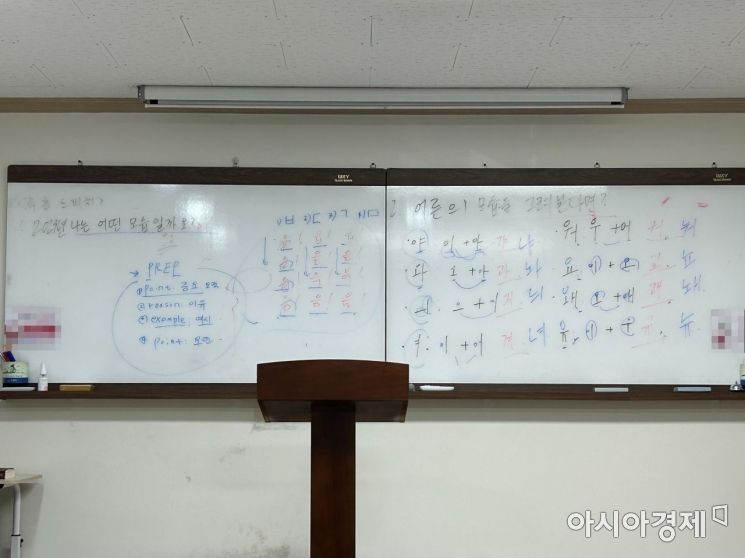
On the first Monday of the new year, I nervously opened the classroom door. I was informed that the class would be conducted one-on-one. Phrases written on the empty classroom’s blackboard caught my eye: 'What will I look like in 2023?' and 'If you were to draw the image of an adult?' Soon after, the academy’s representative and instructor entered.
"Since when have you felt afraid of phone calls?"
The class began with this question. The instructor explained that those suffering from call phobia often feel anxious because they don’t know what to say. Having become accustomed and comfortable communicating via KakaoTalk and DMs (Direct Messages), spontaneous and sudden communication has become difficult, which he diagnosed as the cause of the phobia.
The instructor said that more and more people are visiting the academy complaining of this phenomenon. He shared three representative cases. First, those with direct trauma related to phone calls. One man who worked at a call center sought the academy after developing fear following phone calls he received during work.
People who have lived abroad for a long time or are not familiar with Korean also suffer from call phobia. They feel a sense of alienation due to language gaps or avoid conversations and calls on topics that are hard to grasp. A woman in her 40s, who has been taking classes for about a year, said she started avoiding phone calls after living abroad.
Call phobia among the MZ generation is the most recently emerged type. The instructor said that the MZ generation is becoming accustomed to communicating via social networking services (SNS) without speaking directly. This generation, used to one-way video watching or time-delayed communication through messengers, faces difficulties in multifaceted environments such as the job market, including phone calls and other forms of communication.
"Phone calls are also speech. Let’s start by practicing voice and sound."
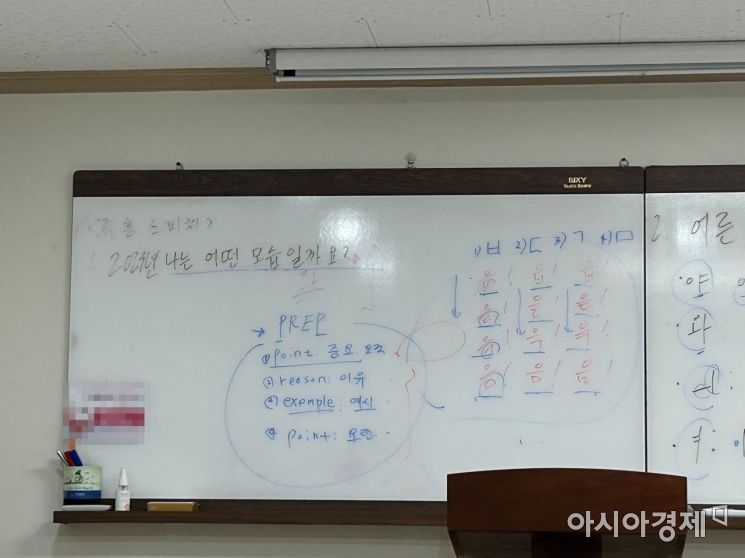 The instructor emphasized that it is important to learn the method of conversation based on PREP (Point·Reason·Example·Point).
Photo by Kim Jeongwan kjw106@
He said, "People must live through empathy and communication, so the fear of phone calls must be overcome." He emphasized that phone calls are part of 'speech' (the act of speaking).
The instructor pointed to the blackboard. Regarding the questions, 'What will I look like in 2023?' and 'If you were to draw the image of an adult?', he asked me to think about any topic for 10 minutes and then come to the front to present.
The diagnosis of the presentation was that "the voice was not audible." Because there was no variation in strength, the voice was absent and boring. He said that to overcome call phobia, training to 'project the voice outward' is necessary.
Since nonverbal cues are not conveyed over the phone, the voice is important. Even if you tremble inside, if you speak loudly, the other person won’t notice. If the final consonants are weak or the voice is too soft, trembling becomes obvious, so pronunciation and voice production are important.
"Ga, Gya, Geo, Gyeo... Eup, Eut, Euk, Eum"
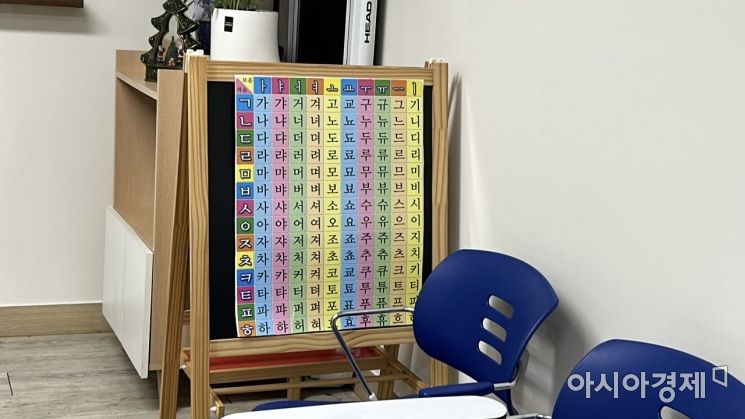
The lecture continued with technical aspects of speech. He brought consonant and vowel boards from the corner of the classroom to check pronunciation. I read from 'Ga, Gya, Geo, Gyeo' to 'Hu, Hyu, Heu, Hi' on the consonant and vowel boards. He said this was training to add strength to speech and had me repeat 'Eup, Eut, Euk, Eum' three times. He also emphasized the importance of diphthongs in pronunciation and had me practice reading 'Ya, Wa, Ui, Yeo', 'Gya, Gwa, Gwi, Gyeo', and 'Nya, Nwa, Nwi, Nyeo'.
The lecture also covered 'how to speak.' He explained that when speaking, one should follow the PREP (Point, Reason, Example, Point) order. The instructor said that if this method is difficult, it is important to get used to communicating with just the point and reason for the time being. He emphasized that this method can also be used when making phone calls.
After the class, three assignments were given.
First, increase contact with people around you. By gradually exposing yourself to uncomfortable relationships, you become familiar with them, and phone calls become easier. He emphasized starting with short phone calls with comfortable people and gradually expanding the subjects and duration.
The second assignment is to review your usual schedule and habits. By organizing your schedule for about a week?from waking up, meals, number of phone calls, outings, to people you meet?you can understand your tendencies and realize that they are not wrong.
Lastly, practice strengthening your speech by repeating 'Eup, Eut, Euk, Eum' three times daily. He said this can improve breathing techniques.
Thus, the class mostly proceeded with training on the technical aspects of speech. The diagnosis is that improving technical skills will make phone calls easier.
Expert: Psychological Issues and Consideration Are as Important as External Factors
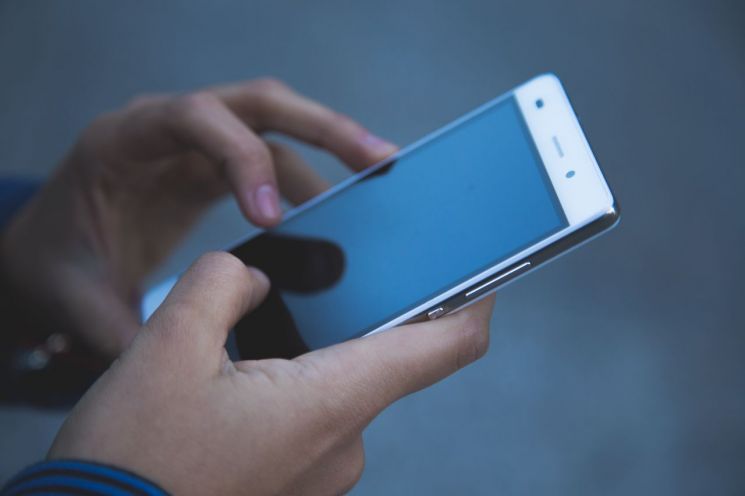
Some experts point out that psychological issues are more important than technical or external factors such as voice, intonation, and pronunciation.
Professor Kwak Geum-ju of Seoul National University’s Department of Psychology said, "Among those afraid of phone calls, many worry excessively about 'how the other person thinks of me,' which means they have difficulty with face-to-face communication regardless of whether it’s phone or voice."
She added, "There are limits to external factors like voice production and intonation, and it is important to escape psychological pressure through comfortable people."
Professor Kwak also advised that a culture of consideration for the call recipient should be established. She explained, "Many avoid phone calls because they are used to texting. Sometimes people don’t have time to talk or don’t want overly personal questions. When older generations or people used to long phone calls receive calls, they feel fatigued."
Professor Kwak said, "Because of this fatigue, people feel comfortable only with self-directed text communication where they can briefly state their purpose and respond when they want. Instead of labeling someone as having 'call phobia' and seeing it as a problem, we should remember that phone calls are mutual communication and correct behaviors that cause fatigue."
Call Phobia Among MZ Generation Is a Global Phenomenon
The situation is similar overseas. According to the U.S. economic media Business Insider, Mary Jane Cope, who founded the phone skills consulting company 'The Phone Lady,' realized 16 years ago that call phobia was increasing and established the company to address this issue. The company’s counseling services are one-on-one and cost $480 per hour (about 600,000 won), with online seminars costing about $365 per 30 minutes (about 460,000 won). The main clients of 'The Phone Lady' are financial companies and startups, with corporate workshops costing $3,500 per day (about 4,430,000 won).
© The Asia Business Daily(www.asiae.co.kr). All rights reserved.



















