Copyright Term Ends for 1995 Works... Surge of Secondary Creations
Differences from Existing Characters Warned to 'Be Careful'
[Asia Economy Reporter Jeong Hyunjin] "A new era of copyright is opening."
The British magazine The Economist reported on the 20th of last month (local time) in an article titled "Hollywood's intellectual property treasure trove is destined to become public domain," stating that "as copyrights for works produced in the late 1920s expire, the public domain is beginning to affect not only literature, art, and music but also video." This explanation was given in reference to the copyrights of globally influential characters such as Gomdori Pu (Winnie the Pooh), Sherlock Holmes, and Mickey Mouse gradually being released in the United States.

Major characters are revealing themselves as public domain after the 95-year protection period stipulated by U.S. copyright law. As a result, new creative works based on these public domain characters are expected to bring changes to the content market. However, since the characters entering the public domain are limited and companies holding copyrights, such as Disney, are actively responding, it is difficult to predict the actual impact of the copyright expiration.
◆ Only the 'Black-and-White' Mickey Mouse Copyright Released
The representative character mentioned by The Economist is Mickey Mouse. In the same month, The New York Times (NYT) also reported in an article titled "Mickey's Copyright Adventure: Early Disney Creations Soon to Enter Public Domain" that the copyright for the early Mickey Mouse character appearing in the 1928 sound short animation Steamboat Willie will expire next year. The copyright for the character from the film Disney made in 1928 will expire in January next year.
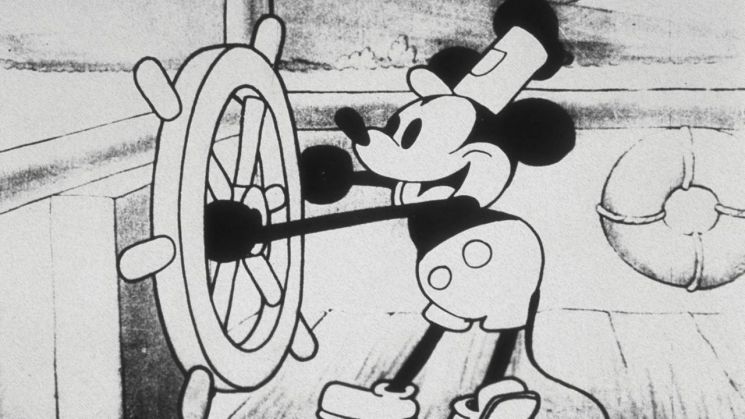
According to reports, U.S. copyright law originally recognized copyright for published works for 56 years, but in 1976, the U.S. Congress amended the law to extend this to 75 years. Later, in 1998, the maximum copyright protection period was extended to 95 years. Because the law was amended according to the copyright protection period of Mickey Mouse, it is called the so-called "Mickey Mouse Law." The Economist analyzes that the possibility of further extending the copyright protection period at this point is low.
Disney, which has protected Mickey Mouse based on copyright law, has declared that although the copyright will expire, it will strive to secure rights related to this character. Disney has upgraded and changed the Mickey Mouse character gradually, starting from black and white. Experts evaluate that the character whose copyright expires this time is only the black-and-white Mickey Mouse with no pupils and a long tail appearing in Steamboat Willie.
NYT reported, "Versions of Mickey Mouse after the black-and-white one, including the round-shaped Mickey wearing red shorts and white gloves, are protected by Disney's copyright." NYT also added that unlike copyright, trademark rights, which indicate the source and quality assurance of creative works to prevent consumer confusion, do not expire as long as related documents are submitted, and Disney continues to hold these rights.
◆ 'Gomdori Pu' Returns as a Horror Movie Protagonist
A representative example showing how characters with expired copyrights transform is Gomdori Pu (Winnie the Pooh). The U.S. economic media Business Insider mentioned "Gomdori Pu: Blood and Honey," scheduled to be released in February this year, as one of the "anticipated horror movies of this year." This work shocked the public last year when news first emerged that the cute Gomdori Pu would be made into a horror movie. The trailer released on Rotten Tomatoes' YouTube channel in August last year shows a menacing Pooh and Piglet committing brutal murders.
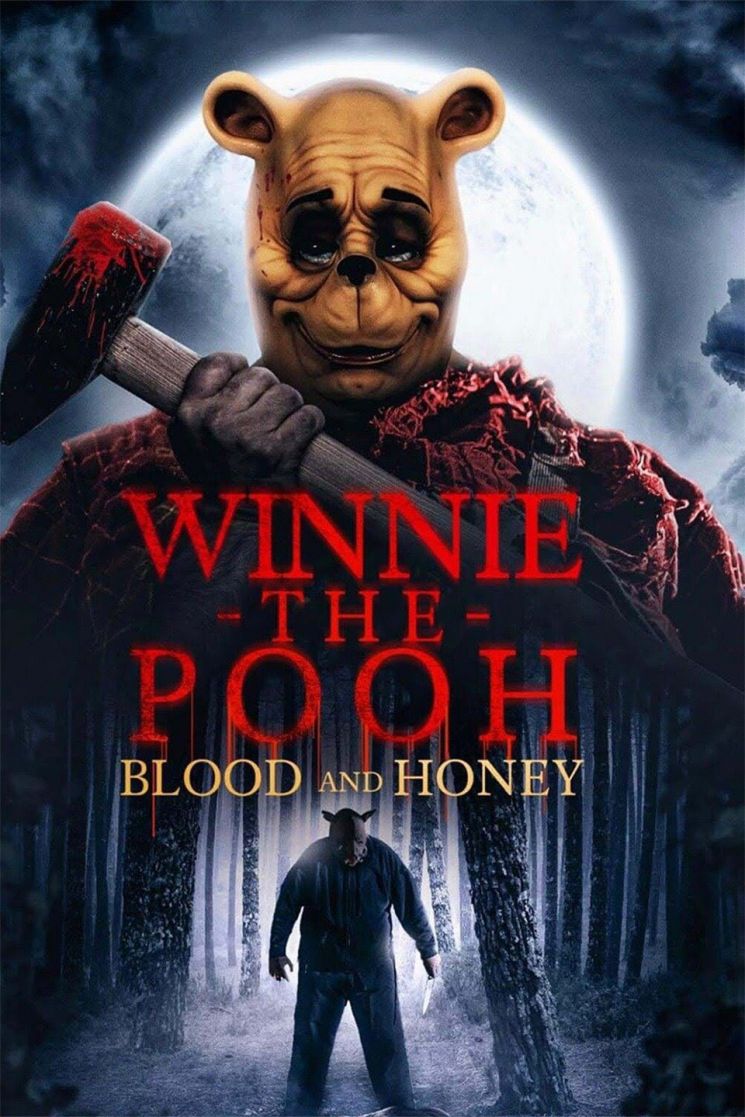
This film was first previewed with a trailer after the copyright for Gomdori Pu expired in January last year. The movie is based on the 1926 published fairy tale book "Gomdori Pu," so its appearance differs somewhat from the animated Gomdori Pu wearing a red shirt that the public remembers. The public's remembered Gomdori Pu is the animated character created by Disney after purchasing the rights to this fairy tale book, first appearing in a 1966 short film, and Disney still holds the copyright.
NYT recently pointed out in an article, "If this film is based on the 1926 material and lacks elements such as the red shirt made in 1930, Disney cannot exercise copyright."
Besides Mickey Mouse and Gomdori Pu, copyrights for other beloved characters worldwide are also set to expire, so discussions around these issues are expected to continue. Superman's copyright will expire in 2034, Batman's in 2035, and Wonder Woman's in 2037. Business Insider reported in an article on copyright issues last August that since the first appearances of Superman, Batman, and Wonder Woman, the characters have been continuously modified, resulting in differences from the characters currently recognized by the public. Experts pointed out that depending on the characteristics of characters in new creative works, copyright infringement could be judged.
◆ Sherlock Holmes' Last Work Copyright Expires This Year
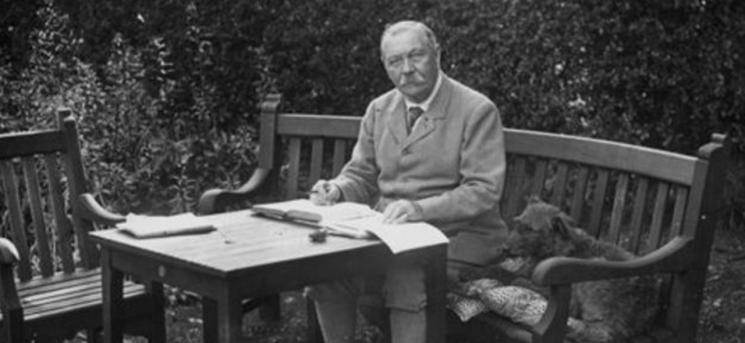 British author Arthur Conan Doyle, who wrote the novel 'Sherlock Holmes' (Photo by Conan Doyle Foundation website)
The work entering the public domain this year is the novel "Sherlock Holmes" by British author Arthur Conan Doyle. Although not a video, the expiration of copyright related to this globally beloved character became an issue. Conan Doyle wrote 56 stories and 4 novels about Sherlock Holmes from 1887 to 1927. Some of these works have gradually entered the public domain over the past few years, and according to the Associated Press, the copyright for "The Case-Book of Sherlock Holmes," which was the last remaining copyrighted work, expired on January 1 this year.
Previously, the Conan Doyle Estate filed a lawsuit against Netflix in 2020 based on the remaining copyrights. Netflix planned to air the film "Enola Holmes," which focuses on Sherlock Holmes' younger sister. This film is an adaptation of the "Enola Holmes Mystery" series of novels by Nancy Springer, published from 2006 to 2010. The estate claimed that some parts depicting detective Holmes reflected content from works whose copyrights had not yet expired. The case was settled the same year the lawsuit was filed, with Netflix and the Conan Doyle Estate reaching an agreement. "Enola Holmes 2" was released in November last year.
© The Asia Business Daily(www.asiae.co.kr). All rights reserved.



















