After over two years of protests causing citizen inconvenience, court mediation proposal ultimately rejected after careful consideration
Court mediation proposal allowing protests under 5 minutes raises concerns over continued citizen inconvenience if abused
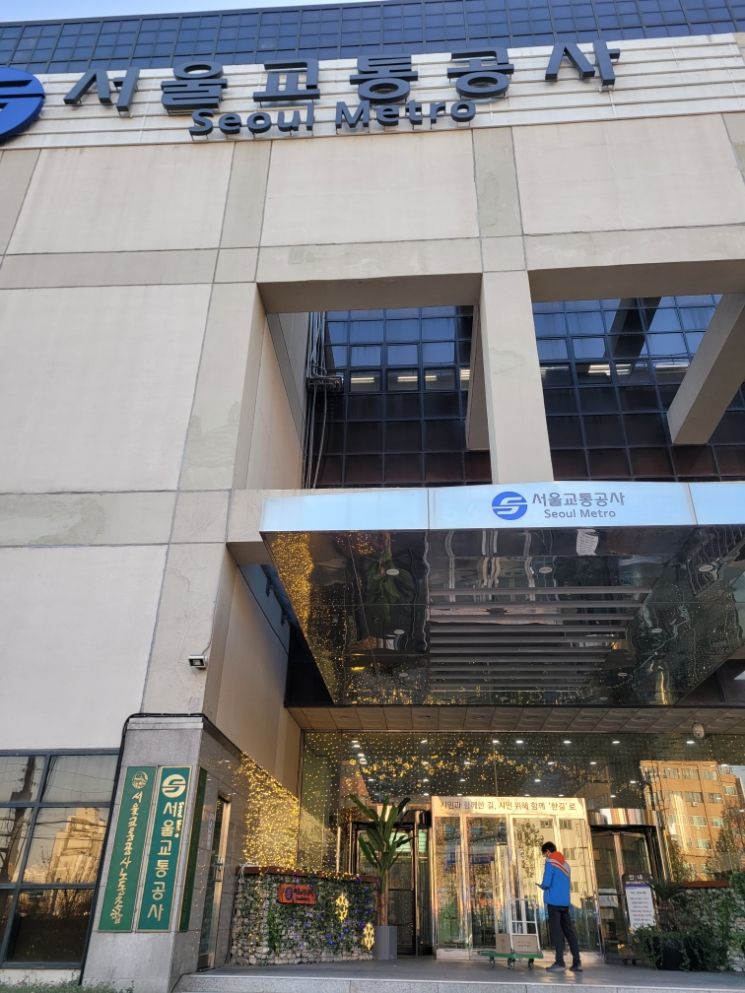
[Asia Economy Reporter Park Jong-il] Seoul Metro announced on the 2nd that it cannot accept the court's forced mediation proposal regarding the civil lawsuit with the National Solidarity for the Elimination of Discrimination against Persons with Disabilities (Jeonjangyeon) and intends to continue legal actions.
The Metro filed two criminal complaints and one civil lawsuit in November 2021 against illegal acts carried out by Jeonjangyeon last year. Regarding one of the civil lawsuits, the court sent a forced mediation proposal to both Seoul Metro and Jeonjangyeon on the 21st of last month.
According to the court's forced mediation proposal, Seoul Metro is to add elevators at ▲stations without a single accessible route among the total 275 stations it operates by 2024, including 19 stations where additional elevators are to be installed. Jeonjangyeon, on the other hand, must pay 50 million KRW to Seoul Metro if they conduct protests that delay train operations by more than 5 minutes by obstructing door openings or other means.
By December, one accessible route per station will be secured at Cheongnyangni Station; currently, 18 stations lack this.
An accessible route per station refers to a path that allows transportation-vulnerable individuals, including persons with disabilities, to move from outside to the subway platform without assistance, using elevators or similar facilities.
Among the stations operated by Seoul Metro, 16 stations have elevators installed but lack a complete accessible route, and two stations?Namguro Station (Line 7) and Yongdap Station (Line 2)?have no elevators at all (wheelchair lifts are available, and elevator installation is planned).
Considering various factors such as passenger inconvenience caused by illegal protests and damages incurred by the Metro, Seoul Metro has carefully reviewed the court's forced mediation proposal and ultimately decided not to accept it.
The reason for rejecting the mediation proposal is that Jeonjangyeon's protests intentionally delay trains and involve clear illegal acts violating the Railroad Safety Act and Criminal Act, such as unauthorized posting of flyers and unauthorized overnight stays within stations. However, the court only stipulated payment for protests exceeding 5 minutes and did not address other illegal acts. Accepting the proposal could lead to continued protests causing inconvenience to passengers.
Seoul Metro emphasized that the most critical issue is the lack of mention regarding protests intentionally delaying trains for less than 5 minutes, which cannot be restrained even if enforced. Due to the nature of subways running on the same track, if one train cannot depart, all trains on that line cannot move. If protests under 5 minutes are enforced, the entire line's trains will stop accordingly, and the resulting delays will cause greater inconvenience to subsequent passengers.
This violates Article 186 (Obstruction of Traffic) of the Criminal Act, Article 48 (Prohibited Acts for Railroad Protection and Order Maintenance) of the Railroad Safety Act, and Article 6 (Adjustment of Passenger Transport) of the Metro's Passenger Transport Terms and Conditions.
Furthermore, if protests under 5 minutes are consecutively enforced at different stations, the total delay time may increase further.
While rejecting the mediation proposal, Seoul Metro plans to take additional legal actions against Jeonjangyeon. Specifically, it will proceed with further criminal complaints and civil lawsuits regarding the total 82 subway protests they have conducted since January 2021. Evidence of illegal acts such as intentional train delays has already been secured.
Separately from rejecting the mediation proposal, Seoul Metro will continue efforts to enable transportation-vulnerable individuals, including persons with disabilities, to move more freely on the subway. The "one accessible route per station" mentioned in the mediation document is planned to be fully secured by 2024. Additionally, station staff provide ongoing assistance from subway entrances to train boarding for wheelchair users, visually impaired persons, and other transportation-vulnerable individuals upon request at all stations.
Kim Seok-ho, Head of Seoul Metro's Operations Division, stated, “Accepting the mediation proposal would legally permit acts that obstruct train operations, undermining the subway’s crucial value of punctuality and potentially being exploited by other groups, making it difficult to accept. We must restore the morning routines of citizens who have been inconvenienced by protests such as ‘taking the subway to work’ by disability groups for over two years. Now it is time for Jeonjangyeon to respond to the voices of citizens who have expressed their discomfort.”
© The Asia Business Daily(www.asiae.co.kr). All rights reserved.

















