Company Group Health Insurance Cancellation Leads to Lump-Sum Premium Refund
Car Insurance Compensation Standards Strengthened... 'Nailong' Claims Become Difficult
Increased Tax Benefits for Pension Accounts
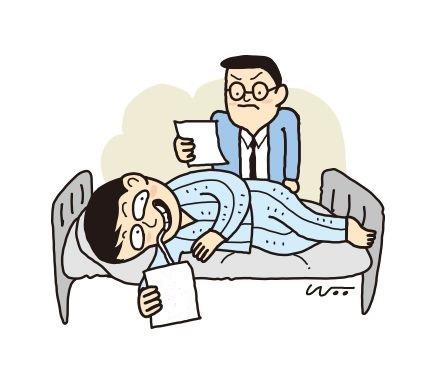
[Asia Economy Reporter Minwoo Lee] From this year, it will be possible to stop duplicate subscriptions to indemnity health insurance, and tax benefits for pension accounts will be expanded. In the case of car accidents, it has become more difficult to receive excessive medical treatment and excessive insurance payments.
Company indemnity insurance can also be stopped... Lump-sum refund of premiums
According to the industry on the 2nd, from this year, the financial authorities will implement the 'Duplicate Subscription Group Indemnity Insurance Suspension System.' Accordingly, consumers who have duplicate subscriptions to individual and group indemnity insurance will be able to directly contact the insurance company to stop the group indemnity insurance subscribed through their workplace. Previously, only the individual indemnity insurance subscribed by the individual could be stopped.
When indemnity insurance is stopped in this way, the insurance company will also refund the premiums. The refund applies to the remaining period after suspension. Considering that group indemnity insurance usually has a one-year term and the company pays the entire premium at the time of contract, if the group indemnity insurance is stopped on the day of renewal, the premium for one year can be refunded. It is advised to strategically choose which insurance to stop by considering the self-insurance ratio between individually subscribed personal indemnity insurance and group indemnity insurance.
The consumer's choice has also been expanded when resuming suspended insurance. Previously, only products currently on sale could be selected at the time of resumption, but now products subscribed to at the time of suspension can also be chosen. To check for duplicate subscriptions to indemnity insurance, you can check on the Korea Credit Information Services' 'CreditForYou' website.
Blocking 'Nailong' in car insurance... Long-term treatment and hospitalization in superior rooms become difficult
Compensation standards for minor injuries in car insurance have also been revised. In the case of minor injuries such as 'simple contusions' without accompanying 'spinal sprain' or 'fracture,' if the treatment period exceeds 4 weeks, proof documents must be submitted. Previously, it was possible to receive treatment and claim insurance money without any time limit. It has also become difficult to intentionally be hospitalized in superior rooms to inflate insurance claims. Clinics are excluded from the recognition of superior room charges. This is to prevent claiming expensive superior room charges by being hospitalized in some clinics that only have superior rooms.
Insurance payments also vary according to the degree of fault. The portion of personal fault in bodily injury liability II treatment costs must be handled by personal insurance (personal injury or automobile injury) or out-of-pocket. It is expected that cases where more insurance money had to be paid because the other party's damage amount was larger despite a smaller fault ratio will decrease. For example, even if both the perpetrator with an 80% fault ratio and the victim with a 20% fault ratio are judged to have minor injuries, and the perpetrator's treatment cost is set at 5 million KRW and the victim's treatment cost at 500,000 KRW, the insurance company used to pay the full treatment cost. However, now only the insurance money applied by the fault ratio can be received. The perpetrator will receive 1 million KRW (20% of 5 million KRW), and the victim will receive 400,000 KRW (80% of 500,000 KRW) from the other party's insurer, and the rest must be settled by themselves. The reward for reporting various insurance frauds, including car insurance, will also be increased from 1 billion KRW to 2 billion KRW.
Expansion of tax credit benefits for pension accounts... up to 9 million KRW
To strengthen old-age income security for personal and retirement pensions, the tax credit contribution limit will also be expanded. For a total salary of 55 million KRW (comprehensive income amount of 45 million KRW), the tax credit contribution limit for pension savings will increase from the existing 4 million KRW to 6 million KRW. The combined tax credit contribution limit including retirement pensions will increase from 7 million KRW to 9 million KRW. For example, a worker with a total salary of 45 million KRW will see the tax credit they can receive for pension savings products increase from 600,000 KRW (15% of 4 million KRW) to 900,000 KRW (15% of 6 million KRW). Also, from next year’s pension receipt, if pension income exceeds 12 million KRW, it will be possible to choose 15% separate taxation in addition to comprehensive taxation.
Insurance companies also face changes... Introduction of IFRS17 and relaxation of one-license-per-company policy
For insurance companies, the accounting method will switch to IFRS17 from this year. Accordingly, the evaluation method of insurance liabilities will change to fair value evaluation. Since liabilities held will be evaluated at fair value annually, insurance companies face increased risks related to interest rate fluctuations. While preparations such as accumulating more reserves are necessary, for high-interest savings-type insurance, the burden of fund management can be reduced as market interest rates rise.
The recognition method of insurance revenue and expenses will also change from the existing cash basis to the accrual basis. Insurance companies will recognize revenue at the point when they actually provide insurance services (risk coverage) to the policyholder. Premium increases will be immediately reflected in profit and loss. In particular, with the introduction of the Contractual Service Margin (CSM) concept in premiums, it is expected that products such as cancer insurance with high CSM can be increased. CSM is a concept that predicts insurance profitability in advance. For example, in a single premium 300,000 KRW cancer insurance, if the insurance company expects a cancer diagnosis rate of 10% and the insurance payout is 1 million KRW, the CSM is 300,000 KRW minus the expected cost of 100,000 KRW (cancer insurance payout * diagnosis rate), resulting in 200,000 KRW.
In addition, with the relaxation of the insurance business licensing policy of 'one license per company,' it is expected that more insurance companies specialized in individual fields will emerge.
© The Asia Business Daily(www.asiae.co.kr). All rights reserved.
![Clutching a Stolen Dior Bag, Saying "I Hate Being Poor but Real"... The Grotesque Con of a "Human Knockoff" [Slate]](https://cwcontent.asiae.co.kr/asiaresize/183/2026021902243444107_1771435474.jpg)
















