"Hard to Buy a Bag of Bungeoppang Now"
Popular Apps Help Find Bungeoppang Shops
Rising Raw Material Costs and Street Vendor Crackdowns Suspected
"I never thought it would become this difficult to buy a bag of Bungeoppang."
This is a comment left on the download page of a Bungeoppang store search application (app). In the past, Bungeoppang street stalls used to appear in every alley during winter without fail, but now they have become so rare that you have to rely on app searches just to find them.
Where did all those Bungeoppang go? Analysts say it is due to a combination of factors rather than a single clear cause. The COVID-19 pandemic, expensive flour prices, and economic downturn have rapidly reduced the space for street stalls.
'Endangered Species' Bungeoppang... Bungswe-gwon App Also a Hot Topic
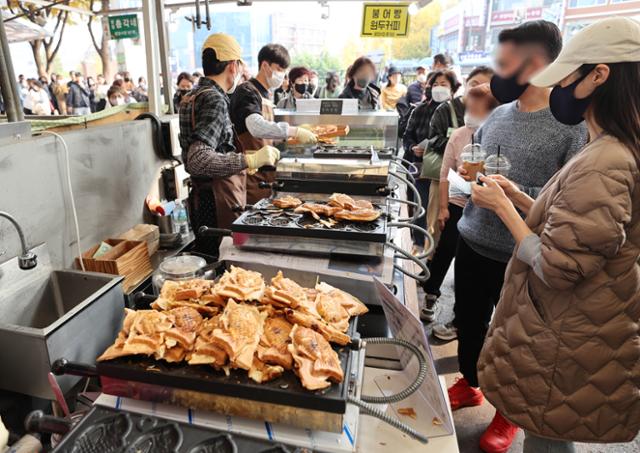
Recently, the 'Bungeoppang app' has become a hot topic among netizens. The Bungeoppang app is a program that marks the locations of street food vendors around the user's smartphone.
These Bungeoppang finder apps first gained attention in 2021 and have since proliferated rapidly, with total downloads already exceeding 100,000 (based on Google Play Store data).
A new term, 'Bungswe-gwon' (Bungeoppang + station area), has also emerged. If a residence is near a Bungeoppang store, it is called Bungswe-gwon. Netizens living in Bungswe-gwon are sometimes envied by others, much like those living near subway station areas.
Netizens agree that "It's really hard to see Bungeoppang these days," and "There isn't a single street stall near my house," expressing how difficult it has become to find street vendors.
Decrease in Street Vendors and Acceleration of Premiumization... Bungeoppang's De-Street Vendor Trend
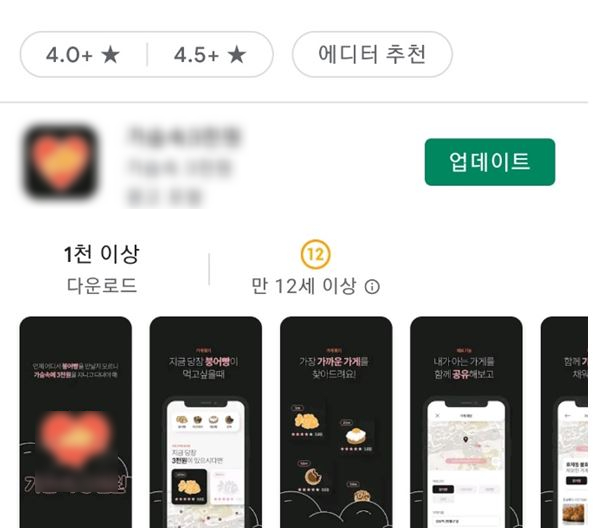
It's not just Bungeoppang stores. Recent updates to Bungeoppang apps have improved them to allow searches for 'nostalgic street food vendors' such as gyeran-ppang (egg bread), eomuk (fish cake), twigim (fried snacks), and takoyaki.
How did Bungeoppang stores become so rare that you have to use an app to find them?
Just over 20 years ago, there were many unauthorized illegal street vendors in Korea. These illegal vendors have greatly decreased due to strict crackdowns by local governments.
However, the number of properly registered and operating street vendors has also sharply declined. According to Statistics Korea's 'Traditional Market Store and Shop Management Survey,' the number of registered street vendors was 47,669 in 2013 but dropped to 33,118 in 2020, a decrease of about 30.5%. Over eight years, three out of ten street vendors nationwide disappeared.
The COVID-19 pandemic, which caused massive sales damage to self-employed and small business owners over the past two years, also accelerated street vendor closures. To make matters worse, the prices of key ingredients needed to make Bungeoppang have surged.
Analysis by 'Korea Price Information' of the price trends for five main ingredients used in Bungeoppang showed an average increase of 49.2% compared to five years ago. In particular, the price of imported red beans used for Bungeoppang's red bean paste doubled from 3,000 won five years ago to 6,000 won now.
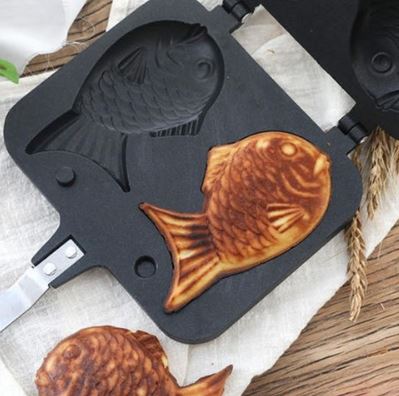 Molds and flour mix kits that allow you to make Bungeoppang yourself are also trending. / Photo by Coupang Capture
The premiumization and DIY (Do It Yourself) trend of Bungeoppang are also encouraging its 'de-street vendor' transformation. Premium Bungeoppang selling for over 3,000 won each are available in stores inside large shopping malls and department stores, and some citizens buy Bungeoppang molds and flour mixes from online stores to make Bungeoppang themselves.
© The Asia Business Daily(www.asiae.co.kr). All rights reserved.



















