"US Biden Semiconductor Policy 'Limits' Clear"
Concerns Raised Over Unclear Advanced Technology Application and Workforce Issues
[Asia Economy Reporter Jeong Hyunjin] "The United States is pouring money into semiconductors, but there are limits even here."
On the 1st (local time), The New York Times (NYT) pointed out that although companies have promised nearly $200 billion (about 252.4 trillion KRW) in semiconductor investments in line with the Biden administration's semiconductor supremacy competition, investment alone is not a 'silver bullet' for building supply chains. Major global semiconductor companies such as Samsung Electronics, Taiwan's TSMC, and the US's Intel have successively declared investments in the US, but this may not always be purely beneficial from an industrial perspective within the US.
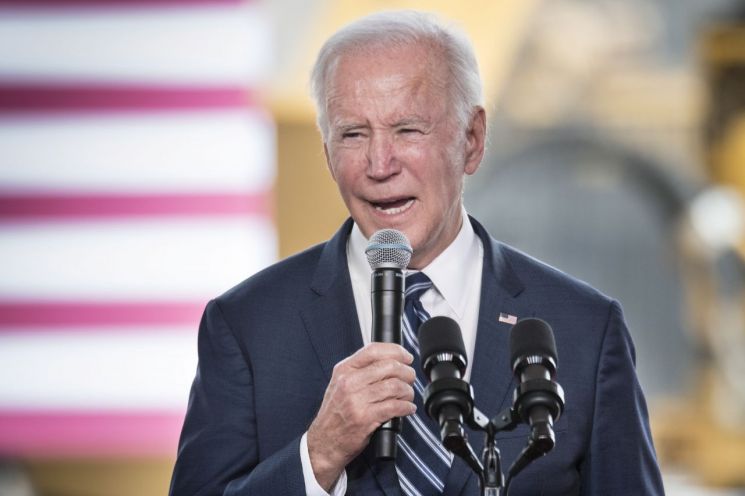
◆ Biden's 'Semiconductor Love'... "35 Companies Promise $200 Billion Investment"
NYT first noted that the Biden administration has succeeded in attracting corporate investment through semiconductor support policies. According to a report citing the Semiconductor Industry Association (SIA), since spring 2020, 35 companies across the US have promised about $200 billion in investments. These funds will be used to build 23 semiconductor factories and expand 9 factories across 16 states including Arizona and New York, as well as to supply additional factory equipment.
This is interpreted as a result of the Biden administration enacting the CHIPS Act, which provides subsidies for semiconductor manufacturing facilities. In August last year, President Biden signed the CHIPS Act, which includes $52.7 billion in support through 2027. Companies building semiconductor factories in the US will receive a 25% tax credit. Daniel Armbrust, former chairman of the US semiconductor manufacturing technology consortium Sematech, told NYT, "I have never seen such a (investment) tsunami."
The US has been a traditional semiconductor powerhouse, leading semiconductor production since the 1950s. However, as it lost supremacy to Asian countries such as South Korea and Taiwan, its share of global semiconductor production gradually declined from 37% in 1990 to about 12% recently. In 2020, SIA and Boston Consulting Group (BCG) projected that if the US government provides $50 billion in funding, the global semiconductor production share could expand to 14% by 2030.
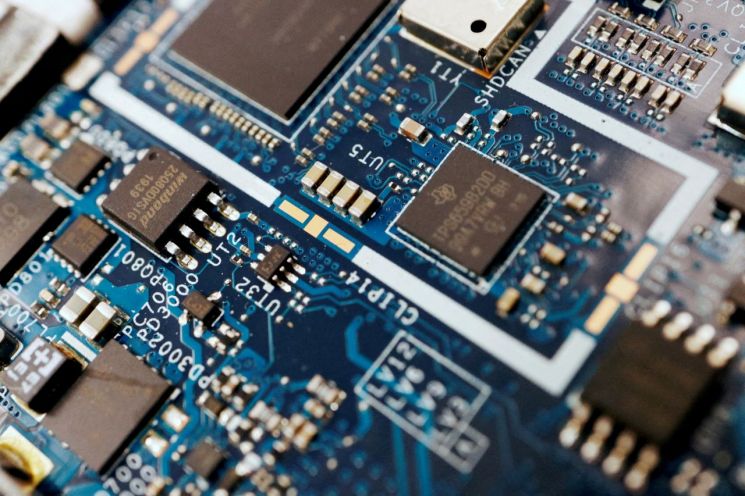
◆ Uncertainty in Applying Advanced Technology and Workforce Shortages Pose Challenges
However, NYT points out that investment alone cannot build a semiconductor supply chain within the US. NYT stated, "The industry believes that efforts to produce semiconductors domestically can correct some imbalances," but added, "only to a certain extent." Chris Miller, a professor at Tufts University and author of the recent book Chip War, told NYT, "Despite the massive government investment, achieving semiconductor self-sufficiency will not be successful."
NYT highlighted that building semiconductor factories takes several years, and even after operation, advanced technology may not be applied. Companies might cancel investment plans if they judge that they will not receive sufficient subsidies from the US government, and companies may face difficulties securing related personnel amid the wave of semiconductor factory constructions, NYT analyzed.
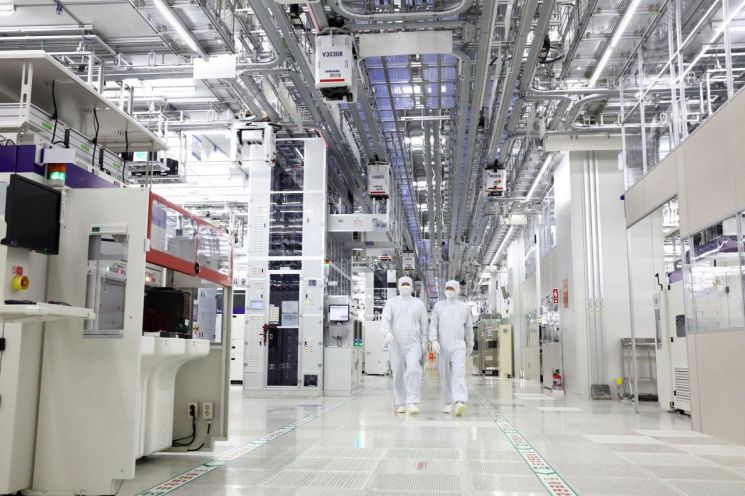
In fact, TSMC announced that it will produce 4-nanometer (nm; 1 nm = one billionth of a meter) semiconductors from 2024 and 3-nanometer semiconductors from 2026 at its Phoenix, Arizona plant. NYT reported, "However, TSMC has already started mass production of 3-nanometer products in Taiwan," and "TSMC's Taiwan factories are expected to begin supplying 2-nanometer products to Apple in 2025." This suggests that while TSMC promises investments in the US, it is unlikely to transfer the latest semiconductor processes to the US.
NYT added, "Not only TSMC but other foreign companies are uncertain whether they will bring more advanced technology to the US," and "Samsung Electronics plans to invest $17 billion in a new factory in Texas but has not disclosed specific production plans." NYT also noted, "Even older, simpler types of semiconductors, which affected the US auto industry so severely that factories had to close over the past two years, may still face shortages."
Workforce is also an issue. SIA expects that the large-scale investment in the US semiconductor industry will create demand for 277,000 semiconductor workers in production companies and factories. However, hiring this workforce in a short period is expected to be a mission. NYT reported, "Semiconductor factories require technicians and skilled scientists in fields such as electrical and chemical engineering," and "According to a recent survey of semiconductor industry executives, 'talent shortage' is one of the most difficult challenges."
© The Asia Business Daily(www.asiae.co.kr). All rights reserved.



















