Electric Vehicle Subsidies Provided for 13 Years Since 2009
BYD, Tesla, and Others Receive 30 Trillion Won in Subsidies
Electric Vehicle Sales Expected to Reach 9 Million Units Next Year
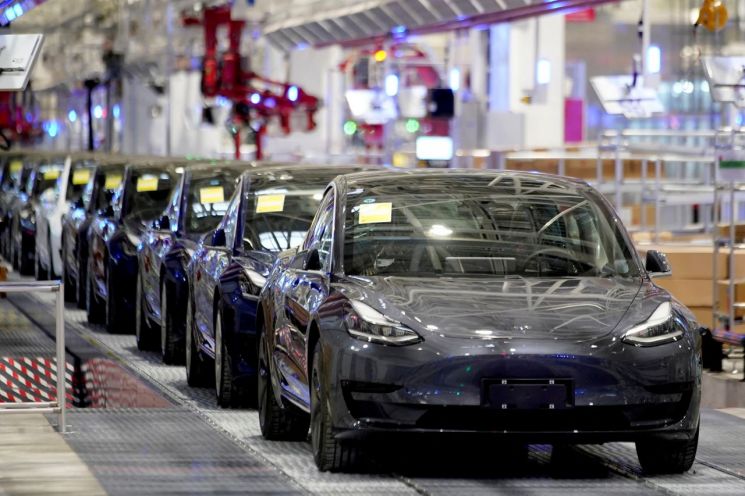
[Asia Economy Reporter Choi Dae-yeol] China has decided to eliminate electric vehicle (EV) purchase subsidies starting next year. Having spent about 30 trillion won over 12 years since 2009, the country now believes its domestic EV industry is competitive enough without subsidies.
According to data compiled by KOTRA Shenyang Trade Center on the 31st, four Chinese government departments?the Ministry of Finance, Ministry of Industry and Information Technology, Ministry of Science and Technology, and National Development and Reform Commission?announced in the "Notice on Subsidy Policies for the Promotion of New Energy Vehicles in 2022" that purchase subsidies will be provided only until today. New energy vehicles refer to pure electric vehicles and plug-in hybrid vehicles.
The Chinese government has provided subsidies since 2009 to increase EV adoption. Unlike South Korea, subsidies were given to manufacturers. When manufacturers report EV sales to local governments and apply for subsidies, the government executes payments after expert review. Since subsidies were factored into vehicle prices, sales prices were lowered, enabling consumers to purchase vehicles at cheaper prices.
KOTRA reported that Chinese EV manufacturers have received a total of 160 billion yuan (approximately 29.528 trillion won) in subsidies so far. BYD, China’s top manufacturer, received the most at 7 billion yuan (1.2933 trillion won). The American brand Tesla received 3.5 billion yuan (646.6 billion won).
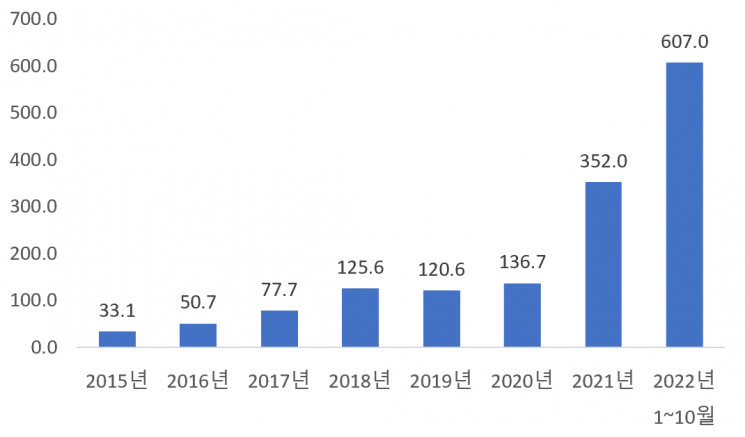
China is considered the number one country in terms of production and sales volume for both conventional internal combustion engine vehicles and electric vehicles. According to the China Association of Automobile Manufacturers, despite disruptions caused by COVID-19 and strict quarantine measures, vehicle production reached 21.7 million units and sales reached 21.29 million units from the beginning of this year through last month.
The subsidy elimination was somewhat anticipated. The government has steadily reduced subsidy amounts to lower dependency. In the early stages of the subsidy policy, up to 60,000 yuan (11.26 million won) per vehicle was provided, but the limit was cut by 20% in 2017. In 2019, it was reduced by 40% compared to the previous year, and this year it was cut by 30% compared to last year.
Subsidy eligibility criteria were also raised. In 2018, subsidies were given only to vehicles with a driving range of 150 km per charge. This was increased to 250 km in 2019 and recently to 300 km.
KOTRA expects vehicle prices to rise as subsidies disappear. BYD has raised prices by up to 6,000 yuan (1.11 million won), and Aiways, under Guangzhou Automobile, recently decided to increase prices by up to 8,000 yuan (1.48 million won).
Next year, EV sales are expected to increase by 35% from this year to about 9 million units. In this case, the share of EVs among all new vehicles sold will rise to 32.6%, meaning one out of every three cars sold will be an EV. While the removal of subsidies is expected to somewhat reduce the price competitiveness of local companies, KOTRA forecasts new opportunities for domestic automakers and battery companies, which had difficulty entering the local market due to subsidy issues.
© The Asia Business Daily(www.asiae.co.kr). All rights reserved.
![Clutching a Stolen Dior Bag, Saying "I Hate Being Poor but Real"... The Grotesque Con of a "Human Knockoff" [Slate]](https://cwcontent.asiae.co.kr/asiaresize/183/2026021902243444107_1771435474.jpg)












