 Joint brand image developed by the Seoul City Center Tourism Council, consisting of six central districts of Seoul, including Mapo-gu
Six Districts of Seoul Downtown Tourism Council Seek Joint Development through Mutual Solidarity and Cooperation... Mapo-gu Leads Strengthening Tourism Promotion and Developing Joint Brand
[Asia Economy Reporter Park Jong-il] The Seoul Downtown Tourism Council (Chairman Park Gang-su, Mayor of Mapo-gu) has signaled a new start to leap forward as a global tourist city after COVID-19 through the development of a joint brand.
Composed of Mapo-gu, Jongno-gu, Jung-gu, Yongsan-gu, Seongbuk-gu, and Seodaemun-gu, the 'Seoul Downtown Tourism Council' is an administrative council formed in 2019 to seek joint development plans through cooperation and solidarity among local governments for fair and sustainable tourism development in the six downtown districts.
So far, the council has promoted various joint cooperation projects such as producing a tourism map of downtown Seoul, conducting basic research for downtown tourism cooperation, jointly producing promotional videos for the six districts, and creating an online virtual exhibition hall.
This year, Mapo-gu, the chair district, has steadily promoted joint cooperation projects among the six downtown districts despite difficult conditions such as the prolonged COVID-19 pandemic and the Itaewon accident, and recently achieved the development of a 'joint brand' reflecting the will to leap forward as a new tourist city.
The joint brand was created to signify a new leap in downtown tourism in the post-COVID era, incorporating the colors of the six districts. It also features an image connecting the 'infinity' symbol with colors representing the individuality of each district, symbolizing Seoul tourism expanding globally. The letters "Hi" are personified, holding hands and sharing history and stories, representing intergenerational empathy.
Along with this, a desk calendar featuring photos of representative tourist spots from the six districts was produced to introduce and promote beautiful attractions to tourists visiting downtown tourist sites.
Chairman Park Gang-su said, "As the center of Seoul tourism, the six downtown districts plan to focus on tourism promotion targeting young people and foreigners," adding, "With the development of this joint brand, we will become a downtown area that establishes itself as a global tourist city through mutual solidarity and cooperation."
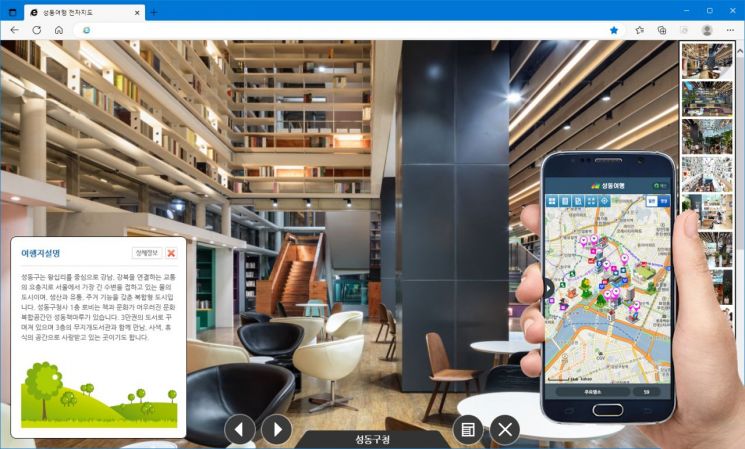
Building Seongdong Neighborhood Food and Style Travel Map... Registering Store Information such as Restaurants and Cafes on the ‘Seongdong Travel Map Platform’
Seongdong-gu (Mayor Jung Won-oh) announced on the 28th that it will newly provide a function to register and promote information about local stores such as restaurants and cafes through the Seongdong Travel Map Platform.
The Seongdong Travel Map Platform, established in May, was created mainly for travel information under institutional leadership, so small business owners who wanted to promote or guide their own stores were excluded from the map service.
To solve this, Seongdong-gu independently developed and built an integrated travel information management system tailored to Seongdong, allowing small business owners to directly register store information through the website and provide services via an online map.
This service is available to any small business owner or self-employed person operating a restaurant or store in the area, who can apply for online registration through the ‘Our Neighborhood’s Delicious and Stylish’ menu on the Seongdong-gu Office website.
An official from the district said, "Through this system construction, Seongdong-gu and residents can participate together and create travel data, securing a two-way integrated management system independently," adding, "It is expected to help expand travel information specialized for Seongdong-gu and revitalize the local commercial district, which has been depressed due to COVID-19."
The ‘Seongdong Travel Map Platform’ was developed independently by Seongdong-gu in May and opened to residents. It is accessible not only via the Seongdong-gu Office website but also on mobile devices, and the map service can be accessed via QR code. On one side of the map, users can also download the Seongdong-gu tourism guide map and the Seongsu travel (Seongsu Station, Ttukseom Station, Seoul Forest) guidebook, enhancing convenience.
This creative policy realization was recognized by winning the Excellence Award in the Proposal Execution category of the ‘2022 Seoul Creativity Awards’ held by Seoul City at the end of this month.
The Seongdong travel map contains travel information for over 300 places across 30 categories, providing detailed guidance on themed travels such as Seongsu Brooklyn, handmade shoes, romantic walking paths, as well as travel destinations in Seongsu-dong including Ttukseom Station, Seongsu Station, and Seoul Forest. Tourist attractions like Wangsimni Square, Seoul Forest, and Understand Avenue, as well as cafes, restaurants, and accommodations, can also be checked. Clicking on each attraction provides travel descriptions along with vivid on-site photos and videos, offering a lively sense of the location.
Jung Won-oh, Mayor of Seongdong-gu, said, "I hope many travelers will find the hidden gems of Seongdong-gu through the Seongdong travel map service," and added, "We will provide richer travel information through continuous updates."
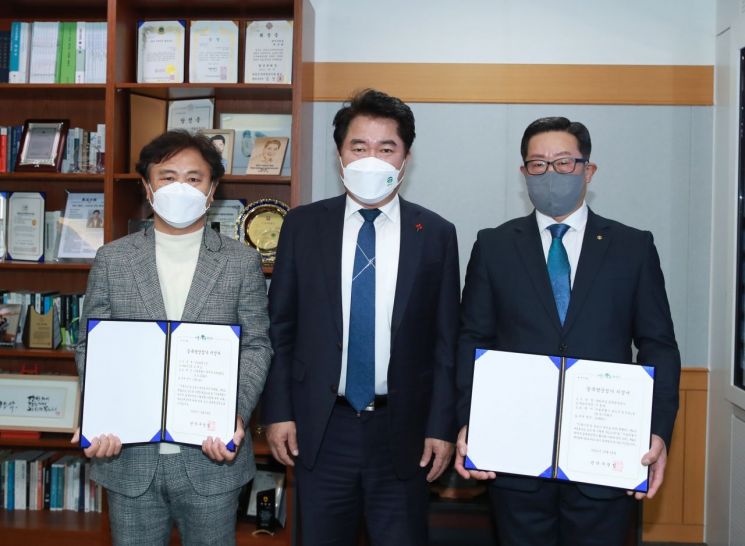
Gwanak-gu Adds Two Alley-type Shopping Districts: Gangnam Alley Market and Bongridan-gil Alley-type Shopping District (Former Yeongnim Market)
Gwanak-gu (Mayor Park Jun-hee) is revitalizing alley shops and small business owners struggling from prolonged economic downturn by designating ‘alley-type shopping districts’ to discover blind spots in traditional market commercial areas.
The district has additionally designated ‘Gangnam Alley Market’ in Jowon-dong and ‘Bongridan-gil Alley-type Shopping District (Former Yeongnim Market)’ in Cheongnyong-dong as Gwanak-gu’s 4th and 5th alley-type shopping districts, strengthening the self-sustainability and competitiveness of traditional markets.
Both markets are representative traditional markets in Gwanak-gu with histories of around 40 years. However, they had not been recognized as traditional markets under the law because over 50% of the stores were service businesses such as beauty salons, cafes, and restaurants, and they faced difficulties due to restrictions on using and affiliating with Onnuri gift certificates.
Going forward, ‘Gangnam Alley Market’ and ‘Bongridan-gil Alley-type Shopping District’ will improve market environments through government and local government-supported public projects like existing traditional markets and shopping districts. Increased customer inflow is expected through handling Onnuri gift certificates, leading to revitalization of commercial areas and increased sales.
To commemorate the designation of the alley-type shopping districts, various commercial revitalization events such as ‘2023 Lunar New Year Discount on Ancestral Ritual Supplies’ and ‘Onnuri Gift Certificate Payback’ will be held.
A representative of the merchants’ association said, “Nothing comes without effort. Being designated as an alley-type shopping district feels like a rare sense of achievement, and we thank Gwanak-gu and related officials for their hard work. We look forward to future development.”
In 2020, the district proactively enacted the ‘Ordinance on Supporting the Revitalization of Alley-type Shopping Districts in Gwanak-gu, Seoul.’ This established a legal foundation allowing designation of alley-type shopping districts in areas within 2,000㎡ where 30 or more stores operated by small business owners are densely located.
Additionally, to lower the threshold for designation, the related ordinance was amended in October 2022 to relax requirements such as deleting the ‘consent of half of landowners/building owners’ rule.
Selected in the 2022 Seoul City public contest ‘Alley-type Shopping District Revitalization Support Project,’ the district laid the groundwork for prospective alley-type shopping districts by supporting the formation of merchant self-governing organizations, administrative staff, and commercial marketing through professional consulting firms.
In particular, the district and merchants’ association have solidified internal foundations by forming merchant self-governing organizations and conducting administrative and commercial marketing projects through professional consulting, earning recognition as an exemplary case among Seoul’s autonomous districts.
The district is also actively promoting revitalization projects to bring vitality to existing traditional markets. It participated and was selected in Seoul City’s ‘1st Phase Living Commercial Area Development Project’ contest, supporting up to 3 billion KRW in budget by 2023 for the commercial area around Nurak Alley-type Shopping District and Urim Market, receiving strong support from merchants and residents.
Mayor Park Jun-hee said, “We will continue efforts to discover blind spots in commercial areas, form self-governing organizations, and expand alley-type shopping districts. We encourage many commercial areas interested in projects such as next year’s ‘Self-governing Organization Formation Support Project’ to participate.”
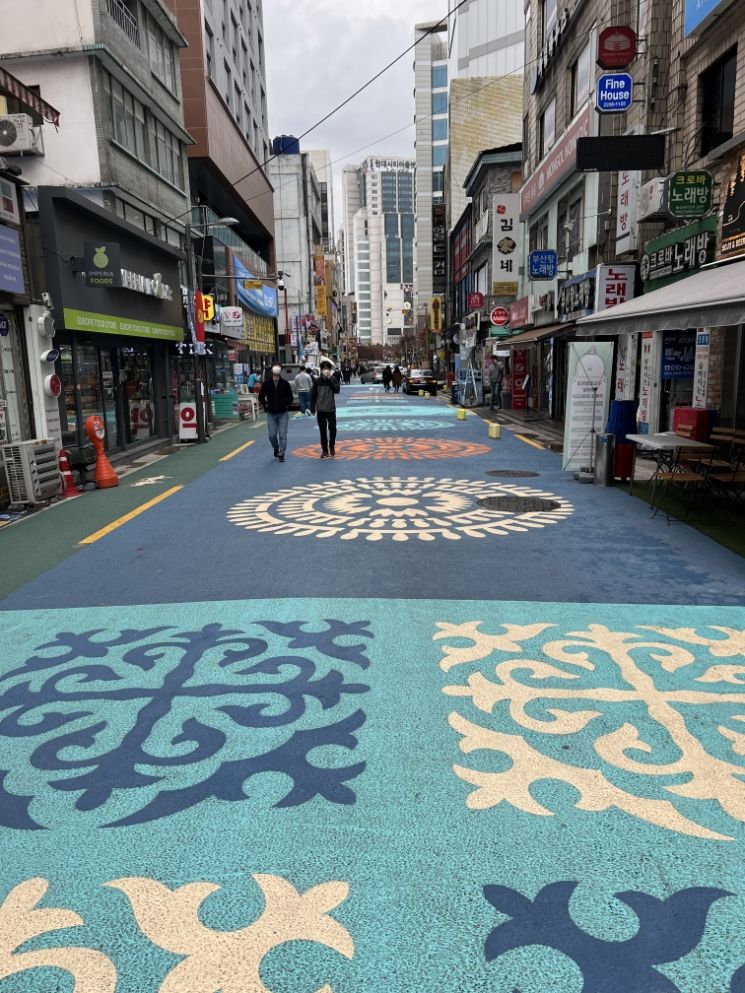
Jung-gu Creates Themed Central Asia Street in Gwanghui-dong with Carpet Street, Guide Signs, and Murals
Seoul Jung-gu (Mayor Kim Gil-seong) completed the landscape improvement construction of Gwanghui-dong Central Asia Street in early December.
Since around 1980, foreigners from Russia, Mongolia, Kazakhstan, Turkmenistan, and other countries gathered in the Gwanghui-dong area for trade. Subsequently, they opened shops and restaurants, creating an exotic alley full of Central Asian atmosphere. The area is bustling with foot traffic due to nearby DDP and clothing malls.
The district applied for the Seoul City landscape improvement project in 2020 to improve the Gwanghui-dong Central Asia Street area and create a pleasant and distinctive landmark street. They secured 500 million KRW in city funds and carried out road paving, installation of guide materials, and alley maintenance over one year and five months.
In the aging street, a carpet street was created by introducing carpet patterns closely related to the nomadic lifestyle, representing Central Asia. Guide materials using strong colors evoking the Central Asian region were also installed.
Additionally, images of people of various nationalities wearing traditional costumes were designed on the street walls to enhance the enjoyment of walking along the street.
In dark alleys, gobos with BI patterns imprinting the street brand and image were installed, and CCTV and road markers were set up to improve nighttime scenery and strengthen crime prevention.
Mayor Kim Gil-seong of Jung-gu said, “Gwanghui-dong Central Asia Street, adjacent to Dongdaemun Fashion Town, has a large floating population due to its exotic atmosphere, but it needed environmental improvements such as addressing aging infrastructure, pedestrian issues, and lack of distinctiveness,” adding, “With this project, the landscape of Gwanghui-dong Central Asia Street has been transformed into a pleasant and distinctive street, and we hope it will further revitalize the local economy.”
© The Asia Business Daily(www.asiae.co.kr). All rights reserved.



















