Comprehensive Reorganization Including Establishment of 2 Departments and 12 Teams
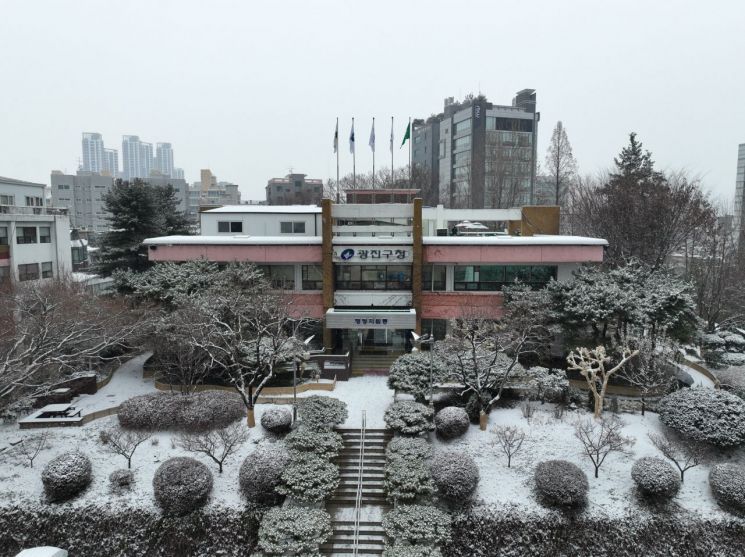
[Asia Economy Reporter Park Jong-il] Gwangjin-gu (Mayor Kim Kyung-ho) will implement an organizational restructuring from January 1st, the start of the new year, to realize a Happy Gwangjin as it enters the turning point of the 8th term of the elected government.
This organizational restructuring was prepared to efficiently support the execution power of district administration centered on the core pledges of the 8th term of the elected government.
To this end, an organizational system was established focusing on ▲work-centered performance orientation ▲demand-centered approach ▲maximizing efficiency, emphasizing areas closely related to residents' daily lives such as ‘urban development,’ ‘commercial district revitalization,’ ‘livelihood economy,’ and ‘culture and leisure’ to enhance the effectiveness of project implementation.
First, the ‘Housing Project Division’ and ‘Sports Promotion Division’ will be newly established. The ‘Housing Project Division’ will focus on reconstruction and redevelopment to achieve balanced urban development, while the ‘Sports Promotion Division’ will devote efforts to enhancing residents' health through policy development for promoting sports for all.
In addition, 12 new teams such as the ‘Integrity and Human Rights Team,’ ‘Industrial Infrastructure Creation Team,’ ‘Youth Policy Team,’ and ‘Climate Change Response Team’ will be established.
Especially, in line with the policy direction of the 8th term focusing on urban development, the ‘Rental Business Team’ and ‘Housing Policy Team’ have newly appeared, and considering Seoul city’s policy direction, the Small-scale Project Team has been reorganized into the ‘Moahouse Team,’ accelerating projects related to Moahouse, youth housing, and coexistence housing.
Furthermore, to improve work efficiency, the entire departments have been reorganized. To provide next-generation administrative services suitable for the 4th Industrial Revolution era, the Smart Information Division under the Administration Bureau will be changed to the ‘Smart Information Officer.’ This department will be responsible for smart integrated control tasks, focusing on strengthening residents' safety.
The existing Job Policy Division has been renamed the ‘Job Youth Division’ to integrate management of jobs, startups, and youth projects. Along with this, instead of the Urban Agriculture Team under the Park and Greenery Division, a new ‘Park Leisure Team’ will be created to increase leisure activity opportunities for residents.
Additionally, for efficient organizational operation, overlapping tasks have been consolidated, the order of the organizational chart adjusted, and department names changed to clearly reflect the nature of the work, resulting in a large-scale restructuring.
Another notable point is the reorganization of the welfare teams at the community service centers. To intuitively grasp the nature of the work, all 15 districts have reorganized the Resident Welfare 1 and 2 Teams into the ‘Welfare Support Team’ and ‘Welfare Care Team.’
In Neungdong and Jayang 3-dong, the two previously separate welfare teams have been merged into one, piloting the ‘Resident Welfare Team One-Team System.’
Kim Kyung-ho, Mayor of Gwangjin-gu, said, “This organizational restructuring is the result of dedicated efforts with staff to maximize the efficiency of organizational operation and the successful promotion of the 8th term elected government’s pledge projects. With the new year, we will show a completely transformed Gwangjin that residents can truly feel, starting anew from the beginning.”
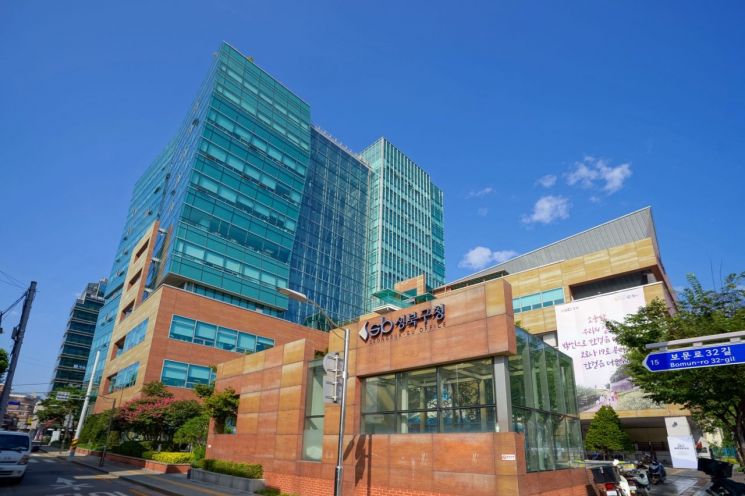
Seongbuk-gu (Mayor Lee Seung-ro) will implement an administrative organizational restructuring effective January 1st next year to further strengthen the execution power of field and livelihood-centered district administration in the 8th term of the elected government.
The district announced that it has maximized organizational efficiency in line with the 8th term pledges and major core project momentum, and the changing demands for administrative services.
The existing organizational structure of 6 bureaus, 1 officer, and 31 divisions will be reorganized into 6 bureaus, 1 department, 1 officer, and 31 divisions.
The key considerations reflected in this restructuring are as follows: ▲Establishment of a temporary ‘Urban Maintenance Rapid Promotion Team’ ▲Strengthening organizational functions to support socially vulnerable groups ▲Enhancing cultural competitiveness and revitalizing the local economy ▲Functional reorganization for efficient promotion of education and village projects.
The most noticeable new organization in the restructured chart is the ‘Urban Maintenance Rapid Promotion Team’ newly established directly under the Deputy Mayor. Seongbuk-gu has the largest number of redevelopment and reconstruction target areas in Seoul, making rapid urban development a core task. The promotion team will operate as a temporary organization until 2025, serving as a ‘control tower’ overseeing maintenance projects, urban regeneration, and urban development plans, actively driving the creation of a premium New Town city.
The function of accompanying the vulnerable in administration will also be strengthened. A new ‘Single-Person Household Support Team’ will be created, the ‘Disabled Welfare Team’ will be separated and reorganized, and the ‘Child and Youth Division’ will be newly established. The plan is to strengthen support for target groups and provide customized welfare administrative services.
Additionally, the ‘Culture and Sports Division,’ responsible for local cultural tourism-related tasks, will be transferred to the ‘Administrative Culture Bureau.’ This reflects the 8th term government’s intention to further promote the Seongbuk-dong historical and cultural area known as the ‘Roofless Museum’ and focus more on the Seongbuk-gu cultural city creation project.
Furthermore, to prevent similar accidents after the Itaewon incident and strengthen preemptive safety management, a new ‘Safety Support Task Promotion Team’ will be established. The plan is to preemptively block a ‘second Itaewon disaster’ at places with dense crowds, including events without organizers.
Lee Seung-ro, Mayor of Seongbuk-gu, said, “This organizational restructuring contains the execution power to realize the ‘Together Happy Seongbuk’ blueprint that we have envisioned with residents. We will realize the ‘better life for residents’ and ‘future development of Seongbuk’ in the 8th term by leveraging the new administrative organizational system armed with execution power and efficiency.”
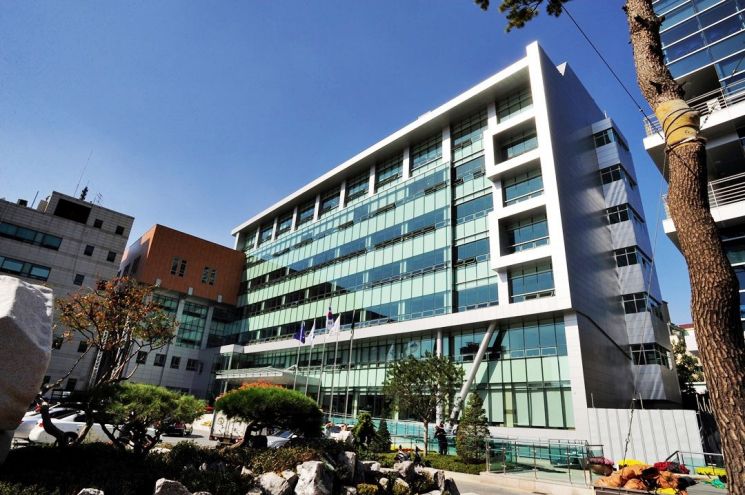
Eunpyeong-gu Implements 8th Term Organizational Restructuring… Establishes Rapid Maintenance Promotion Team and Safety Management Division
Eunpyeong-gu (Mayor Kim Mi-kyung) announced that it will carry out organizational restructuring effective January 1st next year to achieve the policy goals of the 8th term elected government.
This second restructuring in the 8th term focuses on maximizing organizational efficiency by reorganizing at the bureau and division levels. Overall, compared to before the restructuring, there is one fewer officer, two more divisions, one new business office, and five additional teams.
The main points of the restructuring plan include ▲Establishment of a disaster safety dedicated department ‘Safety Management Division’ ▲Establishment of a rapid integrated maintenance project department ‘Rapid Maintenance Promotion Team’ directly under the Deputy Mayor ▲Establishment of the ‘Eunpyeong Han Culture Museum’ business office ▲Department integration to strengthen organization and link cooperation and resident autonomy ▲Establishment of ‘Tax Administration Division’ to expand tax departments ▲Reallocation of functions between bureaus and departments.
The ‘Safety Management Division,’ which serves as the disaster safety control tower, will be newly established under the Urban Safety and Construction Bureau. Reflecting social demands following the enforcement of the Serious Accident Punishment Act and the Itaewon tragedy, it will strengthen safety accident prevention and disaster response capabilities.
The Deputy Mayor’s direct ‘Rapid Maintenance Promotion Team’ will accelerate housing maintenance schedules. Eunpyeong has about 100 redevelopment and reconstruction maintenance projects due to many low-rise old houses, attracting high resident interest. This restructuring integrates and performs maintenance projects previously handled by various departments under a dedicated team directly under the Deputy Mayor to secure rapid project feasibility.
The Culture and Tourism Division’s Museum Team will be converted into the newly established ‘Eunpyeong Han Culture Museum’ business office. This restructuring aims to strengthen expertise in operating the Eunpyeong History Hanok Museum and cultural experience facilities. It will handle cultural experience facility operations and significantly expand exhibitions and educational experience programs to meet the increased cultural demand of residents.
The ‘Cooperation Officer’ and ‘Autonomy Safety Division’ will be integrated into the ‘Resident Participation Cooperation Division.’ This will strengthen resident-centered cooperative administration and participatory budgeting functions linked with resident autonomy. To activate resident participation, it will connect resident autonomy associations and community activists to discover policies and participatory budgeting projects suitable for the region.
Existing Tax Divisions 1 and 2 will be expanded and reorganized into three departments: ‘Tax Administration Division,’ ‘Property Tax Division,’ and ‘Local Income Tax Division.’ The Tax Administration Division will oversee delinquency management, while the Property Tax and Local Income Tax Divisions will handle local tax imposition, managing the district’s tax base more systematically.
‘Resource Circulation Center Construction Promotion Team’ has been transferred under the Transportation Environment Bureau to unify the Resource Circulation Division and its affiliated bureau, and reflecting current issues such as climate change response, the ‘Environment Division’ has been renamed the ‘Climate Environment Division.’
Health center restructuring includes renaming the Health Medical Division to the Disease Control Division and the Health Branch Office to the Regional Health Division. Additionally, the Health City Planning Team and Vaccination Team will be newly established to strengthen health project planning functions and establish a disease management response system including infectious diseases.
Kim Mi-kyung, Mayor of Eunpyeong-gu, said, “We focused on laying the foundation for promoting key projects of the 8th term and ensuring residents’ safety to improve quality of life. We will leap forward as Eunpyeong, the city at the center of change, together with residents, keeping pace with rapidly changing administrative demands and policy environments.”
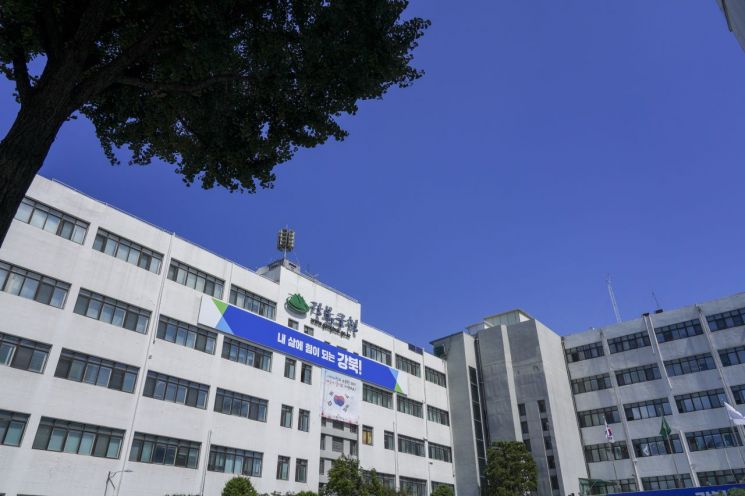
Gangbuk-gu Administrative Organization Restructuring… Establishes Public Relations Planning Team, Future Education Team, Regional Economy Division, Single-Person Household Support Team, Infectious Disease Prevention Team, etc.
Gangbuk-gu (Mayor Lee Soon-hee) is implementing an administrative organizational restructuring to respond to changes in the administrative environment and demands, maximizing organizational operational efficiency.
The district focused on three directions in preparing this restructuring plan: ▲Performance-oriented organizational composition to support the achievement and execution of the 8th term policy goals ▲Demand-centered restructuring reflecting residents’ policy demands ▲Maximizing efficiency through functional adjustment and reassignment between departments.
Due to the restructuring, from January 1st next year, Gangbuk-gu’s organizational system will change from ‘5 bureaus, 1 department, 2 officers, 30 divisions, 137 teams, and 4 health center divisions with 16 teams’ to ‘5 bureaus, 1 department, 2 officers, 30 divisions, 138 teams, and 4 health center divisions with 15 teams and 1 branch office.’
Establishment of Public Relations Planning Team and New Media Team… Strengthening Planning Functions and New Media-Based Promotion
Looking at the restructuring details, the district first changes the Public Relations Marketing Team under the Public Relations Officer to the Public Relations Planning Team, and the Video Media Team to the New Media Team.
This is interpreted as a measure to strengthen planning functions while expanding online communication channels to promote various promotional activities based on new media.
Leading Digital-Based Administrative Innovation… Reorganizing Information Support Division into Digital Information Division
In the Administration Management Bureau, to lead digital-based administrative innovation, the Information Support Division will be reorganized into the Digital Information Division. Team names will be completely changed from the existing Information Support Team, Information Communication Team, Computer Team, and Integrated Control Operation Team to Digital Policy Team, Information Communication Security Team, Information Systems Team, and Integrated Safety Control Team.
The Village Cooperation Division will be abolished from next year due to decreased administrative demand. Accordingly, cooperation support and village community tasks will be transferred to the Autonomous Administration Division, and social economy tasks to the Job Economy Division.
Additionally, to nurture future talents and develop suitable programs, the Future Education Team will be newly established under the Education Support Division, and the Administrative Support Division’s Sympathy Welfare Team and Industrial Safety and Health Team will be renamed the Labor Welfare Team and Major Accident Prevention Team, respectively. The Tourism Promotion Team and Sports Operation Team of the Culture, Tourism, and Sports Division will be renamed the Tourism Landmark Team and Sports Promotion Team.
Splitting Job Economy Division into Regional Economy Division and Job Support Division… Focusing on Regional Economic Revitalization
The Planning and Finance Bureau will be reorganized into the Planning and Economy Bureau to strengthen economic functions.
The district splits the Job Economy Division into two divisions: Regional Economy Division and Job Support Division. According to the restructuring plan, the administrative staff of the two divisions will increase by 9 to a total of 35. This appears to be aimed at more systematically promoting regional economic revitalization and job support.
Also, the Policy Development Team of the Planning and Budget Division will be renamed the Policy Development Management Team, and the Road Name Address Team of the Real Estate Information Division will be renamed the Spatial Information Team.
More Detailed Welfare System… Establishment of Single-Person Household Support Team, Adjustment of Welfare Work Administrative Functions
To implement Gangbuk-style welfare policies, the Life Welfare Bureau will be reorganized into the Welfare Life Bureau.
To provide focused customized support for the continuously increasing single-person households, the district will establish the Single-Person Household Support Team as a subordinate team of the Welfare Policy Division. This team plans to focus on various support projects for single-person households considering age, gender, and region.
Additionally, for efficient welfare service realization, the district redesigned the administrative functions of the Welfare Policy Division. The Integrated Survey Team and Integrated Management Team, which previously handled social welfare integrated surveys, will be transferred to the Life Security Division, and the Welfare Planning Team will be renamed the Welfare Policy Team.
The Life Security Division will inherit the Welfare Policy Division’s tasks and strengthen functions by also taking over housing welfare tasks previously promoted by the Senior Welfare Division.
Furthermore, the Senior Welfare Division will be renamed the Senior and Disabled Division; the Women and Family Division’s Childcare Support Teams 1 and 2 and the Birth and Multicultural Promotion Team will be renamed the Childcare Administration Team, Childcare Support Team, and Family Multicultural Team, respectively; and the Cleaning Administration Division’s Cleaning Administration Team and Work Team will be renamed the Resource Circulation Team and Urban Cleanliness Team. The Urban Cleanliness Promotion Team will be abolished and absorbed into the Urban Cleanliness Team.
Abolition of Village Cooperation Division Due to Changes in Administrative Demand… Transfer of Existing Tasks to Autonomous Administration Division, etc.
The Urban Management Bureau will adjust administrative functions and integrate and transfer similar functions according to changes in administrative demand.
The district will transfer tasks related to the abolished Village Cooperation Division to the Autonomous Administration Division and Job Economy Division, and establish an Urban Landscape Team in the Architecture Division to reflect Gangbuk-gu’s characteristics in public design architecture. The Advertising Management Team and Advertising Maintenance Team in the Architecture Division will be integrated and transferred to the Construction Management Division’s Advertising Management Team considering work functions.
The Environment Division will change team names and organizational structure to strengthen climate crisis response strategies and energy efficiency, changing the Environment Administration Team, Climate Environment Policy Team, and Water Quality Management Team to the Climate Environment Policy Team, Green Energy Team, Air Quality Management Team, and Environment Management Team.
Establishment of Infectious Disease Prevention Team at Health Center, Suyu Health Branch Office to Open in March Next Year
With the opening of the Suyu Health Branch Office established to expand health medical services and improve accessibility starting next year, the district will adjust administrative functions by transferring the Regional Health Division’s Health Care Team to the Suyu Health Branch Office. The Suyu Health Branch Office (335-1 Samyang-ro, Gangbuk-gu), newly opening at the site of the district health center’s Oriental Medicine Center, is scheduled to start operation in March next year.
Also, to prevent infectious diseases such as COVID-19, the district will establish an Infectious Disease Prevention Team as a subordinate organization of the Medical Affairs Division, and rename the Infectious Disease Management Team, which handled epidemiological investigations and confirmed case management related to COVID-19, to the Infectious Disease Response Team.
A district official said, “Considering the government’s policy of freezing organization and staffing and current office conditions, we prepared a restructuring plan that maximizes administrative efficiency without increasing the size of the organization and staff.”
This organizational restructuring plan of Gangbuk-gu will be implemented from January 1st next year.
Lee Soon-hee, Mayor of Gangbuk-gu, said, “We have carried out a large-scale organizational restructuring to establish a performance-oriented organization with execution power so that residents can feel the changes in Gangbuk-gu. Please watch the 8th term Gangbuk-gu, which will officially start next year.”
The district had previously established the Redevelopment and Reconstruction Support Team directly under the Mayor, the New Gangbuk Line Promotion TF Team, and the Municipal Children’s Specialized Hospital Construction TF Team as of August 1st, and on October 17th, it abolished the Urban Regeneration Division and established the Housing Maintenance Division through organizational restructuring.
© The Asia Business Daily(www.asiae.co.kr). All rights reserved.
![User Who Sold Erroneously Deposited Bitcoins to Repay Debt and Fund Entertainment... What Did the Supreme Court Decide in 2021? [Legal Issue Check]](https://cwcontent.asiae.co.kr/asiaresize/183/2026020910431234020_1770601391.png)

















