Biometric Pattern Technology Firms Participate in Government Projects like Regulatory Sandbox
Korean Veterinary Medical Association Negative on Biometric Identification... "Accuracy in Question"
Industry: "Low Animal Registration Rate Must Be Increased Through Biometric Pattern Recognition"
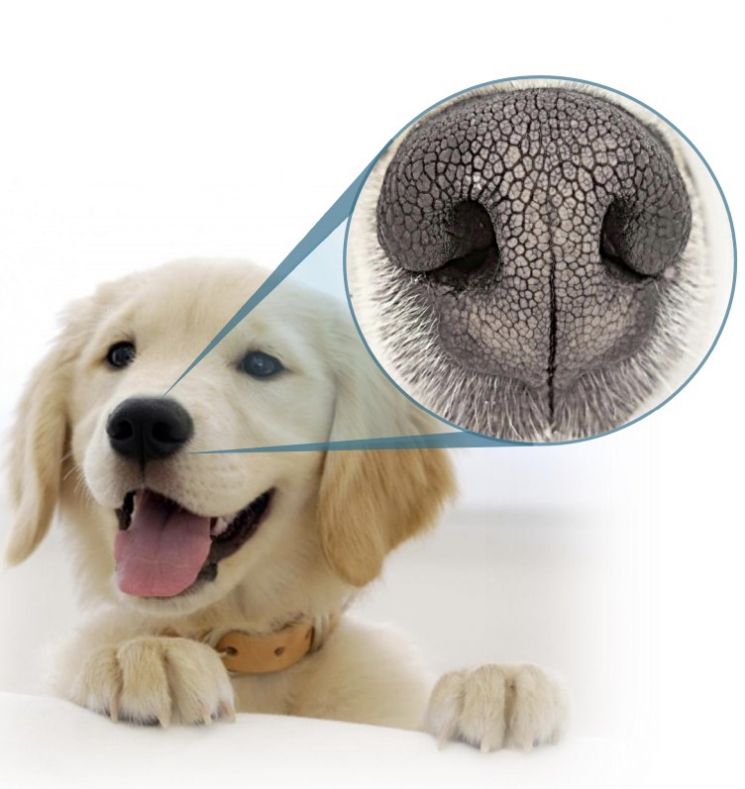
The industry is fiercely debating the technology that identifies companion dogs by their nose wrinkles (biometrics). Opinions are sharply divided between those who see it as an innovative technology that will bring new opportunities to the pet industry and those who argue that it will become 'useless' because veterinarians on the ground refuse to use it.
According to the government on the 26th, the Ministry of Science and ICT recently approved a pet registration service based on nose wrinkle recognition through a regulatory sandbox. ‘iCyLab,’ selected as a participant company in the regulatory sandbox, will enter a two-year technology verification phase using a mobile application (app) to capture the nose wrinkles of companion dogs. Since the nose wrinkle recognition method is not a registration method stipulated by law, it received approval for a special exemption for demonstration.
South Korea has been implementing an animal registration system since 2014. After applying for registration, animals must receive an implantable microchip procedure at a veterinary hospital or have an external wireless identification device attached. The problem is that the animal registration rate was only 38.6% as of 2020. This is why there are criticisms that the current animal registration method has limitations. The government has announced plans to raise the animal registration rate to 70%, the level of advanced countries, by 2024, and the Yoon Seok-yeol administration’s national agenda includes 'activation of pet insurance.' To vitalize the pet insurance market, the effectiveness of the animal registration system must be improved.
In the startup industry, iCyLab, which began research on human biometric recognition in 2000, is leading the active development of nose wrinkle recognition technology. They view nose wrinkle recognition technology as the future direction for the pet industry. Shin Min-ho, director of iCyLab, said, "If South Korea becomes the world’s first country to implement a biometric-based animal registration system, it can dominate the huge animal ID market," adding, "Welfare improvement and industry activation will be achieved through individual IDs."
Another representative of a pet company participating in the regulatory sandbox introduced, "Nose wrinkle recognition technology, which is the same as human fingerprint recognition, is a technology that can replace implantable and external microchips," describing it as "an innovative technology that possesses uniqueness, universality, and permanence." Just as human fingerprints do not change, the unique pattern of nose wrinkles does not change throughout life. He explained, "The reason for the low animal registration rate is the reluctance to implant microchips and low accessibility," adding, "Using a nose wrinkle registration device allows easy registration and will greatly contribute to increasing the animal registration rate."
 Asia Economy DB
However, the veterinary hospital industry is negative about the commercialization of nose wrinkle recognition technology. They argue that no matter how advanced the nose wrinkle technology is, if veterinarians on the ground refuse to use it, it will be nothing but useless. Kim Hong-seok, head of the policy team at the Korean Veterinary Medical Association, said, "The official position of the veterinary association is that it should be unified with implantable microchips," adding, "In a situation where animal registration must be done quickly, continuous changes in the system could cause confusion." He also pointed out, "It is difficult to say that the identification power of nose wrinkles has been academically verified," claiming, "Nose wrinkles can change if the animal suffers from disease or injury." He emphasized that "During quarantine processes between countries, companion animals are confirmed by implantable chips," highlighting that implantable chips are the international standard.
In response, a pet industry insider interpreted the issue as a matter of misunderstanding, saying, "Currently, under the Animal Protection Act, the procedure to implant microchips inside the body is only allowed for veterinarians, so there is opposition to nose wrinkle recognition." He also said, "Despite the lack of capability in nose wrinkle recognition artificial intelligence (AI) technology, many companies have emerged promoting it aggressively for investment and other reasons," adding, "There needs to be a sorting of the wheat from the chaff." In fact, startup A recently shifted the development of nose wrinkle recognition technology to a lower priority business. Although A commercialized insurance products using nose wrinkle recognition solutions, it is currently suspending operations.
The government is maintaining a cautious stance. A representative from the Ministry of Agriculture, Food and Rural Affairs, the main government department for the pet industry, said, "We will observe the process of proving the accuracy and safety of the technology during the two-year special demonstration," adding, "Based on the results, we will decide whether to reform the animal registration system or continue with the current method."
© The Asia Business Daily(www.asiae.co.kr). All rights reserved.
![Clutching a Stolen Dior Bag, Saying "I Hate Being Poor but Real"... The Grotesque Con of a "Human Knockoff" [Slate]](https://cwcontent.asiae.co.kr/asiaresize/183/2026021902243444107_1771435474.jpg)
















