Approximately 2.74 Million Visitors Over 7 Months... Interest Lower Than at Opening
Conversion to 'Art Complex' Practically Difficult, Focused on Justifying
President Yoon Seok-yeol Increasingly Uses State Guesthouse... Roadmap Expected by Year-End
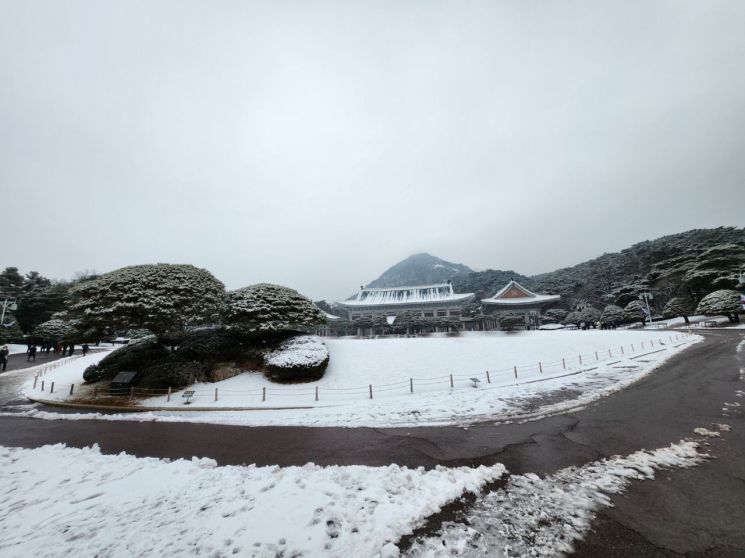
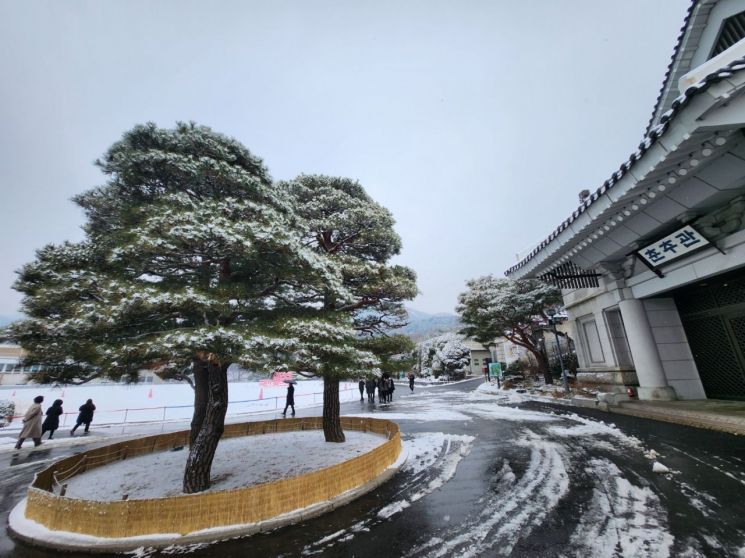
The Blue House main building features an elegant paljak (eight-ridged) roof. The triangular gable-shaped ridge and eaves that curve upward like a bowstring add to its beauty. It showcases the charm of Korean architecture, emphasizing natural lines and curves. When heavy snow piles up, as it did on the 21st, it exudes a graceful atmosphere. It reflects purity and justice, facing the sky with a dignified posture. Now, it also faces the people. It is no longer the old palace where entry was strictly prohibited. It is an open space where anyone can freely come and go. Since its opening in May, about 2,746,868 visitors have come over approximately seven months until the 19th of this month.
More Relaxed Viewing Environment, Government Growing Anxious
The driving force behind the crowds cannot be simply summarized as beautiful landscaping or architecture. All former presidents resided here, and the place is imbued with the glory and shame of history. For a while, the curtain of power sparked curiosity and interest. Visitor satisfaction is relatively high. According to a survey conducted by the Cultural Heritage Administration’s Blue House Public Opening Promotion Team on June 15, targeting 1,000 visitors aged 15 and above, 89.1% gave positive evaluations. On that day, a mother with her child said, "It’s fascinating and interesting to glimpse the lives and history of the presidents." A middle-aged man who visited with his wife said, "It’s deeply moving to see a place I only saw on the news in person," adding, "The view combined with the snowy scenery looks like an oriental painting."
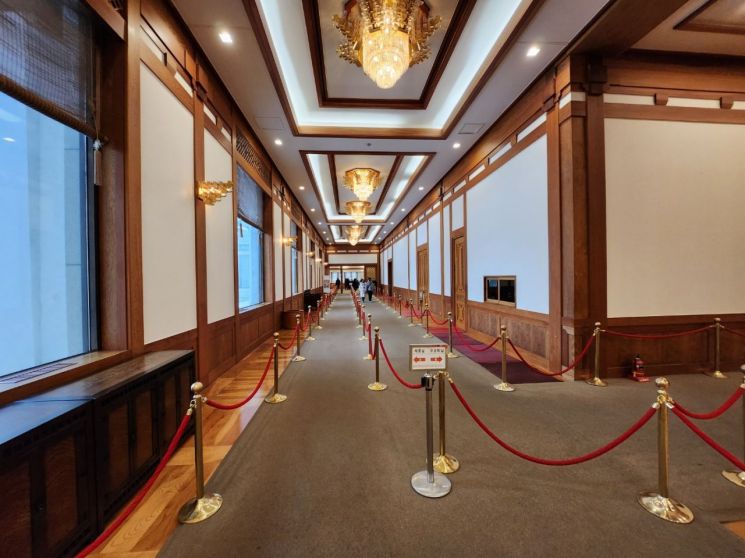
The waning public interest has contributed to the high satisfaction levels. The long waiting lines in front of the main building disappeared long ago. The crowded walking paths inside are now wide open. The concerns about damage raised at the beginning of the opening have proven unfounded as the site is quite tranquil. Several visitors agreed, saying, "There weren’t as many people as expected, so we could enjoy the visit leisurely." One guide explained, "Since two months ago, weekends are no longer crowded," adding, "It’s manageable even without a reservation system." Another guide said, "There are fewer questions from visitors, so we can respond in detail, which suggests it has reached a stable phase."
This is not welcome news for the government. The Ministry of Culture, Sports and Tourism has been promoting the transformation of the site into a complex cultural and artistic space. The so-called 'Art Complex' integrates culture and art. Minister Park Bo-gyun said, "The new Blue House is a core brand and symbolic asset of the new government," and "We will reorganize the space like the Palace of Versailles in France." There were two main objectives: long-term popularity through repeat visits relying on diverse content placement, and expanding interest in culture and art. The former is urgent for now. There is no suitable catalyst to induce visitors to return. Large-scale events boldly announced have been postponed repeatedly, and only makeshift measures have been presented.
Failed Exhibition Plans... Scrambling to Fill the Quota
The Ministry of Culture, Sports and Tourism is holding a special literary exhibition titled "Yi Sang, Yeom Sang-seop, Hyun Jin-geon, Yoon Dong-ju, Strolling Through the Blue House" on the second floor of the Chunghugwan until the 16th of next month. When twenty visitors to the main building were asked if they knew about it, the only answer was "No." This was a natural result. No signboards, posters, or banners were placed at the main entrance where most visitors enter. The same was true for major buildings and walking paths. Promotional materials were concentrated only around Chunghugwan. This was quite different from the first exhibition, "Special Exhibition of Disabled Artists," which ended successfully on September 19. During that twenty-day period, about 70,000 visitors came to the second floor of Chunghugwan. Twenty-five of the sixty submitted works were sold.
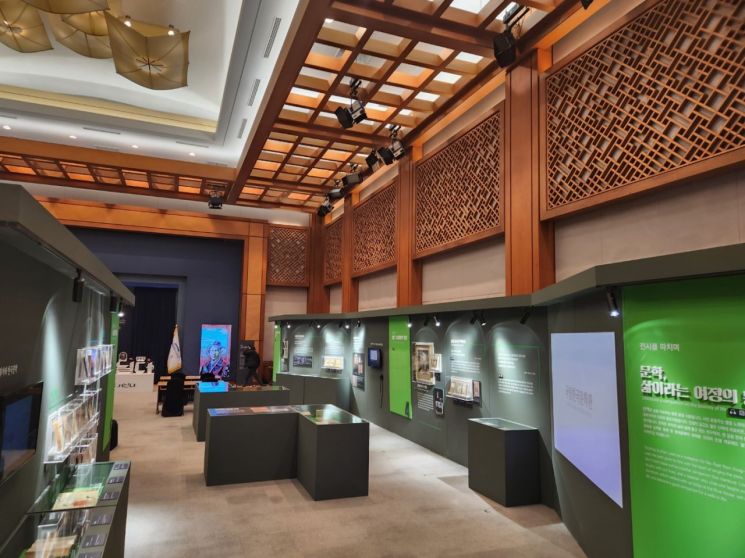
The literary exhibition is quite different in nature. It is not intuitive to appreciate and is unfriendly to foreigners, children, and adolescents. Without solid information on modern and contemporary literature, it cannot be fully understood. The rare materials that catch the eye include a photo of Yi Sang, Park Tae-won, and Kim So-woon taken together around 1934?1935. The Ministry of Culture, Sports and Tourism and the National Korean Literature Museum explained that the exhibition was planned based on the fact that the featured writers used Seochon near the Blue House as their main base and left representative works there. However, there was no related explanation at the press conference, and the exhibition description was simplified to phrases like "Yeom Sang-seop of Chebu-dong, Hyun Jin-geon of Buam-dong, Yi Sang of Tongin-dong, Yoon Dong-ju of Nusaeng-dong." An anonymous insider expressed regret, saying, "They should have handled the connection between this area and the writers and their works more delicately, such as by placing old photos of the Blue House area to provide a unique spatial sense." Another insider clicked their tongue, saying, "It’s merely a simple listing of materials owned by the National Korean Literature Museum."
A three-dimensional composition was impossible from the start due to the limited size of the Chunghugwan second floor (450㎡). The Sejong Room (335㎡), Chungmu Room (355㎡), and Inwang Room (216㎡), which the Ministry of Culture, Sports and Tourism designated as exhibition spaces, face the same situation. Since these were not built as art galleries, internal modifications are inevitable. Issues such as damage to the original form may arise during the installation of temperature and humidity control functions and separate lighting. The Ministry of Culture, Sports and Tourism, facing various obstacles, failed to implement the initially announced plans. A representative example is the "Blue House Collection Special Exhibition" planned for last fall. It was to feature about thirty works by twenty-four Korean painting masters including Heo Baek-ryeon, Jang Woo-sung, Lee Sang-beom, Kim Ki-chang, and Seo Se-ok, but was canceled for various reasons. An insider said, "They tried to convert the State Guest House, which was used for events for important foreign guests, into a special exhibition hall, but it seems difficult to proceed at present."
President Visits State Guest House... Museum Plans Become Difficult
Visitors on that day could not enter the State Guest House because the Emergency Economic and Livelihood Meeting combined with the National Economic Advisory Council was being held. Since President Yoon Suk-yeol attended the event, officials were paying special attention to security. Starting with a state banquet with Vietnamese President Nguyen Xuan Phuc on the 5th, President Yoon visited the State Guest House roughly every three days for eighteen days until the 22nd. On the 8th, he hosted a banquet for the Qatar World Cup national soccer team, and on the 15th, he participated in a national agenda review meeting with 100 citizen panelists. Large-scale official events such as a youth dialogue (20th) and a conversation with future scientists (22nd) were also held. The plan to build a new State Guest House near the Yongsan Presidential Office was canceled, and the frequency of use increased in line with the recent phase of expanding direct communication.
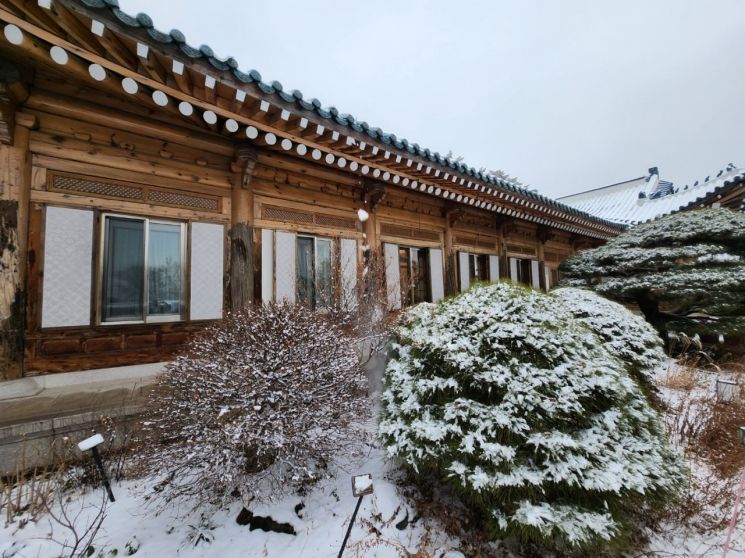
The State Guest House is a two-story stone building. Built in 1978, it is old but was renovated and its facilities greatly improved during the previous administration. The interior hall is the largest among Blue House buildings at 496㎡. The ceiling height reaches 10 meters, making it suitable for hosting events befitting the national dignity. President Yoon also frequently visits Sangchunjae, which was used as an unofficial meeting room. On the 6th, he hosted a tea gathering for President Phuc, and on the 9th, he invited economic leaders for an unofficial dinner. The Presidential Office stated, "It is meaningful in terms of inheriting history and tradition and reutilizing practical spaces," and "We plan to use the State Guest House and others practically to conduct events befitting the national dignity."
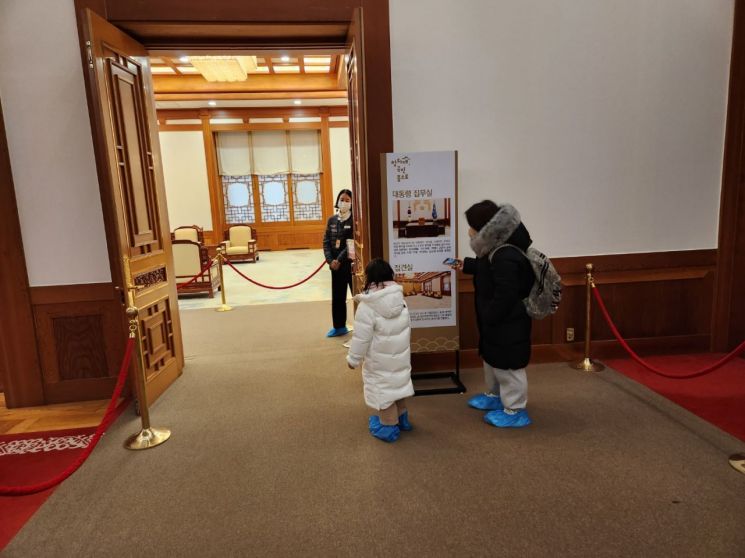
The Ministry of Culture, Sports and Tourism, which planned to convert the State Guest House into a special exhibition hall, is perplexed by President Yoon’s changed behavior. Officials uniformly said, "It’s a difficult situation to answer," and remained tight-lipped. An external official said, "The 'Blue House Collection Special Exhibition' and 'Lee Kun-hee Collection' announced by Minister Park Bo-gyun are off the table," adding, "Other buildings will be designated as viewing areas and routes considering preservation of the original form and existing character, so it will be difficult to convert them into museums or 'Presidential Historical and Cultural Spaces.'" He emphasized, "Using only Chunghugwan, which is outside the Blue House and limited to the second floor, has limitations for holding various exhibitions." In fact, the Ministry of Culture, Sports and Tourism allocated 3.6 billion won for art exhibitions next year, far less than the 6.4 billion won for spreading K-music or 6 billion won for renovating Sarangchae and operating the information center.
Which Institution Is Suitable for Management...
The government launched the Blue House Management and Utilization Advisory Group in July and appointed former Ewha Womans University President Lee Bae-yong as its head. Based on meetings of experts in history, culture, art, content, tourism, landscaping, and architecture, on-site verification, and public opinion, a roadmap is planned to be announced as early as the end of the year. The museum utilization plan announced by the Ministry of Culture, Sports and Tourism has been effectively excluded from priority. Since the Blue House is a historic site where the government’s footsteps after liberation are imprinted, the direction has been set to utilize it while preserving the original form of major buildings as much as possible. Rather, if meaningful results come from the "Gyeongbokgung Rear Garden Basic Survey Research Project" commissioned by the Cultural Heritage Administration and conducted by the Korean Architectural History Society, more weight will be given to related investigations. The Blue House site flourished as a secondary palace (a detached palace outside the capital) during the Goryeo King Sukjong era but disappeared from history for a while after the abolition of the Three Capitals System during King Chungnyeol’s reign. After the founding of Joseon and the construction of Gyeongbokgung Palace, it was developed as a rear garden and used as a royal resting place.
The entity that will manage the Blue House next year will also be decided through the roadmap. Minister Park Bo-gyun stated, "In the first phase, when it was opened to the public, the Cultural Heritage Administration and the Blue House Management Secretariat worked together, but in the second phase, which aims to make it a living space, the Ministry of Culture, Sports and Tourism will take the lead." The plan was to create the best exhibition space by building a cooperative system with private experts without establishing a new organization. Several insiders agreed, saying, "Since it has become difficult to use it as an exhibition space, it is better to continue management by the Cultural Heritage Administration, which has accumulated know-how." One insider emphasized, "The Blue House has great value not only in its various buildings but also in its aesthetic assets such as gardens. As long as visitors continue to come, continuous care must be given to cultural properties and architectural assets like Chinryugak, Ounjeong, Chilgung, the Stone Seated Buddha statue, and the group of old trees designated as natural monuments." Another insider said, "Even if the Ministry of Culture, Sports and Tourism leads management, it will frequently reach out to the Cultural Heritage Administration," and urged, "I hope they focus on long-term tasks rather than immediate results."
© The Asia Business Daily(www.asiae.co.kr). All rights reserved.
!["The Woman Who Threw Herself into the Water Clutching a Stolen Dior Bag"...A Grotesque Success Story That Shakes the Korean Psyche [Slate]](https://cwcontent.asiae.co.kr/asiaresize/183/2026021902243444107_1771435474.jpg)


















