2022 Revised Curriculum Confirmed... First Update in 7 Years Since 2015
Credit-Based Elective Curriculum Established... Graduation Requirement Set at 192 Credits
Middle School Free Semester System Reduced... Enhanced Korean Classes for 1st-2nd Grade Elementary Students
[Asia Economy Reporter Yoo Byung-don] With the new curriculum finalized, the foundation has been laid for the full implementation of the high school credit system. Various new subjects will be introduced in the high school curriculum related to the high school credit system, which will be applied from 2025. Additionally, the required credits and their scope will also be expanded.
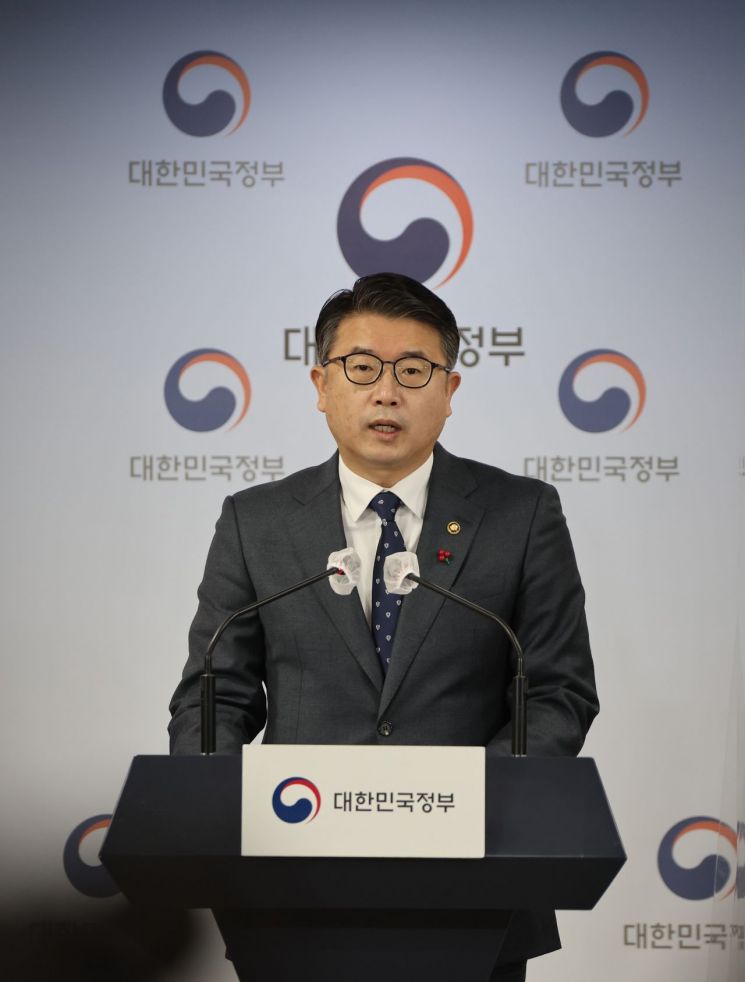
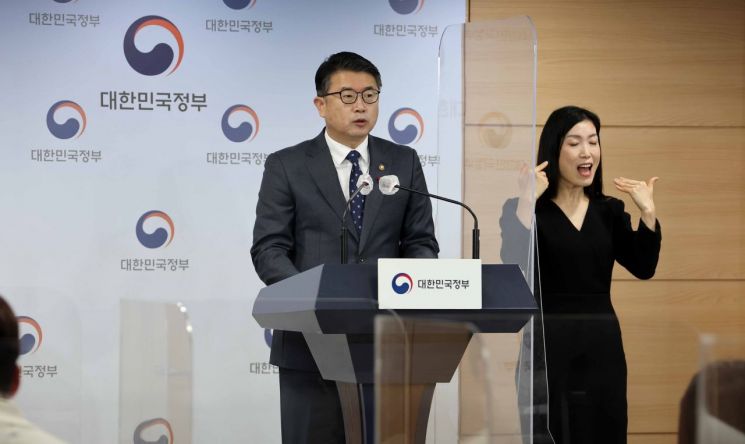
On the 22nd at 10:30 a.m., the Ministry of Education finalized and announced the "2022 Revised Curriculum" at the Government Seoul Office. This is the first time in seven years since 2015 that the Ministry has revised both the general and detailed curriculum.
On this day, Deputy Minister Jang Sang-yoon of the Ministry of Education stated, "We have systematized competencies such as learner autonomy and creativity to equip students with the ability to respond to future societal changes," adding, "The main directions include flexible curriculum operation by region and school, student-tailored education, and improvement of classroom instruction based on digital and artificial intelligence."
The revised curriculum is expected to be applied from the 2024 academic year after the Minister of Education's official announcement by the end of December, followed by textbook development, approval, and selection processes. It will be reflected starting with grades 1-2 in elementary school in 2024, grades 1-4 in elementary, grade 1 in middle school, and grade 1 in high school in 2025, grades 1-6 in elementary, grades 1-2 in middle school, and grades 1-2 in high school in 2026, and all grades by 2027. Until the 2022 revised curriculum is applied, the current 2015 revised curriculum will remain in use.
The Ministry of Education also plans to finalize the college entrance system reform plan according to the new curriculum by February 2024. The reform plan will be applied starting with the 2028 academic year entrance exam for students currently in the first year of middle school.
Preparation for Full Implementation of the High School Credit System... Credit-Based Elective Curriculum
First, unlike the elementary and middle school curricula, which are based on class hours, the high school curriculum is structured as a credit-based elective curriculum considering the full application of the high school credit system. The high school credit system allows students to select subjects they want to take and graduate upon earning the required credits; it is currently implemented in some high schools. The Ministry of Education is promoting a plan to fully introduce the high school credit system by applying the new curriculum from the 2025 academic year when current middle school first-year students enter high school.
Upon introduction of the high school credit system, the credits students must complete to graduate are set at 192 credits. One credit corresponds to 16 sessions per semester, each session lasting 50 minutes. Each subject is assigned a basic 4 credits per semester (3 credits for physical education, arts, and liberal arts). Students must complete 8 credits each in Korean, Mathematics, English, and Integrated Social Studies, and 10 credits in Science. The required credits for Korean History (6 credits), Physical Education and Arts (10 credits each), Technology & Home Economics, Information, Second Foreign Language, Chinese Characters, and Liberal Arts (16 credits each) remain at current levels.
Students take common subjects until the first year for foundational literacy, including Common Korean 1 & 2, Common Mathematics 1 & 2, Common English 1 & 2, Integrated Social Studies 1 & 2, Integrated Science 1 & 2 (all totaling 8 credits), Korean History 1 & 2 (6 credits), and Science Inquiry Experiment 1 & 2 (2 credits). However, from the second year, students can choose subjects from General Electives, Career Electives, and Convergence Electives according to their career path or aptitude.
Currently, high school subjects consist only of common subjects, general electives, and career electives, but the new curriculum introduces convergence electives to expand students' choices and enable in-depth learning. Convergence electives focus on integrating themes within or across subjects and applying them to real life. Students can take elective subjects not offered at their own school through online and offline joint curricula with other schools. Classes linked with local universities or research institutions can also be taken.
The new curriculum stipulates that the credits earned in Korean, Mathematics, and English subjects should not exceed 81 credits to ensure balanced learning across various subjects. To earn credits, students must meet minimum attendance and academic achievement standards. The Ministry of Education plans to provide detailed guidelines regarding failure to complete courses in the future.
With the introduction of the high school credit system, high school internal grades will shift from the current relative evaluation system with 9 grades to an absolute evaluation (achievement evaluation) system. Initially, the Ministry planned to apply absolute evaluation only to elective subjects and use a dual system of achievement evaluation and relative 9-grade evaluation for common subjects mainly taken in the first year. However, it is now considering switching the first year to absolute evaluation as well.
Middle School: Linked Operation of Free Semester and Career-Connected Education
The middle school curriculum is operated in connection with the free semester system and career-connected education. The current free semester system is conducted for one or two semesters, but to support middle school adaptation, schools will be allowed to autonomously choose one semester in the first year to operate the free semester.
To promote student-centered classes, the current four activities (theme selection, career exploration, arts and physical education, clubs) are condensed into two activities (theme selection and career exploration). Career-connected education supports preparation for academic and career planning needed at the middle school stage, including understanding the high school curriculum (credit system, elective subjects, etc.) and concretizing desired career paths.
School sports club activities will be organized as creative experiential club activities without reducing class hours, and the mandatory organization time will be reduced to operate 34 hours annually per grade (total 102 hours) each semester.
Middle school autonomous school hours are secured at one week’s worth of class time per semester based on 34 weeks annually, and schools can decide the content of subjects during this time.
Increased Digital Education in Elementary and Middle Schools, New Elective Subjects in High School
The number of information technology class hours in elementary and middle schools will be doubled, and various elective subjects will be newly introduced in high schools according to students’ career paths. In elementary school, the information education unit hours within the 'Practical Arts' subject for grades 5-6 will increase from 17 hours to over 34 hours, and in middle school, the 'Information' subject hours will increase from 34 hours to over 68 hours.
In high school, in addition to the 'Information' subject, new career elective subjects such as 'Introduction to Artificial Intelligence,' 'Data Science,' and 'Software and Daily Life' will be introduced. In the Mathematics curriculum, the 'Matrices and Operations' unit, mainly studied by first-year high school students, has been reinstated in the common subjects.
To strengthen Korean language education, the Korean language hours for grades 1-2 in elementary school will increase by 34 hours from 448 to 482 hours. Given the growing importance of media literacy, a 'Media' domain will be added to Korean language subjects in elementary and middle schools, and new elective subjects such as 'Literature and Video' and 'Media Communication' will be introduced in high school Korean language.
The new curriculum also strengthens experiential and practical safety education in response to the Itaewon tragedy. For grades 1 and 2 in elementary school, safety education hours will be maintained at 64 hours, but safety education currently taught in the 'Safe Living' subject will be linked with 'Right Living,' 'Wise Living,' and 'Joyful Living' subjects for integrated learning.
From grade 3 in elementary school through high school, experiential and practical education elements have been enhanced by incorporating safety rules for densely populated environments and crisis response skills into related subjects such as physical education, music, art, and health.
In English, the classification by skills such as listening, speaking, reading, and writing has been replaced with two domains: English comprehension and English expression. Practical English communication skills will also be strengthened.
In social studies, achievement standard verbs such as 'understand' and 'explore' have been improved to enable classes that seek diverse answers. Science learning content has been reorganized to connect with topics like climate change, infectious diseases, and career paths instead of segmented learning. Rather than studying physics, chemistry, biology, and earth science separately, students will learn through themes such as 'Infectious Diseases and Healthy Living,' 'Climate Change and Our Life,' 'Resources and Energy,' and 'Science and My Career.'
© The Asia Business Daily(www.asiae.co.kr). All rights reserved.


















