[Seoul District News] Lee Gijae, Yangcheon-gu Mayor, Proactive Response Including Protest Visit to Ministry of Land and Invitation of Minister for Meeting ▲ Designation and Announcement of Noise Control Areas Every 5 Years, Expansion from 39,575 to 40,030 Households Next Year ▲ Continuous Negotiations on Residents' Requests Such as Reduced Aircraft Operation Hours and Altitude Restrictions ▲ Property Tax 40% Reduction Ordinance for Airport Noise Damage Areas Stalled by District Council ... Gangseo-gu Installs 250 Solar-Powered LED Building Number Signs in Hwagok 6-dong & Absorbs Solar Heat by Day, Lights Up at Night
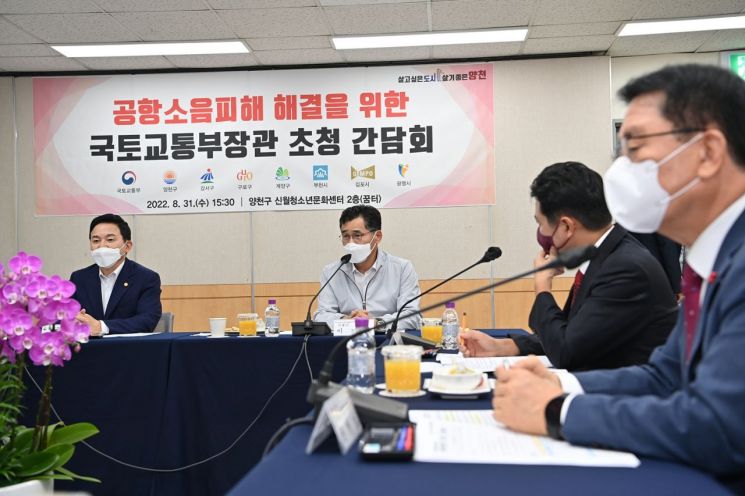
[Asia Economy Reporter Park Jong-il] Yangcheon-gu (Mayor Lee Gi-jae) announced that the enforcement decree of the "Act on Prevention of Airport Noise and Support for Noise Countermeasure Areas," which includes the substantial expansion of airport noise countermeasure areas, passed the Cabinet meeting on the 20th.
As a result, starting next year, the number of households in the airport noise countermeasure areas is expected to increase by about 400 to 500 households, and the population is also expected to expand by approximately 1,580 people.
On the other hand, the ordinance proposal for a 40% reduction in property tax, which the district intended to proactively promote, is facing difficulties due to the district council's failure to submit it.
This is due to the partial revision of the enforcement decree of the "Act on Prevention of Airport Noise and Support for Noise Countermeasure Areas," which was legislatively announced by the Ministry of Land, Infrastructure and Transport on November 2, following the change and implementation of the airport noise measurement unit from WECPNL to Lden㏈, which reflects residents' perceived noise more comprehensively, effective January 1, 2023.
Yangcheon-gu's prompt response played a significant role in the expansion of the airport noise countermeasure areas. Initially, the Ministry of Land's noise impact survey service predicted a significant reduction of about 3,000 households in the airport noise countermeasure areas due to decreased air travel demand caused by COVID-19.
However, Mayor Lee emphasized that the decrease in air travel demand due to COVID-19 was a temporary phenomenon and strongly argued against the irrationality of the noise impact measurement method. Through active and proactive responses, including a protest visit to the Ministry of Land, Infrastructure and Transport and hosting a meeting with Minister Won Hee-ryong on August 31, Yangcheon-gu successfully achieved the expansion of the noise countermeasure area.
Meanwhile, at the resident briefing session on the noise impact of Gimpo Airport hosted by the Seoul Regional Aviation Office on the 1st, it was announced that the number of households in Yangcheon-gu's noise countermeasure area is estimated to increase from 39,575 to about 400-500 households, totaling 40,030 households, and the population is expected to rise from 88,144 to approximately 89,724 people.
Mayor Lee Gi-jae of Yangcheon-gu said, "It is truly fortunate that the feared reduction of the airport noise countermeasure area did not occur and instead some expansion took place. However, there is still a gap between the psychological damage residents actually feel and the system, so we will continue to negotiate residents' demands such as reducing late-night flight hours and easing altitude restrictions to expand noise-affected areas and secure substantial additional support."
Additionally, the district plans to proactively implement a 40% property tax reduction for single-home owners, support precise hearing tests, establish an airport noise monitoring system, and prepare reasonable compensation plans and solutions.
Meanwhile, the 40% property tax reduction policy, a key pledge of the 8th local government, is facing difficulties. The ordinance must pass the district council's review, but it has not even been submitted to the standing committee. In response, the district held public hearings on the 12th and 13th in Sinwol 3, 4, 6, and 7-dong, explaining the necessity of the ordinance and listening to various opinions from about 450 local residents.
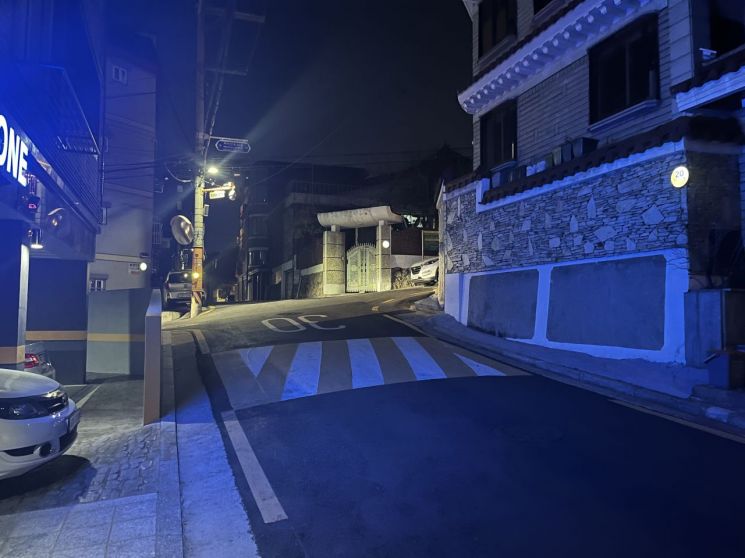
Gangseo-gu, Seoul (Mayor Kim Tae-woo) replaced and installed 250 general building number plates in the alleys of Hwagok 6-dong, Gangseo-gu, with solar-powered LED building number plates featuring a moonlight pattern.
Building number plates are facilities that must be attached to all buildings, displaying the building number along with the road name address.
The "solar-powered LED building number plate" absorbs solar energy during the day to charge power and lights up at night, minimizing power consumption with an eco-friendly method that allows semi-permanent use.
Especially, the "moonlight pattern," first devised by a Seoul autonomous district, emphasizes traditional beauty in its design and provides psychological stability.
Through this, pedestrians can easily recognize addresses and building numbers even at night, and the lighting effect brightening dark alleys is expected to alleviate anxiety on the way home and prevent crime, according to the district.
The district supports the installation of "autonomous building number plates," which can be freely designed according to building characteristics, unlike standard building number plates, and promotes the activation of road name addresses in daily life and the creation of a beautiful urban landscape through the replacement with solar-powered LED building number plates.
Mayor Kim Tae-woo said, "The solar-powered LED building number plates installed in densely populated residential areas are expected to help create a safe walking environment by aiding quick location identification in emergencies," adding, "We will continue to strive for meticulous administration that residents can feel firsthand and work to create a safe environmental city."
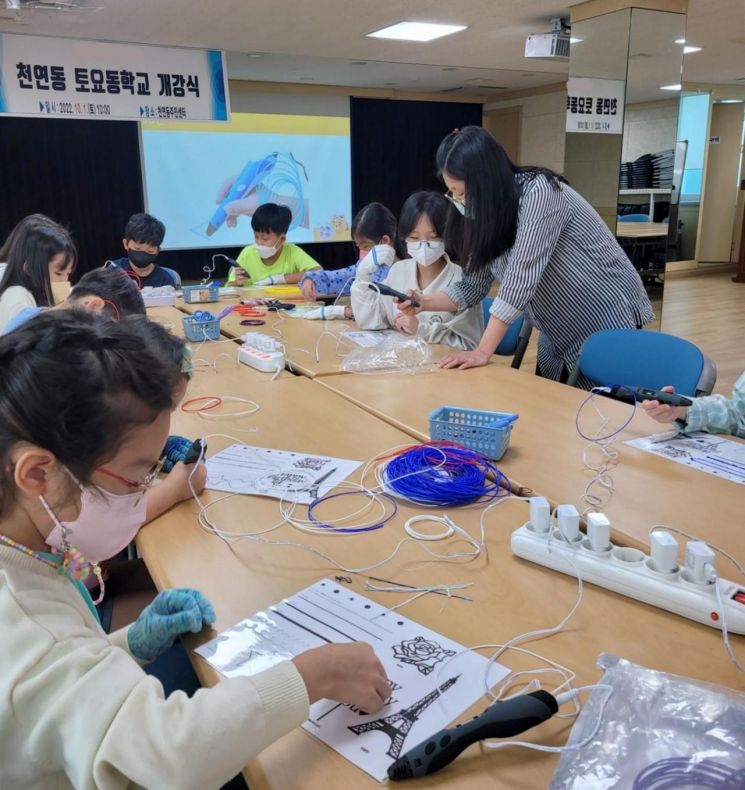
Seodaemun-gu (Mayor Lee Sung-heon) announced on the 21st that it was recently selected as a "2023 Future Education District" in a competition conducted by the Ministry of Education.
Accordingly, the district will establish a sustainable educational cooperation system with the education office and receive an annual project fund of 100 million KRW from the Ministry of Education to develop excellent educational models suited to local characteristics.
The district was selected as one of only two future education districts among Seoul's autonomous districts next year, recognized for establishing education councils by neighborhood and operating Saturday neighborhood schools and Snail Schools.
Seodaemun-gu established "education councils by neighborhood," composed of residents, teachers, parents, and public officials, and operated "Saturday neighborhood schools" using community center spaces.
Additionally, it opened "Snail Schools" outside of regular schools, utilizing local human and material resources to provide experiential programs such as woodworking, pottery, oriental painting, and art therapy to enhance youth self-esteem and relationship building.
Furthermore, it promoted programs like the All-Children Experience Festival with parents and support projects for school grade transitions.
As a future education district, Seodaemun-gu plans to expand support to strengthen children's and youth's autonomous activity capabilities and build a local educational cooperation ecosystem to create an educational environment where they can joyfully learn and dream.
Mayor Lee Sung-heon said, "We will operate a demand-oriented, customized future education district to ensure that no child or youth is left behind and that everyone is happy in Seodaemun-gu."
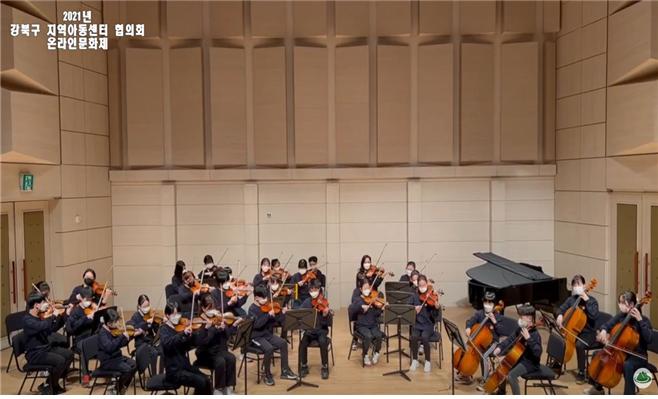
Buk-gu (Mayor Lee Soon-hee) will hold the "15th Regional Children's Center Children's Culture Festival," showcasing children's talents, on the 23rd.
Hosted by the Gangbuk-gu Regional Children's Center Council (Chair Kim Kyung-hwa) and supported by Gangbuk-gu, the Children's Culture Festival is an event for children using regional children's centers to present their talents. It was prepared to reflect on the achievements of children using regional children's centers over the past year and to enhance their self-esteem through talent presentations.
This year's festival, held online and non-face-to-face, will involve about 480 children from 21 regional children's centers in Gangbuk-gu. The council plans to film children's performances and works and post them on the Gangbuk-gu YouTube channel on the 23rd (Friday).
The council has prepared a variety of performances, including acoustic guitar, violin, samulnori (traditional Korean percussion), string duets, Nanta (percussion performance), and choir.
Additionally, artworks created by children over the year at regional children's centers, such as integrated art, clay, pottery, 3D works, keyrings, and napkin art, will be exhibited online.
The video of the 15th Children's Culture Festival will be available for viewing on the Gangbuk-gu YouTube channel for one year starting from the 23rd.
The district expects that the Children's Culture Festival will not only increase satisfaction among children using regional children's centers but also activate village care projects through the promotional effect of care institutions.
Mayor Lee Soon-hee of Gangbuk-gu said, "The Children's Culture Festival is an opportunity to see how well children have grown in regional children's centers that provide protection, education, and care services," adding, "We will continue to develop various policies that allow children to be trusted and entrusted and to fully blossom their talents."
© The Asia Business Daily(www.asiae.co.kr). All rights reserved.



















