[Seoul District News] Yongsan-gu, Safety Sector Reform as Part of Follow-up Measures after 10.29 Disaster ▲ Implementation of 26 Tasks Including Expansion of Disaster Prevention Personnel and Installation of Intelligent CCTV ▲ Integrated Control Center to Switch from Outsourcing to Direct Management from January ... Gwanak-gu Establishes Safety Response System for Unhosted Events and Crowd Gatherings ▲ Selected Sillim Intersection, Sharosugil, Gwanaksan, and Byeolbitnaerimcheon as Major Crowd Gathering Areas ▲ CCTV Integrated Control Center Operates Joint Civil-Government Response System with Police, Fire Department, and Volunteer Crime Prevention Teams ▲ On Christmas and New Year's Eve, Gwanaksan Sunrise Viewing Event
[Asia Economy Reporter Park Jong-il] Yongsan-gu (District Mayor Park Hee-young) is significantly expanding disaster prevention personnel and utilizing artificial intelligence (AI) technology to monitor crowd density in highly congested areas in real time.
The Integrated Control Center, which had been operated under a service contract system, will be converted to direct management starting in January.
This is a key part of the "Yongsan-gu Comprehensive Improvement Plan for Safety Accident Prevention," established as a follow-up measure to the October 29 disaster. The district has decided to undertake a comprehensive reform of its administration in the field of safety.
First, the district will improve the operation of the Comprehensive Situation Room (Disaster Safety Situation Room) to enable faster response to disaster situations. Manuals and reporting systems have been revised, and disaster management training for staff has been strengthened. In the new year, eight dedicated disaster and safety management personnel (fixed-term public officials) will be hired. Their working hours will cover weekday nights and holidays, and their duties will include receiving and assessing disaster situations and sending disaster alert messages.
The number of disaster safety public officials will increase from one to three. Currently, the average number of disaster safety personnel in Seoul’s 25 autonomous districts is 1.7. The district established a "Partial Amendment Plan for Staffing Rules" at the end of last month, which will be implemented as of January 1 next year.
The Integrated Control Center will switch to direct management from the new year to strengthen accountability for control operations. The number of personnel will increase from 12 to 16. Through training and drills for emergency situations, the professionalism of control operators will be enhanced, and regular inspections will be conducted.
Additionally, AI technology will be used to monitor crowd density in highly congested areas in real time by installing 10 to 30 "Intelligent Closed-Circuit (CCTV)" cameras during the first half of next year. In case of crowding, the district is considering issuing warning broadcasts via CCTV speakers and displaying warning messages on LED electronic boards. District office and community center officials will patrol alongside residents, responding to crowd density levels (caution, alert, critical) by maintaining order and sending disaster alert messages if necessary.
The district has also strengthened noise regulations around the Hamilton Hotel area. Through meetings with merchant associations, it requested compliance with self-imposed noise standards and the formation and operation of voluntary inspection teams. During festivals and commemorative days with large crowds, the district’s enforcement team will conduct intensive crackdowns. The district has also requested amendments to related laws to regulate the installation of external loudspeakers at business sites.
Inspections of illegal buildings in crowded areas, which began at the end of last month, will continue until May next year. In the first phase, three areas including Hannam Five-way Intersection and Samgakji Station vicinity will be prioritized, followed by inspections around Namyeong Station and Sookdae Entrance Station. Habitual illegal buildings for commercial purposes will face strict measures: warnings upon the first correction order and prosecution upon the second. Six illegal buildings near the accident site have already been corrected.
Furthermore, the district will carry out projects such as establishing a disaster relief system, safety management of welfare facilities for the disabled, elderly, children, and youth, safety inspections of multi-use facilities, special inspections of food service establishments, and CPR education and promotion. On the 20th, disaster prevention experts will be invited to provide training to about 180 staff members from the district’s safety and disaster response departments to enhance disaster prevention and response capabilities.
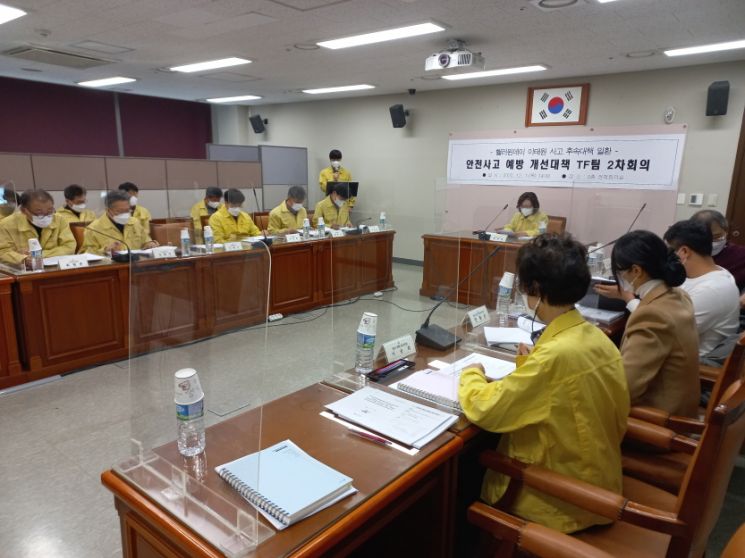
At the beginning of last month, the district formed a task force (TF) team for safety accident prevention improvement measures, consisting of the district mayor, deputy mayor, heads of related departments, police, fire officials, and private experts, and has held two official meetings.
Through this, 26 tasks under six major policies were finally selected.
The six comprehensive measures include: ▲ Formation and operation of a disaster response task force and strengthening of control center functions ▲ Establishment of disaster relief systems and safety management of welfare facilities ▲ Prevention of safety accidents at cultural and sports events and noise regulation around Hamilton Hotel ▲ Strengthening correction measures for illegal buildings and establishing safety standards for street fronts ▲ Crisis management response in crowded areas and inspection of various facilities ▲ Special inspections of food service establishments and enhancement of CPR education.
Park Hee-young, Mayor of Yongsan-gu, emphasized, “Through the establishment of plans, we will actively lead cooperation systems with related organizations as well as make our own efforts to prevent accidents. Although we cannot solve all problems at once, we will find and immediately implement what can be done with an open mind, and we will also make thorough preparations for the year-end crowds.”
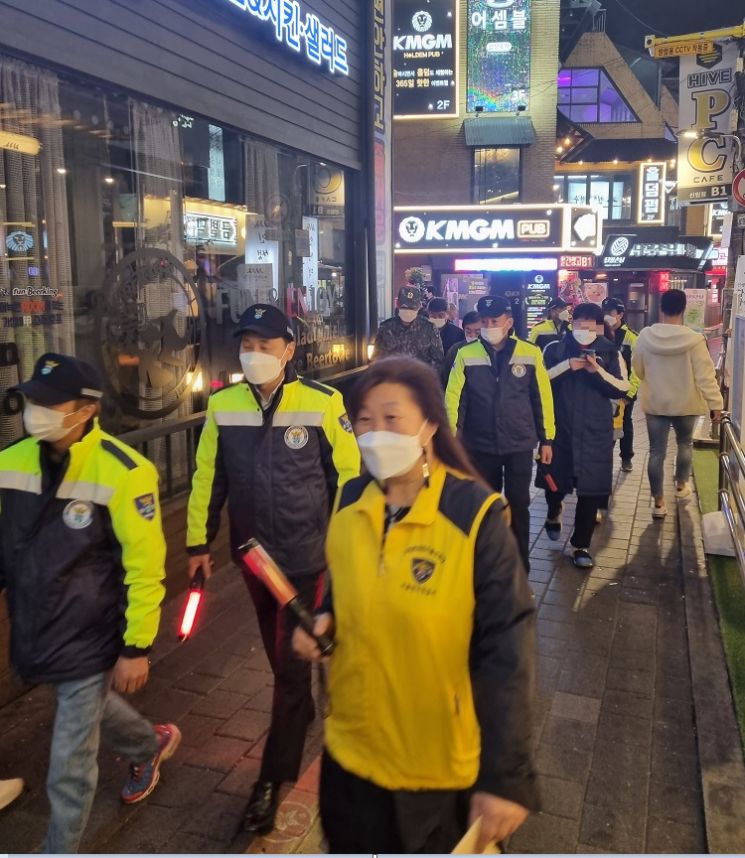 The public, private, military, and police sectors are jointly inspecting safety hazards in narrow alleyways and other areas.
Gwanak-gu (District Mayor Park Jun-hee) has established a "Safety Management Plan for Crowd Gatherings and Large-scale Events Without Organizers" to prevent a second Itaewon disaster and will activate the response system during the upcoming Christmas and year-end holidays to ensure the safety of residents.
The district first analyzed big data from the Seoul City Urban Data System and conducted on-site investigations. Based on the results, it selected major crowd gathering areas such as Sillim Intersection, Sharosugil, Gwanaksan Mountain, and Byeolbitnaeruncheon (Dorimcheon Stream), and established a safety management response system involving cooperation between police, fire services, volunteer patrols, and volunteer disaster prevention teams.
Through this response system, safety measures will be established and activated for events without organizers, large crowds expected during Christmas, year-end holidays, and large-scale sports event cheering.
The response system is subdivided into prevention and preparation, crisis occurrence, and response and recovery stages. During the prevention and preparation stage, the Gwanak-gu Integrated Control Center conducts 24-hour CCTV monitoring to quickly grasp on-site situations. On-site, joint patrols by police, volunteer patrols, and others are conducted to prevent and prepare for crowd gatherings.
Specifically, when crowd density reaches 4 people per square meter, the Integrated Control Center issues caution announcements, and when it reaches the critical threshold of 5 people per square meter, the district office, police station, and fire station are immediately notified. The dedicated Safety Management Division then sends disaster alert messages and urgently distributes action guidelines to the relevant disaster safety headquarters and community centers to ensure coordinated action.
Additionally, illegal buildings, street obstructions, and illegal parking that hinder crowd movement and emergency vehicle access are preemptively cracked down on to secure wide passageways. Construction site facilities are also inspected to prevent accidents caused by falls or falling objects, and major roads and especially sidewalks are checked in advance.
From the 21st to the 24th, before Christmas Eve, and from the 28th to the 31st, before New Year’s Eve, patrols will be conducted around Gwanaksan Mountain’s sunrise viewing spots, Sillim Intersection, and Sharosugil areas to inspect illegal buildings, street obstructions, construction sites, and other potential safety hazards.
Meanwhile, following the college entrance exam period and during the four days of the Qatar World Cup matches, a total of 280 personnel?including 113 public officials, 44 police officers, and 123 volunteer patrol and disaster prevention team members?were deployed to operate the safety management response system.
Park Jun-hee, Mayor of Gwanak-gu, said, “Starting with the establishment of a safety management response system for events without organizers and crowd gatherings, we will focus the district’s disaster response capabilities on preventing safety accidents in blind spots. We will do our best to ensure residents can have a safe Christmas and year-end holiday.”
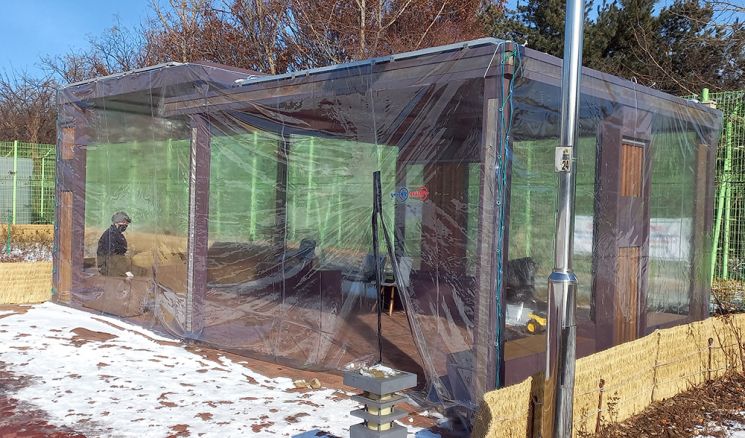 Dongjak-gu installed windbreaks on shade shelters so that residents can use the park warmly and comfortably during the winter. The photo shows the installation of windbreaks on the pergola next to the lawn field at Daebang Park. Photo by Daebang Park Reporter
Dongjak-gu (District Mayor Park Il-ha) is conducting the "Warm Park Project," installing windbreaks so that residents can use parks warmly and comfortably during the winter season.
The "Warm Park Project" involves installing windbreaks on existing pergolas (shade structures) within parks to help park users avoid the cold during winter.
The district will install windbreaks on 50 shade structures across a total of 46 parks in the area, including 23 neighborhood parks, 14 children’s parks, 9 small parks, 1 historic park, and 3 other parks.
Installation sites were selected based on easy access to multi-use facilities such as badminton courts and grass fields, as well as areas with high resident usage. After a pilot operation this year, the project will be expanded to parks with heavy usage.
The windbreaks will be operated for four months until the end of March next year, and during the off-season, they will be removed and used as park pavilions.
Park Il-ha, Mayor of Dongjak-gu, said, “This will help activate park use during the winter season. We will do our best to ensure residents have no inconvenience when using the parks.”
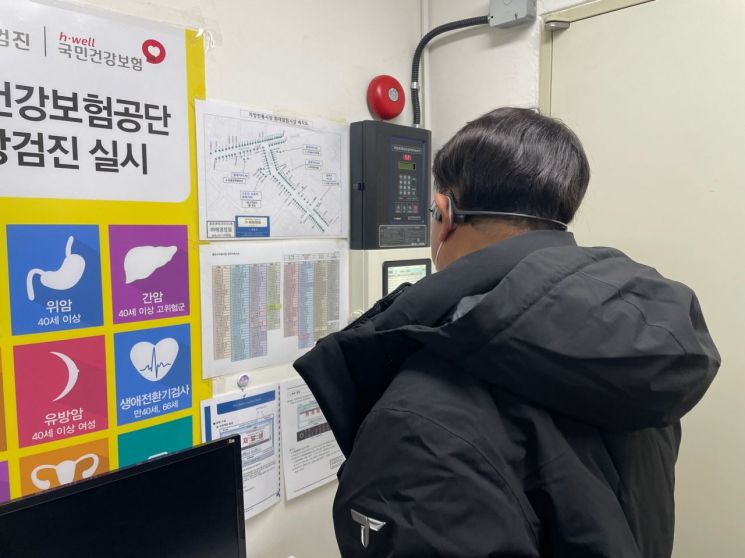
Gwangjin-gu (District Mayor Kim Kyung-ho) conducted monitoring of the "Traditional Market Facility Modernization Project" until the 9th.
The "Traditional Market Facility Modernization Project" is a project aimed at improving the environment of traditional markets to enhance convenience for visitors, thereby increasing visitors and revitalizing commercial districts.
This monitoring was prepared to inspect the management status of modernization facilities within the markets to maintain the effects of environmental improvements.
The monitoring targets included four projects implemented last year under the "Traditional Market Facility Modernization Project," such as the renovation of public parking lots at Junggok Jeil Market and Jayang Traditional Market, and the installation of fire alarm facilities at Jayang Traditional Market.
In November last year, the district upgraded the public parking lot at Junggok Jeil Market to create a more convenient parking environment for visitors by replacing monitors and parking control systems, adding four infrared CCTVs, and installing two additional parking barriers.
To enhance safety at the parking lot, the district installed soundproof walls, removed railings and poured concrete to expand curved sections, and carried out painting and repairs of steel structures and decks at the public parking lot of Jayang Traditional Market.
Finally, a "Smart Fire Alarm System" was established and installed at Jayang Traditional Market. This system automatically notifies the Gwangjin Fire Station and store merchants of the fire location in case of a fire within the market, enabling early fire suppression to prevent large-scale fires.
Based on last year’s facility modernization projects, expert committee members provided advice on facility safety inspections and management methods during the monitoring. The experts were three specialists selected from the Gwangjin-gu Construction Technology Advisory Committee.
Kim Kyung-ho, Mayor of Gwangjin-gu, said, “Post-installation management of facilities is as important as their replacement and installation. Through monitoring inspections and management, we will strive to maintain a safe and convenient environment in traditional markets.”
The district plans to reflect the results of this monitoring in facility aftercare and in the promotion of the "Traditional Market Facility Modernization Project" in 2023.
© The Asia Business Daily(www.asiae.co.kr). All rights reserved.



















