Low Birthrate Crisis Is Also a Crisis for Pediatric Departments
Medical Lawsuits and Blame-Shifting Reach Worst Levels
Staff Shortages and Increased Burden on Existing Personnel Create a Vicious Cycle
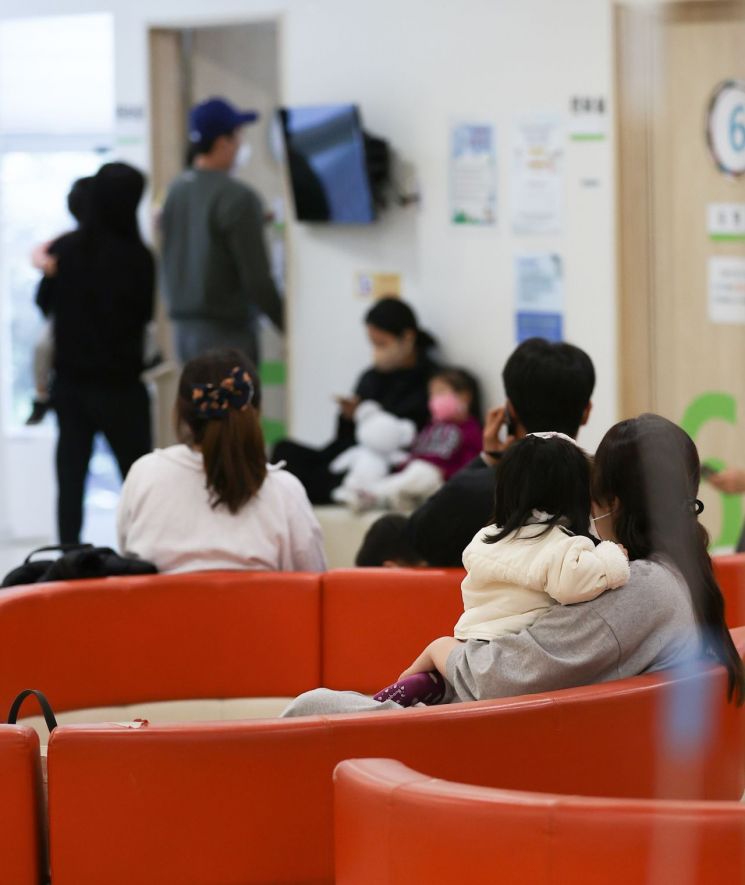
[Asia Economy Reporter Lee Gwan-ju] ‘15.9%’ is the nationwide application rate for pediatric and adolescent resident recruitment at training hospitals for next year, conducted from the 5th to the 7th of this month. Out of 207 available positions, only 33 applicants applied. Not only regional hospitals but even Severance Hospital, considered one of the ‘Big 5,’ had zero applicants for its 11 available positions.
If there are no pediatricians, children cannot receive specialized medical care even when they are sick. The collapse of the pediatric care system has already become a reality. Children suffering from severe febrile seizures are wandering from one hospital emergency room to another. In fact, in August, a 5-year-old girl in an emergency situation passed away while searching for an emergency room that could provide treatment. University hospitals are increasingly suspending inpatient care or reducing consultation hours. The root cause of all these issues is a shortage of medical personnel.
How did pediatrics become the most avoided specialty among residents? The first reaction is that “there is no future.” The fundamental cause can be traced to low birth rates. The annual number of births remains in the 200,000 range, and as of last year, the total fertility rate was 0.81, one of the lowest in the world. Park Yang-dong, president of the Korean Association of Children’s Hospitals, lamented, “The crisis of population extinction and regional extinction is leading to a crisis in pediatrics. There are fire stations, but no firefighters to put out fires. Children’s lives are at risk.”
In a situation where the future looks bleak, factors attracting residents to pediatrics have further diminished. One notable incident cited by the medical community is the 2017 Ewha Mokdong Hospital neonatal death case. Medical staff were investigated for alleged malpractice, and some were even detained. Although the Supreme Court recently acquitted seven medical staff members, the difficult times they endured cannot be undone. The medical community believes that medical lawsuits related to critical care and the shifting of responsibility onto medical staff ultimately led to the worst avoidance of pediatrics.
Kim Ji-hong, president of the Korean Pediatric Society and professor of pediatrics at Gangnam Severance Hospital, pointed out, “Even when doctors do their best in treatment, results may not always be good, but unilaterally blaming doctors is very dangerous. Residents who grew up witnessing such situations can they encourage their juniors to freely engage in critical care? I think it had a very significant impact.” In fact, after this incident, the application rate for pediatric residency dropped annually: 80% in 2019, 74% in 2020, 38% in 2021, and 27.5% in 2022.
The shortage of personnel leads to a vicious cycle of overwork for existing medical staff. Currently, 75% of training hospitals have pediatric professors on duty, but only 27% operate with at least one full-time inpatient specialist. According to a survey conducted by the Korean Pediatric Society, 75% of training hospitals responded that reducing medical services next year is inevitable. In fact, in February 2019, a tragic case occurred where a second-year pediatric resident at Gachon University Gil Hospital died from overwork after working 110 hours per week.
If resident recruitment does not improve, the pediatric care system will inevitably collapse. There are already reports of limits being reached in many places. Over the past five years, 662 neighborhood pediatric clinics have closed. At this rate, there will be no hospitals left for our sick children to visit. The medical community is urgently appealing for strong incentives to attract residents to pediatrics and for measures to establish a stable care system. Lim Hyun-taek, president of the Korean Pediatricians Association, expressed, “We are now worried whether there will be any place to accept sick children. The government can no longer hesitate. Fundamental measures must be implemented as soon as possible to reach a stage where we can save our children’s lives. Please help us.”
© The Asia Business Daily(www.asiae.co.kr). All rights reserved.

















