AI Spread... Egg Prices Rising
Reflecting Supply-Demand Anxiety... Feed Prices Also Increasing
Restaurant Industry 'Sorrow'... Self-Employed Sighing
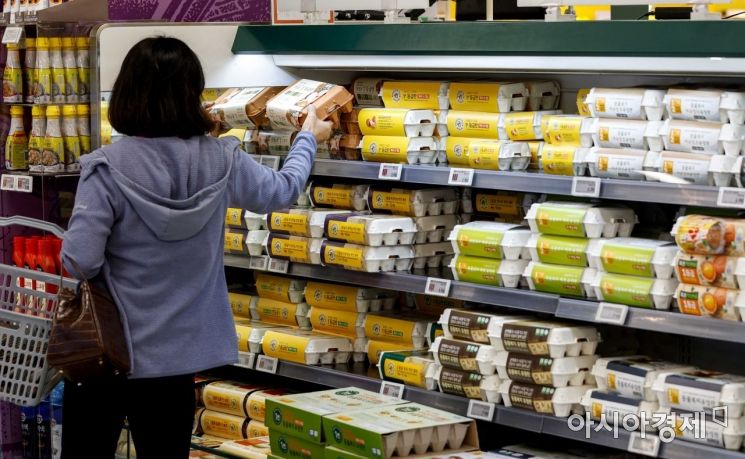
[Asia Economy Reporter Song Seung-yoon] As avian influenza (AI) spreads, egg prices are on the rise, deepening the concerns of self-employed business owners. Since the beginning of the year, prices of ingredients such as flour, seasonings, and dairy products have been steadily increasing, and with egg prices soaring, it has become difficult to bear the cost of production.
According to the Livestock Products Quality Evaluation Service's Livestock Distribution Information, as of the 15th, the nationwide average consumer price for one tray of eggs (30 special eggs) is 6,715 won. This is more than 7% higher than 6,226 won a year ago and about 21% higher than the average price of 5,547 won.
The biggest reason driving up egg prices is the growing supply and demand anxiety caused by the spread of AI infections in poultry farms nationwide. The rise in feed prices has also fueled this. If egg prices skyrocket, it could lead not only to price increases in the dining industry but also to related products and overall inflation. Some predict that egg prices could surpass the psychological threshold of 7,000 won.

However, the likelihood of such a scenario occurring is still low. The government maintains that the culling rate of laying hens due to AI is not high, so supply and demand are not a major issue. Production is also on the rise, and most experts believe that compared to the past, the impact of the disease on egg supply is not significant. It is expected that after a temporary increase, egg prices will gradually stabilize. The Ministry of Agriculture, Food and Rural Affairs plans to consider importing fresh eggs if consumer prices exceed 7,000 won per tray.
On the other hand, the dining industry views the situation seriously. Bakery cafes and dessert cafes selling items like castella cakes are also sighing deeply. Small merchants selling egg bread and toast are in the same situation. In online communities of self-employed business owners, sharing information about relatively cheaper purchasing sources is actively taking place. Some have even decided to temporarily suspend menu items containing eggs.
Meanwhile, this year's AI first occurred on October 19 at a poultry farm in Yecheon-gun, Gyeongbuk Province. Since then, as of the 14th, there have been 46 confirmed and suspected cases nationwide. The Central Accident Response Headquarters judges that the first occurrence this year is about three weeks earlier than last year, and due to the sporadic outbreaks in multiple locations, the risk is higher than last year. In particular, the mortality rate among ducks is high, and the virus is analyzed to have strong transmissibility and pathogenicity, so the situation is being closely monitored and responded to.
© The Asia Business Daily(www.asiae.co.kr). All rights reserved.
![From Bar Hostess to Organ Seller to High Society... The Grotesque Con of a "Human Counterfeit" [Slate]](https://cwcontent.asiae.co.kr/asiaresize/183/2026021902243444107_1771435474.jpg)

















