Social Isolation Outside the Home Among '10s and 30s'
Unemployment and Divorce in '50s and 60s'... Serious Issue of Solitary Death, the 'Quiet Death' Problem
[Asia Economy Reporter Han Seung-gon] The phenomenon of reclusive youth and the issue of solitary deaths among middle-aged individuals are emerging as serious social problems.
Both reclusive youth and solitary deaths share the commonality that due to a lack of interaction with others, their suffering and depression are not properly communicated externally, causing the so-called golden time to be missed. Since this issue can lead from social isolation in youth to solitary death in middle age, urgent measures are being called for.
'Reclusive youth' refers to adolescents aged 19 to 24 who, without any special triggers such as disabilities or mental illnesses, have not left their room or home for 3 or 6 months or more and have one or fewer friends. The situation is similar among young adults following adolescents.
As of 2020, the Korea Youth Policy Institute estimated that about 370,000 young people aged 18 to 34 live socially isolated. The estimated social cost in South Korea amounts to approximately 585 trillion won. Earlier, based on the 2019 Youth Socioeconomic Status Survey data, the Korea Youth Policy Institute's study "Youth Socioeconomic Status and Policy Measures II" estimated that 0.9% of respondents aged 19 to 39 reported 'not going out,' which translates to about 131,610 people nationwide.
A bigger problem is that some of these individuals even contemplate extreme choices. According to the 'Interim Report on the Survey of Reclusive Youth' held by Busan City Hall last September, 7 out of 10 young people who are in a state where normal social activities are difficult considered extreme choices.
Among them, 2 actually attempted it. Of the reclusive youth who responded to the survey for the report, 77.8% showed interest in extreme choices, and 21.5% had already attempted it. Notably, 10.5% of those who attempted had repeated it more than 10 times. This underscores the urgency of not missing the golden time to solve the 'reclusive youth' problem.
In November, the government announced the 'High-Risk Youth Support Enhancement Plan,' which focuses on providing living expenses, medical costs, vocational training, and youth activities support to reclusive youth. There is also support for young adults. Seoul City offers services such as 'Customized Counseling for Reclusive Youth.' Programs for emotional support, relationship understanding, and parental support are available.
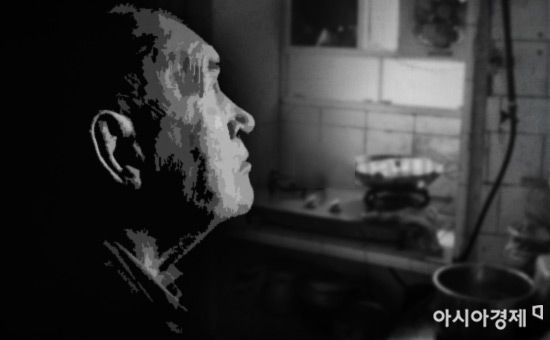
'Life Satisfaction' Rapidly Decreases → Solitary Death Among Middle-Aged People Becomes a Serious Issue
While the issue surrounding youth is reclusive behavior, middle-aged individuals face the problem of solitary death. According to solitary death prevention guidelines, solitary death refers to a death where a person living alone, isolated from family, relatives, and others, dies from suicide, illness, or other causes, and the body is discovered after a certain period.
According to the '2022 Solitary Death Survey' released by the Ministry of Health and Welfare on the 14th, among the 3,378 solitary death cases last year, 1,760 were men in their 50s and 60s, accounting for 52.1% of the total. Of these, 900 were in their 50s (26.6%) and 860 in their 60s (25.5%).
Compared to the number of female solitary death cases in the same age group, these figures are about 10 times and 7.5 times higher, respectively. Among the total 2,817 male solitary death cases, those in their 50s and 60s accounted for 62.5%. There were also 436 cases in their 40s, followed by 314 in their 70s, 135 aged 80 and above, 120 in their 30s, 37 in their 20s, and 1 in their teens.
The government has begun preparing related measures. The Ministry of Health and Welfare explained, "While the total number of deaths increases with age, solitary deaths are most prevalent among men in their 50s and 60s," adding, "Men in their 50s are often unfamiliar with health management and household chores, and life satisfaction can sharply decline due to unemployment or divorce."
Oh Jin-hee, Director of the Regional Welfare Division at the Ministry of Health and Welfare, said, "By analyzing health insurance data of male deaths in their 50s and 60s, we can detail the diseases and lifestyle habits that appear during the progression of solitary death," and added, "We will strengthen solitary death countermeasures based on such data."
© The Asia Business Daily(www.asiae.co.kr). All rights reserved.
![Clutching a Stolen Dior Bag, Saying "I Hate Being Poor but Real"... The Grotesque Con of a "Human Knockoff" [Slate]](https://cwcontent.asiae.co.kr/asiaresize/183/2026021902243444107_1771435474.jpg)















