Rising Egg Prices Amid AI Expansion
Street Vendors of Egg Bread and Toast Face Hardship
Worries Over Egg Cartons Exceeding 7,000 Won
Low Culling Rate Means No Supply Issues
 On the afternoon of the 14th, a vendor is seen operating at a street stall selling egg bread in Banghwa-dong, Gangseo-gu, Seoul.
 Photo by Song Seung-yoon
[Asia Economy Reporter Song Seung-yoon] "Flour and even eggs... It looks like I can't even cover labor costs."
Around 1 p.m. on the 14th, at an egg bread street vendor in Banghwa-dong, Gangseo-gu, Seoul. Despite the cold wave with subzero temperatures continuing into the afternoon, the vendor Kim Bong-hee (57, pseudonym) diligently baked egg bread. The savory aroma caught the attention of passersby, and customers kept coming. However, Kim's face was full of worry. This was due to the recent rise in flour prices followed by an increase in egg prices.
The LPG gas, which is used about one cylinder per day, also rose in price from 40,000 won to 50,000 won, and flour became nearly 40% more expensive. Additionally, a carton of eggs reached 7,000 won, so selling egg bread at 1,000 won each leaves no profit for labor costs, according to Kim. Kim said, "I haven't raised the price of egg bread because I was worried that customers would drop after raising the price of fish-shaped bread earlier this year," adding, "Compared to last year, the floating population has increased, so business is much better, but the margin has actually decreased. This is the first time in 20 years that this has happened."
Joo Young-sik (48, pseudonym), who runs a toast business nearby, is in a similar situation. Since the shop is near an elementary school, toast is sold cheaper than elsewhere, but he is seriously considering a price increase. Joo said, "Even during the COVID-19 situation, I consistently sold egg toast for 2,000 won each, but considering the rise in egg and butter prices, there is absolutely no profit left," adding, "I think I will have to raise all menu items by at least 500 won starting from the new year."
As avian influenza (AI) spreads and egg prices rise, small business owners selling egg-based items such as toast, egg bread, and snack foods are deeply troubled. Since the beginning of the year, prices of flour, seasonings, and dairy products have risen one after another, and with the sudden surge in egg prices, the burden has become unbearable. The dining industry is also watching the situation seriously. Bakery cafes and dessert cafes selling bread such as castella have also sighed more often. In online communities of self-employed people, sharing relatively cheap purchasing sources is actively taking place. Some have even decided to temporarily suspend menus containing eggs.
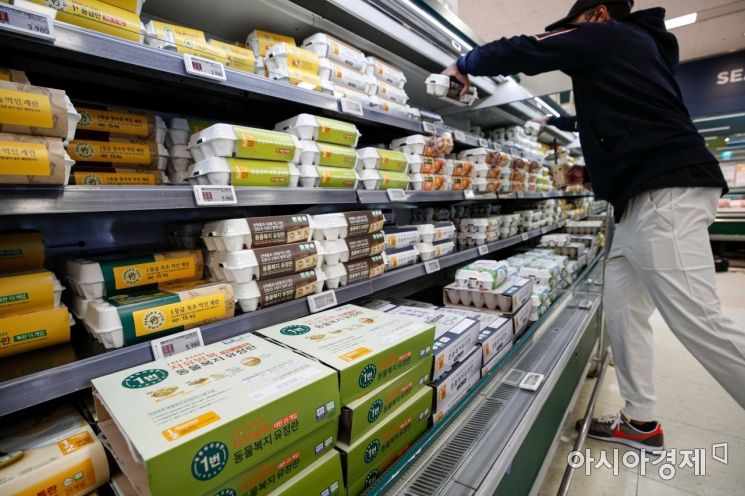
According to the Livestock Products Quality Evaluation Institute's Livestock Distribution Information, as of the 13th, the nationwide average consumer price for a carton of eggs (30 special eggs) was 6,715 won. This is more than 7% higher than 6,226 won a year ago and 21% higher than the average price (5,547 won). There are also forecasts that the psychological threshold of 7,000 won could be exceeded. The Ministry of Agriculture, Food and Rural Affairs plans to consider importing fresh eggs if the consumer price exceeds 7,000 won per carton.
The biggest reason for the rise in egg prices is analyzed to be the increased supply anxiety caused by the spread of AI infection in poultry farms nationwide. The rise in feed prices also played a part. If egg prices soar, it could lead not only to price increases in the dining industry but also to related product price hikes and overall inflation. However, so far, this possibility is not considered high. The government’s position is that there is no major problem with egg supply because the culling rate of laying hens due to AI is not high. Production volume is also increasing, and compared to the past, the impact of diseases on egg supply is generally considered to be small. There are forecasts that egg prices will gradually stabilize after a temporary rise.
Meanwhile, this year's AI first occurred on October 19 at a poultry farm in Yecheon-gun, Gyeongbuk. As of the 9th, there have been 37 confirmed and suspected cases nationwide. The Central Accident Response Headquarters judges that the first occurrence this year was about three weeks earlier than last year, and due to the sporadic outbreaks in multiple locations, the risk is higher than last year. In particular, the duck mortality rate is high, and the transmissibility and pathogenicity of the virus are also strong, so the situation is being carefully monitored and responded to.
© The Asia Business Daily(www.asiae.co.kr). All rights reserved.


















