[Seoul District News] Gwanak-gu to Develop Mixed-Use Facility Near Seoul National University Venture Town Station (Sillim-dong 110-1 and 1 Other Parcel) by 2024 with 1,283.5㎡ Donated Building Area for 3-Story Youth Venture Startup Space... Youth Entrepreneurs Leveraging Know-How from Nowon Youth Stores Achieve Independent Startup Success & Open 11th Branch This Year; Applications for Youth Store Owners of 1st and 2nd Branches Until 18th... Seocho-gu Supports Cultural and Artistic Youth Startups
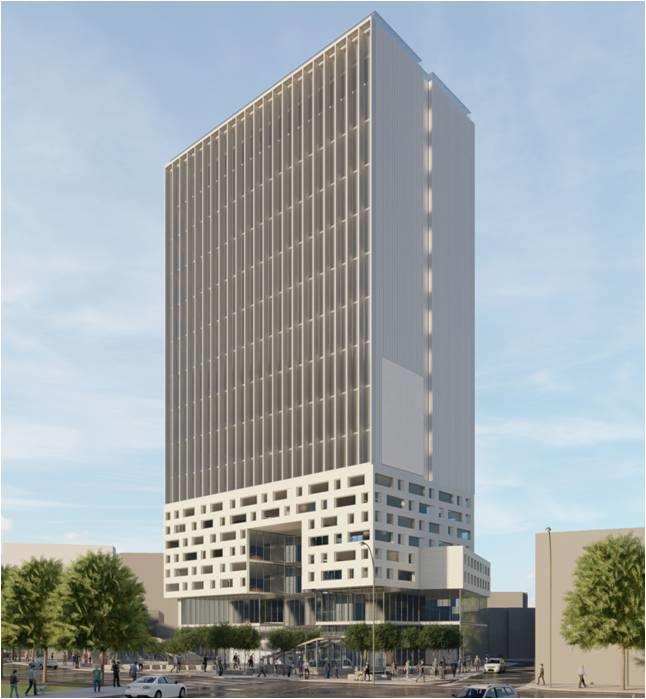
[Asia Economy Reporter Jongil Park] Gwanak-gu (Mayor Park Junhee) is creating a youth venture startup space in the area around Sillim Line Seoul National University Venture Town Station, the target site of the ‘Station Area Revitalization Project,’ to strengthen the ‘Gwanak S Valley’ youth startup ecosystem.
The ‘Station Area Revitalization Project’ is an urban planning strategy aimed at revitalizing downtown areas by expanding insufficient local living infrastructure and fostering living economic hubs. It involves upgrading the land use zone of station area land that meets location requirements (e.g., from residential to commercial zones), increasing the floor area ratio, and expanding 50% of the increased floor area ratio into necessary local living service facilities (such as daycare centers, health centers, sports facilities) and public rental facilities (offices, housing).
Gwanak-gu was selected as a pilot site for Seoul City’s ‘Station Area Revitalization Project’ in 2019. Accordingly, the district promoted a change in land use zoning through proposals from the project implementer, drafting a plan to upgrade from quasi-residential to neighborhood commercial zones, and after completing related procedures and continuous consultations with Seoul City, the project was officially approved by Seoul City’s announcement on December 15, 2022.
As a result, by 2024, a complex facility is scheduled to be built around Seoul National University Venture Town Station (Sillim-dong 110-1 and one other parcel) station area. The district will receive a donation of 1,283.5㎡ of building area through public contributions resulting from the land use zone upgrade and will create a youth venture startup space on the third floor above ground.
This is expected to accelerate the establishment of a venture startup ecosystem centered on youth by combining excellent accessibility as a ‘station area’ with human resources such as ‘youth’ and ‘Seoul National University.’
In addition, the district plans to complete three startup infrastructure facilities in Daehak-dong by the end of this year, where venture startup companies will additionally move in. Beyond space support, the district will also operate programs such as mentoring to strengthen companies’ capabilities and support commercialization funds through the ‘Startup Scale-Up’ project, playing a pivotal role as a hub for venture startups.
A district official said, “The increase in floor area ratio through land use changes will enable high-density development of the station area and provide youth venture startup spaces in excellent locations, creating opportunities for young people to start businesses in better locations. We will continue to strive to make Gwanak a city conducive to startups through urban planning tailored to local characteristics.”
Nowon-gu (Mayor Oh Seungrok) is drawing attention as a youth store there is preparing for a new challenge in a new location after building a foundation for entrepreneurship over the past two years.
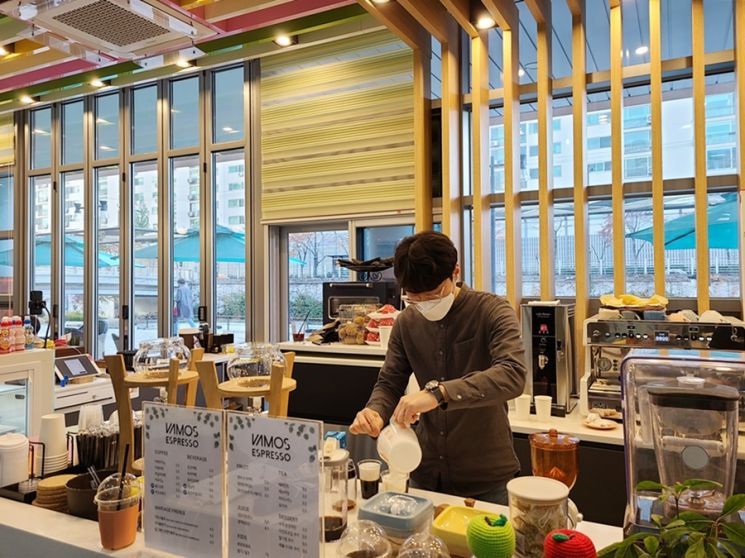
In February last year, Mr. A, who became the first store owner of the youth store by overcoming a 9:1 competition ratio, operated a 15-pyeong (approx. 49.6㎡) caf? called ‘Vamos Espresso’ inside the Nowon Math Culture Center in Junggye-dong. Having established a foundation for entrepreneurship by running the Nowon Youth Store for two years, Mr. A is preparing to open his own store independently.
Mr. A recently completed a lease contract to open a caf? in Sanggye-dong next February. He said, “Participating in the youth store project and operating a caf? gave me confidence and assurance about starting a business. The experience and know-how I have accumulated will be a great asset in running my own store.”
The Nowon Youth Store, operated by a total of 19 young people including Mr. A, plays a catalytic role in revitalizing youth entrepreneurship in the region.
Since 2020, the ‘Nowon Youth Store’ project has recruited and supported local youth with entrepreneurial dreams. Initially, it started by leasing idle spaces in public institutions, but from the third store onward, the lease targets expanded to include private buildings.
The district reduces the rent burden, the biggest obstacle for youth startups, by offering up to 100% rent reduction depending on conditions without requiring a deposit during the contract period. For youth stores established in public institutions, initial facility setup support is also provided.
Additionally, to help develop the necessary skills for actual startups, the district provides basic education on startup procedures and taxation, as well as practical training such as expert consulting by industry, enabling tenants to acquire management know-how.
Recently expanded to 11 stores, the youth stores feature diverse businesses including caf?s, clothing workshops, design studios, live commerce studios, character shops, and interior design, reflecting the fresh ideas of young entrepreneurs.
The youth stores not only activate youth entrepreneurship but also harmoniously coexist with existing commercial districts, invigorating the local economy and creating youth cultural spaces, achieving a triple effect.
The district is currently recruiting new operators for the first and second stores, whose contracts expire early next year, until the 18th of this month. The project plans to steadily create 3 to 4 youth stores annually to provide many young people with opportunities to operate stores.
To support youth not only in startups but also in employment, the district opened the Nowon-gu Youth Job Center ‘Youth Tomorrow’ on the 9th floor of KB Financial Nowon Plaza at Nowon Station Intersection, a place with high youth foot traffic, last November.
The center is equipped with employment counseling rooms, interview clothing rental rooms, interview photo studios, and study spaces. It is available to anyone aged 19 to 39 who resides in or bases their life in Nowon-gu.
Oh Seungrok, Mayor of Nowon-gu, said, “The Nowon Youth Store project was started to provide young people with opportunities to test their ideas and marketability with small capital. We will continue to support so that warm cases of startup experiences through youth stores lead to actual startups.”
# ‘Poodle’ (CEO Yoon Chaeyoung) is a team of Hongik University design students who united to create a sustainable environment through a reusable container production and sharing service business. Through project funding, promotion, marketing, and sales channel support provided by the district, they built capabilities and received love calls from ESG management large corporations such as GS Retail and Shinhan Bank. They also succeeded in attracting investment by receiving collaboration proposals from catering companies like Ourhome and Samsung Welstory.
‘ESG management’ refers to pursuing sustainable development through environmentally friendly, socially responsible, and transparent management.
# ‘Puble’ (CEO Yoo Jihyun) succeeded in founding a media art production and exhibition business this year with support including project funding and consulting from the district. Recognized for their expertise, they secured 30 million KRW in investment from the Korea Arts & Culture Education Service and were selected for the Netherlands Embassy international exchange support project, receiving 8 million KRW in grants. They also received space support from the Seoul Design Foundation and successfully held an exhibition at DDP, solidifying their business stability.
These are representative success stories of social economy enterprises participating in Seocho-gu’s ‘Social Economy Cultural Arts Youth Startup Support Project’ this year.
Seocho-gu (Mayor Jeon Seongsu) achieved the outcome of producing 22 youth social economy enterprises from all teams selected earlier this year in the ‘Social Economy Cultural Arts Youth Startup Support Project’ conducted this year.
The district’s ‘Social Economy Cultural Arts Youth Startup Support Project’ is a program that enhances the growth potential of youth in cultural arts social economy enterprises and supports their startups. It is also known as fostering ‘Seocho-type social economy enterprises.’
‘Social economy enterprises’ refer to business models that solve social problems with ideas, simultaneously pursuing corporate profits, social value, and job creation.
The youth startup teams participating in this year’s project showed significant effects in sales increase and job creation. The total sales of participating teams increased by about 400 million KRW compared to the previous year, reaching 1.2 billion KRW. Employment also increased by 19 people from the previous year, totaling 70 employees.
Since launching this project in 2018, Seocho-gu has achieved success in startup for most of the approximately 270 early-stage entrepreneurs from 87 youth startup teams in the cultural arts field up to this year.
Since January, Seocho-gu selected 22 teams of youth social economy cultural arts startup companies and prospective entrepreneurs.
Support includes up to 20 million KRW in initial business support funds, up to 5.4 million KRW in business site rent, one-on-one startup consulting, academies, and networking to help stable settlement and foundation building. Additionally, the district opened a Social Economy Integrated Support Center earlier this year to provide consulting on entering social economy enterprises and programs for expanding sales channels.
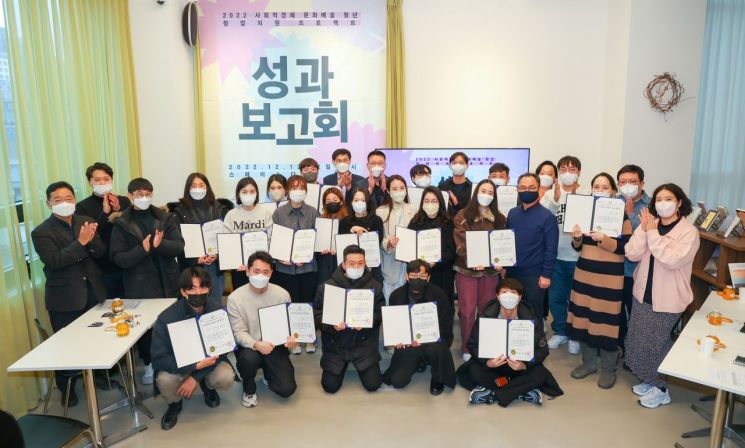
On the 12th, Seocho-gu held a performance report meeting for the ‘Social Economy Cultural Arts Youth Startup Support Project’ to share the achievements of youth entrepreneurs and invited social economy enterprise experts for lectures and communication sessions.
At the performance report meeting, Park Sinjung, CEO of ‘Lemon Sound,’ a music and media production matching platform, said, “This year, Seocho-gu’s support was a stepping stone leading to startup success. I will strive to grow into a global company.”
Seocho-gu plans to establish ways to link district-led projects with social economy enterprises in the future.
Jeon Seongsu, Mayor of Seocho-gu, said, “I support the courage and efforts of young people who started businesses during the difficult times of COVID-19. We will continue to support youth startups so they can realize their dreams and contribute to their success.”
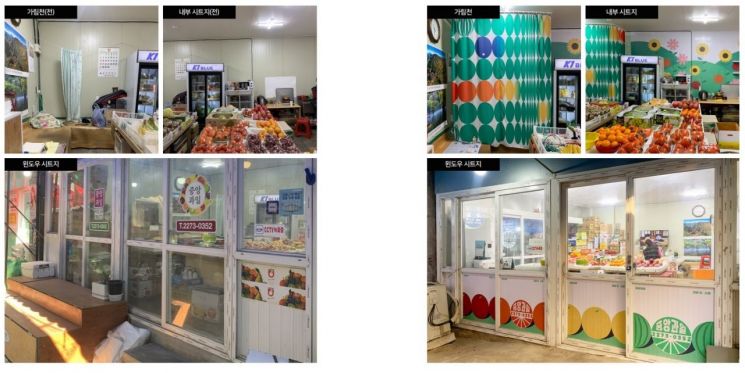
The ‘Artterior’ project, which revitalized the design of 40 stores in Inhyeon Market, Jung-gu, Seoul (Mayor Kim Gilsung), borrowing the sensibilities of 15 young artists, successfully concluded at the end of November.
Stores in Inhyeon Market commonly faced issues of aging facilities and cramped spaces. To overcome these, young artists enhanced store competitiveness by utilizing various elements such as images, characters, and unified color schemes that highlight each store’s characteristics, improving signage, menus, kitchen partitions, interior and exterior walls, and lighting.
The Youth Cooperative Federation (Chairman Lee Dooyoung), which organized this project, compiled the beginning and end of the store transformations into a book. Chairman Lee stated in the introduction to ‘2022 Inhyeon Market Our Neighborhood Store Artterior,’ “We tried to solve each store owner’s concerns in various ways.”
The process was, in short, intense communication between artists and store owners. They spent three months brainstorming together on what needed urgent improvement, the design direction desired by the owners, and how to effectively promote the stores.
There were initial trials and errors. Sometimes the owners did not understand the artist’s design or the artists failed to immediately grasp what the owners needed, causing difficulties. However, by sharing stories about running the stores and opening their hearts, they reached consensus.
Artist Kwon Sinhae said, “The most necessary skill as an artist in this project was the ability to communicate with small business owners. By identifying what the owners needed most, coordinating opinions, and proposing realistic solutions, we achieved good results.”
Kim Gilsung, Mayor of Jung-gu, said, “This project was a great opportunity for small business owners and artists to coexist amid the difficulties caused by COVID-19 and economic downturn. Thanks to the magical design strategies of the artists, Jung-gu will actively promote to help increase sales.”
© The Asia Business Daily(www.asiae.co.kr). All rights reserved.



















