Seoul Metropolitan Council People Power Party Special Committee on Accompanying the Vulnerable Holds Meeting with Borderline Intellectual Functioning Individuals to Hear Updates on Key Projects and Current Issues Related to Borderline Intellectual Functioning
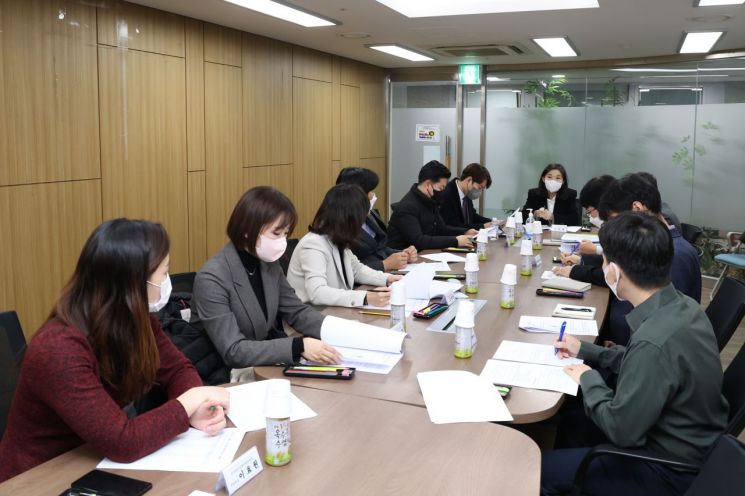
[Asia Economy Reporter Jongil Park] The Seoul Metropolitan Council’s People Power Party Special Committee for Accompanying the Vulnerable (Chairman Councilor Jongbae Lee) held a meeting on the afternoon of the 13th at the 5th meeting room on the 5th floor of the Seoul Metropolitan Council Members’ Hall. During the meeting with the executive branch’s working-level staff, they received reports on the progress and future plans of the borderline intellectual functioning project and listened to the voices of the staff carrying out the project.
The meeting was promoted based on a consensus between the special committee and the executive branch that there is a need to provide opportunities to help the continuously increasing number of borderline intellectual functioning individuals to be detected early and undergo rehabilitation and regeneration training, thereby supporting their growth as healthy members of society.
Present at the site were Special Committee Chairman Councilor Jongbae Lee, along with Councilors Kyunghoon Kim, Kyunam Kim, Hyeyoung Kim, Hyowon Lee, and Younghee Yoon, who accompanied as vice-chairpersons.
The number of borderline intellectual functioning individuals corresponds to 13.59% of the domestic population. As of October 2022, the estimated number of borderline intellectual functioning individuals residing in Seoul is 1.32 million. Considering that the number of intellectually disabled persons residing in Seoul in 2022 was 27,516, the number of borderline intellectual functioning individuals is approximately 48 times greater than that of intellectually disabled persons.
Currently, borderline intellectual functioning individuals do not have a separate disability grade or official assessment criteria, leaving them in a borderline state where they do not belong to either the disabled or non-disabled groups.
On this day, the special committee proposed diversifying efforts to establish cooperative systems with autonomous districts for the smooth progress of the borderline intellectual functioning project, securing specific data related to borderline intellectual functioning individuals, and conducting a thorough review of budget execution details.
Chairman Jongbae Lee stated, “There are many expert opinions that early detection of borderline intellectual functioning individuals and support through various programs improve academic ability and social skills,” adding, “We must raise social interest through awareness improvement of borderline intellectual functioning individuals and provide sufficient opportunities for them to grow as healthy members of society by creating a favorable environment.”
The special committee announced that as a result of holding the meeting, it will review improvement tasks for effective lifelong education support for borderline intellectual functioning individuals, including ▲ discovering customized lifelong education programs ▲ establishing and supporting support networks ▲ research and development for systematic support ▲ and improving awareness of borderline intellectual functioning individuals.
In this regard, the Special Committee for Accompanying the Vulnerable plans to seek effective support measures for borderline intellectual functioning individuals, urge interest at the council and party levels, and actively cooperate with the Seoul Metropolitan Government.
© The Asia Business Daily(www.asiae.co.kr). All rights reserved.

















