Attendance by International Organizations, Domestic and Foreign Universities and Research Institutions, and Industry Representatives
[Asia Economy Reporter Kim Pyeonghwa] A forum was held to examine the rapid changes in the global trade environment due to digital transformation, trends in international trade norm discussions, and the direction for domestic digital trade to advance.
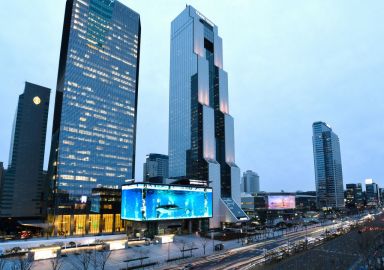
The Korea International Trade Association (KITA) hosted the ‘2022 Digital Trade International Conference’ on the 12th at COEX in Samseong-dong, Seoul, in collaboration with the Ministry of Trade, Industry and Energy. Experts in digital trade from international organizations such as the World Trade Organization (WTO) and the Organisation for Economic Co-operation and Development (OECD), as well as domestic and foreign universities, research institutes, and law firms, participated as speakers and panelists.
In his welcoming remarks, KITA Chairman Koo Ja-yeol stated, “The future of digital is the full-fledged data era,” adding, “Data usage and transactions are widely utilized not only in digital services and platforms but also in manufacturing and everyday life.”
Chairman Koo mentioned that the pace of advancing digital trade agreements is accelerating in this context. However, he emphasized the need for discussion, saying, “Our companies understand the importance of the digital era but lack sufficient preparation.”
The government and the National Assembly expressed their commitment to expanding digital trade efforts on the day. Ahn Deok-geun, Director-General for Trade Negotiations at the Ministry of Trade, Industry and Energy, emphasized, “For us, who have grown through openness and innovation, digital trade is a crucial agenda that will determine future industrial competitiveness,” and added, “We will actively pursue digital trade policies to become a leading digital trade nation.”
He also announced, “With the signing of the Korea-Singapore Digital Partnership Agreement (DPA), a system foundation has been established to expand the entry of our digital companies into the ASEAN market,” and previewed, “We will promote modernization of e-commerce norms in the Korea-European Union (EU) Free Trade Agreement (FTA) and improvement negotiations of FTAs including digital norms with the United Kingdom, Ecuador, and Gulf Cooperation Council (GCC) countries.”
Yoon Kwan-seok, Chair of the National Assembly’s Industry, Trade, Energy, Small and Medium Enterprises Committee, stated, “Just as aggressive FTA signings have led our industries to overseas markets, digital trade policies must drive the growth of Korea’s digital economy,” and said, “The National Assembly will also strive to create a domestic environment where our industries can seize new opportunities through digital innovation and grow based on them.”
Industry representatives raised the opinion that domestic regulatory improvements are necessary to revitalize digital business. Cho Young-gi, Secretary-General of the Korea Internet Corporations Association, said, “Domestic regulations should not create inequality between global operators and domestic operators,” and added, “Regulations should be improved in a way that promotes the overseas expansion of domestic businesses.”
© The Asia Business Daily(www.asiae.co.kr). All rights reserved.

![Clutching a Stolen Dior Bag, Saying "I Hate Being Poor but Real"... The Grotesque Con of a "Human Knockoff" [Slate]](https://cwcontent.asiae.co.kr/asiaresize/183/2026021902243444107_1771435474.jpg)















