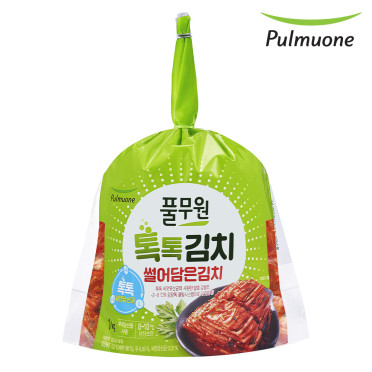
[Asia Economy Reporter Eunmo Koo] As kimchi solidifies its position as one of the representative foods of K-Food, competition among major finished kimchi manufacturers such as Pulmuone, Daesang, and CJ CheilJedang in overseas markets is heating up.
According to Pulmuone Foods on the 10th, the company acquired 180,000 shares of PPEC Global Kimchi from Pulmuone Global Investment Partnership Private Equity Fund, a corporate partnership fund established with the National Pension Service, for about 16 billion KRW at the end of last month. Through this, Pulmuone Foods now holds 100% ownership of PPEC Global Kimchi as a subsidiary.
PPEC Global Kimchi is an export-oriented kimchi manufacturing specialist company established by Pulmuone Foods with an investment of about 30 billion KRW. Since 2019, it has been producing domestic and export kimchi at a factory in Iksan, Jeonbuk, covering an area of 30,329㎡ (9,175 pyeong). Pulmuone Foods plans to improve operational efficiency and accelerate kimchi exports through this subsidiary integration.
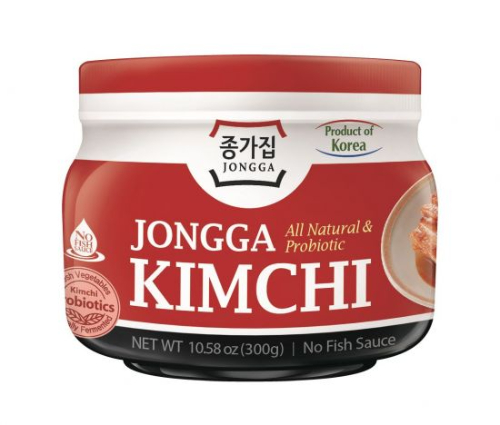
Daesang is intensifying its entry into the European market after integrating its kimchi brands. Previously, Daesang unified its kimchi brands under ‘Jongga’. Daesang had been operating the representative kimchi brand ‘Jongga Jip’ and the global kimchi brand ‘Jongga (JONGGA)’. To ensure consistent global communication activities, Daesang plans to unify the domestic and international kimchi brands, which were previously separate, under ‘Jongga’ and increase brand recognition in the global market.
Along with brand integration, last month Daesang established a joint venture to build a kimchi factory in Poland and announced plans to produce kimchi locally and actively target the European market. Daesang is focusing on the recent rapid rise of European countries as major export destinations for domestic packaged kimchi and chose Poland as a forward base for European market development considering ease of raw material procurement and accessibility to neighboring countries. Poland, located at the center of Eastern and Western Europe, was judged to be the optimal location as a logistics hub connecting the entire European region.
Accordingly, Daesang plans to supply Jongga kimchi to the European market first by utilizing the production facilities and distribution networks of the local Polish company after establishing the joint venture. The company also plans to increase kimchi production significantly by completing a new factory in Poland in 2024.
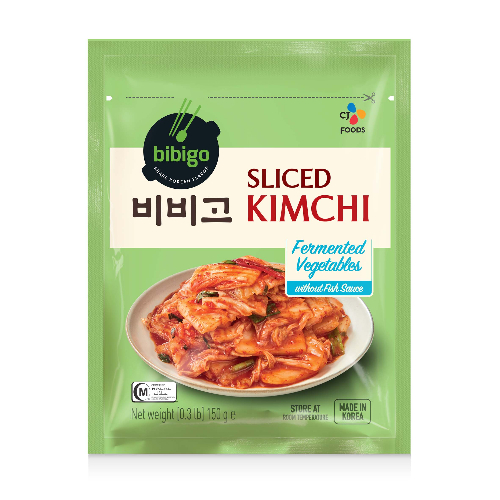
CJ CheilJedang is also making a bold move by launching the export strategic product ‘bibigo SLICED KIMCHI’, which can be stored and distributed at room temperature for 12 months, in Europe on the 5th. CJ CheilJedang applied fermentation control technology to maintain the ripeness of export kimchi, which, when shipped by sea, would ferment for about a month, causing local consumers to taste ‘over-fermented kimchi’.
A CJ CheilJedang official explained, “With fermentation control technology, acidity and the texture of napa cabbage, which affect kimchi taste, can be maintained in their original state for one year,” adding, “Overseas consumers who thought over-fermented kimchi was the original kimchi taste will be able to experience the authentic taste of Korean kimchi.”
Starting this month, CJ CheilJedang’s product will be sold in key European countries such as Germany, France, the United Kingdom, Italy, and Austria, and will also be introduced to Southeast Asia, the Middle East, Oceania, and South America. In countries where local production is possible, such as the United States, Japan, and Vietnam, the company plans to expand product categories and distribution channels.
According to the Korea Agro-Fisheries & Food Trade Corporation (aT), kimchi export value, which was 81.39 million USD (about 106 billion KRW) in 2017, increased to 97.46 million USD (about 126.9 billion KRW) in 2018, 105 million USD (about 136.7 billion KRW) in 2019, 144.51 million USD (about 188.1 billion KRW) in 2020, and reached 159.92 million USD (about 208.2 billion KRW) last year, setting a new record every year.
© The Asia Business Daily(www.asiae.co.kr). All rights reserved.



















