Improved Bank Competition with Introduction of Internet Banks
Still Small in Scale, No Significant Impact on Major Commercial Banks Yet
[Asia Economy Reporter Song Hwajeong] Although the introduction of internet-only banks has improved the competitiveness of banks, the market concentration of the banking industry in South Korea is evaluated to remain in the lower-middle tier among the member countries of the Organisation for Economic Co-operation and Development (OECD).
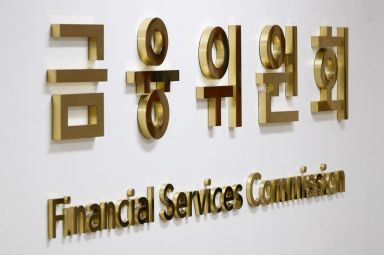
On the 11th, the Financial Services Commission announced the results of the operation of the 2nd Financial Industry Competitiveness Evaluation Committee and its future plans.
The 2nd Financial Industry Competitiveness Evaluation Committee (November 2020 to November 2022) conducted evaluations this time on banks, credit card companies, and credit information businesses, following last year's evaluation of insurance and credit rating industries.
Banking Industry: Competitiveness Improved by Introduction of Internet Banks
As a result of the banking industry evaluation, compared to the first evaluation in 2018, the concentration generally decreased except for medium-term loans and total deposit concentration, indicating improvement. In particular, the decline in concentration of household loans is estimated to be due to the growth of internet banks focusing on household loans, confirming the effect of introducing internet banks.
The evaluation committee explained, "At the time of the first evaluation, the introduction of internet banks was decided to promote competition, and new entries have been made recently, so the effect is gradually emerging. Since it is still in the early stages of entry, it is necessary to first observe the growth of internet banks and consider the introduction of small licenses if competition promotion policies are needed."
Regarding all general banks, competitiveness has increased due to the influence of internet banks expanding their business mainly in household loans; however, internet banks are still small in scale to become meaningful competitors to large commercial banks, and thus have not had a significant effect on competition among commercial banks.
Although somewhat improved by the introduction of internet banks, the market concentration of South Korea's banking industry remains in the lower-middle tier among 34 OECD countries. According to World Bank data on market concentration of banking industries by total assets, South Korea ranked 23rd when considering general banks and 18th when considering commercial banks. However, the market concentration of South Korean commercial banks was lower than that of Germany and Spain but significantly higher than that of financial advanced countries such as the United States and the United Kingdom.
The evaluation committee stated, "Regarding entry regulations, improving the qualifications of major shareholders and others to enhance the integrity of the banking industry could lead to promoting effective competition in the banking industry. Recently, fintech and big tech have been notably entering the financial sector, especially banking services, and to promote innovation through competition within banking, improvements to the banking licensing system are necessary." They added that reflecting recent changes in the financial environment and the demands of banks and consumers, it is necessary to prepare comprehensive improvement plans including the subdivision of banking licensing units (introduction of small licenses) and matters related to concurrent, auxiliary, and entrusted businesses.
Market Concentration of Credit Card and Credit Information Industries Unchanged Over the Past Five Years
In addition, the market concentration of the credit card industry has not changed significantly over the past five years. Due to the high entry barriers caused by new entry costs characteristic of the credit card market, competition among the top three or four companies has been maintained. The evaluation committee said, "With the increasing usage of big tech simple payments, a competitiveness evaluation from the perspective of the entire payment market is required," and added, "It is necessary to set the direction of entry regulation policies considering the risks related to the soundness of card companies and consumer protection."
The market concentration of the credit information industry has also not changed significantly over the past five years. The evaluation committee explained, "Considering the improvement of credit rating accuracy, expansion of financial accessibility for those lacking financial history, and personal information protection, policy directions that can promote effective competition are needed."
The Financial Services Commission plans to form the 3rd Competitiveness Evaluation Committee in the first half of next year, select evaluation targets, and conduct competitiveness evaluations from the second half. A Financial Services Commission official said, "In the 3rd evaluation, we will improve analysis methods and enhance data utilization during research projects for more effective competitiveness evaluation."
© The Asia Business Daily(www.asiae.co.kr). All rights reserved.
![Clutching a Stolen Dior Bag, Saying "I Hate Being Poor but Real"... The Grotesque Con of a "Human Knockoff" [Slate]](https://cwcontent.asiae.co.kr/asiaresize/183/2026021902243444107_1771435474.jpg)
















