A Couple in Their 60s Killed by Escaped Bear... Site of Two Previous Escape Incidents
Captive Bears of the 'Ban-dal Gaseum-gom' Subspecies... Left in Legal Blind Spot
Animal Freedom Coalition "Suffering Continues for Bears in Cages," Urges Special Law to Ban Bear Farming
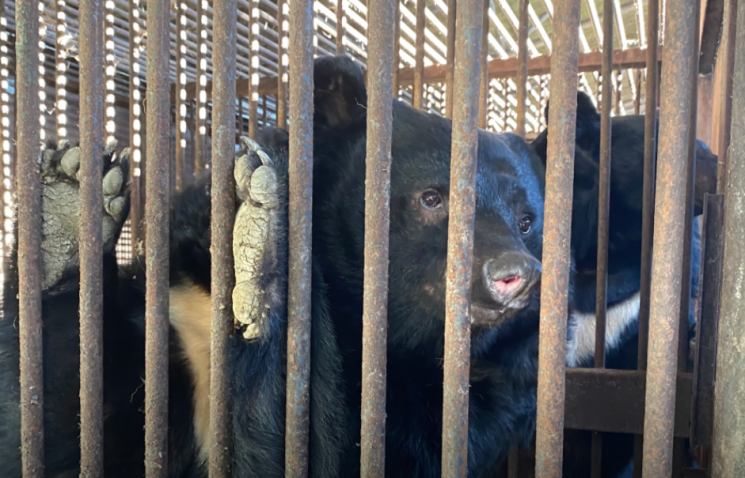
[Asia Economy Reporter Yoon Seul-gi] Human casualties have occurred due to bears escaping from breeding farms. Although bear escape incidents have been repeated several times, critics point out that this tragedy happened as a result of repeatedly postponing legal reforms related to the bear breeding industry.
Three bears escaped from a bear breeding farm in Ulju-gun, Ulsan City, and were shot dead. In front of the breeding facility, a couple in their 60s, who were the farm owners, were found dead, presumed to have been attacked by the escaped bears. According to fire authorities and police on the 9th, firefighters responded to a report from a daughter on the 8th afternoon stating that she could not contact her parents, and upon arriving at a farm in Beomseo-eup, Ulju-gun, they found two Asiatic black bears outside the farm and one inside the farm.
At the farm entrance, a man and woman in their 60s, who were the farm operators and the reporting parents, were found dead. The police are investigating the exact cause of death, placing significant weight on the possibility that they were attacked by bears based on external injuries.
Previously, there were two bear escape incidents at this farm. According to Animal Freedom Coalition, in June 2019, a baby Asiatic black bear bred at the farm escaped, and another escape incident occurred in May 2021. However, the Nakdong River Basin Environmental Office, the management and supervisory agency at the time, judged that emergency protective measures were unnecessary and reportedly returned all bears to the farm.
These bears are said to be illegally bred individuals from Farm A in Yongin City, Gyeonggi Province, which caused a bear escape commotion last year. At Farm A, repeated bear escape accidents heightened local residents' anxiety, with incidents occurring six times in total: two bears in February 2006, three bears twice in April and July 2012, one bear in August 2013, and escapes in July and November 2021, totaling 12 bears escaping.
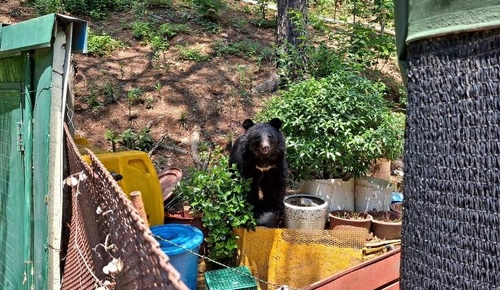
During the bear escape incident in July 2021, the owner of Farm A inflated the number of escaped bears to confuse the search efforts in order to hide illegal slaughtering activities. As a result, the farm owner was sentenced to six months in prison for obstruction of official duties by deception and violations of the Wildlife Protection Act. Previously, the owner had been fined multiple times following reports from animal protection groups for illegal slaughtering and was prosecuted in 2020 for violations of the Wildlife Protection Act, receiving a four-month prison sentence with a one-year probation.
After serving his sentence and being released, the Farm A owner received custody of 100 bears again. Despite multiple bear escape incidents caused by poor facility management, the bears, being private property, cannot be confiscated. Even if confiscated, there are currently no suitable facilities to protect these bears.
Breeding bears often fall into protection blind spots. Although the Asiatic black bear is classified as a first-class endangered species under the Convention on International Trade in Endangered Species of Wild Fauna and Flora (CITES), it is difficult to receive legal protection if it is an illegally bred subspecies. When bears are designated as breeding bears, slaughtering is permitted, but only after they have been kept for more than 10 years.
However, bear breeding should be terminated as it not only raises animal cruelty concerns due to bile extraction but also can cause significant human casualties, as seen in the Ulsan case. On the 9th, Animal Freedom Coalition issued a statement criticizing, "The farm where the accident occurred had already been identified as an unlicensed facility several years ago, highlighting the loopholes in the legal system and management framework surrounding the bear breeding industry."
Animal Freedom Coalition stated, "The government declared the end of the bear breeding industry by 2025 at the 'Agreement Ceremony for the End of Bear Breeding' held in January this year and promised to fulfill its role by enacting special laws and establishing protection facilities."
Animal Freedom Coalition pointed out, "However, contrary to citizens' earnest expectations, nearly a year has passed since the agreement, and the 'Special Act on the Prohibition and Protection of Bear Breeding' has not passed the National Assembly and remains pending. Meanwhile, the suffering of bears bred behind bars continues, and bears that have seen the outside world were shot and killed."
© The Asia Business Daily(www.asiae.co.kr). All rights reserved.
![Clutching a Stolen Dior Bag, Saying "I Hate Being Poor but Real"... The Grotesque Con of a "Human Knockoff" [Slate]](https://cwcontent.asiae.co.kr/asiaresize/183/2026021902243444107_1771435474.jpg)

















