Guri City Maintains "Open Recruitment to Hire Talent Well-Acquainted with Guri's Needs"
Gyeonggi Province and Ministry of the Interior and Safety Announce "Deputy Heads Must Be Regular Local Officials," No Fixed-Term Appointments Allowed
Legislation Office to Decide This Month on Open Recruitment Possibility... Other Local Governments Watch Closely
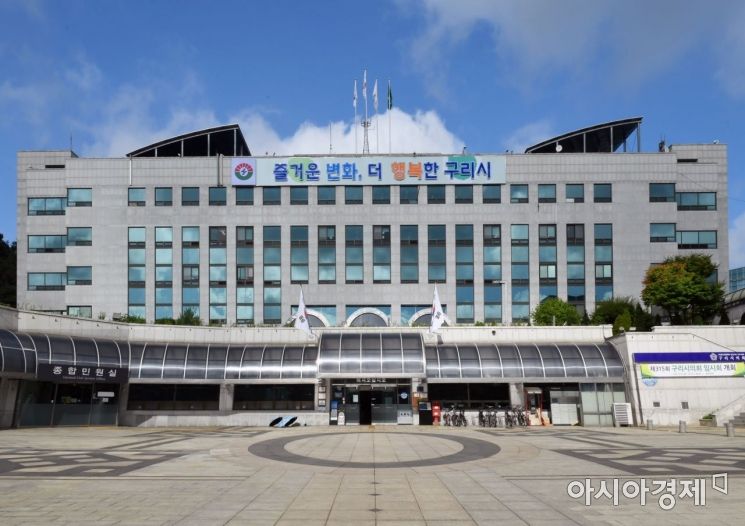
[Asia Economy Reporter La Young-cheol] The Guri City government under the 8th elected administration has refused the appointment of the Deputy Mayor by Gyeonggi Province, leaving the position vacant for six months, raising concerns and controversies over potential citizen harm due to an 'administrative vacuum.'
As there have been many cases where attempts to hire specialized personnel independently led to conflicts with metropolitan governments or the Ministry of the Interior and Safety and were eventually abandoned, other local governments are also paying close attention to whether Guri City will hire a fixed-term (open recruitment) Deputy Mayor.
According to the government, Gyeonggi Province, and Guri City on the 9th, under current laws, the deputy heads of basic local governments are appointed by metropolitan governments, and deputy heads of metropolitan governments are appointed by the Ministry of the Interior and Safety.
However, based on comprehensive reporting, immediately after the launch of the 8th elected administration, Guri City proposed to Gyeonggi Province and the Ministry of the Interior and Safety that the Deputy Mayor be hired through an "open recruitment" system. Both institutions responded that this was "without basis and contrary to the law," notifying that it was not allowed. Guri City promptly requested a legal interpretation from the Ministry of Government Legislation, and until the final response is received, the vacancy of the Deputy Mayor position in Guri City is inevitable.
Guri City argues that hiring a fixed-term Deputy Mayor through open recruitment is possible based on Article 29-4 of the Local Public Officials Act. According to Article 29-4 of the Local Public Officials Act, appointing authorities may designate and operate positions as open-type positions when it is deemed necessary to appoint qualified personnel from inside or outside the public service for positions requiring particular expertise or for efficient policy formulation.
A Guri City official stated, "Until now, Deputy Mayors have lacked understanding of Guri City's circumstances and have shown insufficient initiative or proactiveness," adding, "We decided to hire talent that Guri City desires through an open recruitment system." Currently, the Director of the Economic and Finance Bureau of Guri City is acting concurrently as the Deputy Mayor.
Gyeonggi Province and the Ministry of the Interior and Safety have blocked Guri City's plan to hire a fixed-term Deputy Mayor based on Article 123, Paragraphs 4 and 5, and Article 124, Paragraph 1 of the Local Autonomy Act, and Article 25-5 of the Local Public Officials Act. Their interpretation is that "the deputy head is a pure general local public official position and is not a position requiring expertise or special characteristics."
Article 123, Paragraph 4 of the Local Autonomy Act stipulates that deputy heads of basic local governments shall be appointed as general local public officials, with their rank determined by Presidential Decree. Paragraph 5 of the same article states that the deputy head assists the head of the local government in overseeing affairs and supervises and directs subordinate staff, and Article 124, Paragraph 1 specifies that the deputy head acts on behalf of the head of the local government.
Regarding this, a Gyeonggi Province official said, "Appointing deputy heads as fixed-term public officials does not align with the purpose of the related system." The Ministry of the Interior and Safety also stated, "It is difficult to interpret that fixed-term local public officials fall within the scope of public officials who can serve as deputy heads," aligning with Gyeonggi Province's stance. A Ministry of the Interior and Safety official explained, "The purpose of the fixed-term public official system is to appoint personnel for a set period to handle tasks requiring expertise and special characteristics, so hiring a deputy head as a fixed-term public official is inconsistent with the intent of both systems."
With the Ministry of Government Legislation's review pending and both sides firmly opposed, while Guri City's plan for open recruitment of a fixed-term Deputy Mayor has positive aspects, the general consensus inside and outside the public service is that the drawbacks outweigh the benefits, making its failure highly likely.
A former Gyeonggi Province public official expressed concern, saying, "Open recruitment, intertwined with local government personnel affairs, can be distorted from its original intent and exploited as a means of 'favoritism' or 'protecting one's own people.' There is a sufficient risk of forming factions based on academic, regional, or blood ties to suppress competitors in a 'witch hunt' manner or, conversely, to nurture favored public officials."
Another public official pointed out, "There is a risk of violating the political neutrality obligation of public officials," noting the high possibility of election interference. He added, "During elections, it is natural for those hired by the local government head to lean more favorably toward them. Usually, if close aides or politicians trusted by the incumbent local government head are appointed, they are classified as 'the mayor's people,' and may even cover up corruption allegations involving their circle or key personnel."
Criticism is also emerging within Guri City itself, with some calling it a "means to control city administration." An anonymous informant said, "There is a strong intention to control Guri's administration by deploying a loyal audit officer unit, and if the Deputy Mayor is also hired as their own person under the pretext of open recruitment, the public service community will be damaged unprecedentedly."
The Guri City Council has also urged Mayor Baek Kyung-hyun to make a prompt decision, expressing concern over the prolonged administrative vacuum. Council member Shin Dong-hwa recently questioned, "Despite having already received a 'not allowed' notice from Gyeonggi Province and the Ministry of the Interior and Safety regarding the open recruitment of a fixed-term Deputy Mayor, the city is forcibly proceeding without accepting it," warning, "In a situation where support from the central government and Gyeonggi Province is urgently needed for the city's policy projects, this could be a case of losing the big picture for small gains."
On the other hand, there is a view that "if the open recruitment Deputy Mayor is properly utilized, it could invigorate the organization and enable administration aligned with the purpose of local autonomy." The case of Deputy Mayor Ahn Dong-kwang of Uijeongbu, who had a conflict with Mayor Ahn Byung-yong over personnel authority in May, is also cited as an example of the positive function of deputy heads assisting the appointing local government head while also serving as a check.
The Ministry of Government Legislation plans to hold a legal review committee meeting this month to determine whether Guri City's open recruitment of the Deputy Mayor is permissible.
© The Asia Business Daily(www.asiae.co.kr). All rights reserved.

















