'Crime Source' Simbox, Network-Based Blocking
Samsung and Apple Collaborate to Solve Family Impersonation Issues
Easy International Call Detection... Convenient Reporting Feature Included
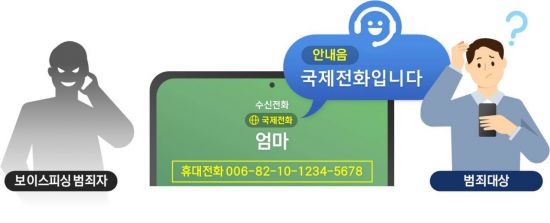
[Asia Economy Reporter Minyoung Cha] Starting from June next year, when receiving a call from abroad, the recipient will hear a voice prompt saying "This is an international call." Since voice phishing criminal organizations operate mainly from overseas bases, this measure helps recipients more accurately recognize calls originating from outside the country.
The Ministry of Science and ICT announced follow-up measures against voice phishing on the 8th, including voice guidance for incoming international calls and direct reporting of suspicious "bait messages" from the message reception window.
Following the September crackdown on voice phishing, which blocked number manipulation relay devices (Simboxes) used to spoof international calls as domestic ones, the government decided to implement voice guidance for incoming international calls starting in the first half of next year.
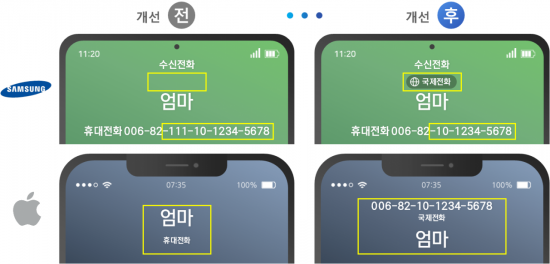
Additionally, to address the new type of spoofing issue where even partial matches between foreign-originated phone numbers and numbers stored on users' devices cause the stored contact name to be displayed, the Ministry completed OS updates in cooperation with device manufacturers such as Samsung Electronics and Apple. Previously, if the last 9 to 10 digits of the caller ID matched, the device would display the name registered in the address book, leading victims to mistakenly believe the call was from family or acquaintances and thus fall prey to voice phishing.
The Ministry of Science and ICT also identified that the starting point of voice phishing is "bait messages" that deceive victims by pretending to be about low-income loans, overseas payments, or government subsidies. To address this, they established a one-stop reporting system allowing suspicious messages to be reported directly from the message reception window. Currently, while devices have spam reporting functions, they are hard to find, and although there is a reporting site at the Korea Internet & Security Agency, the process is complicated, resulting in low reporting rates. To improve this, from the first half of next year, domestic device manufacturers have agreed to include a suspicious message reporting section in the message reception window, and cooperation is being requested from overseas manufacturers.
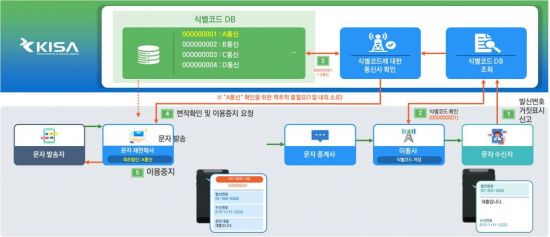
The Ministry plans to insert unique identification codes for each service provider into messages starting March next year to more quickly track and block phishing messages sent en masse to unspecified recipients. This is expected to reduce the time from illegal message report receipt to sender blocking from 7 days to 2 days.
Furthermore, from early next year, phone numbers used for illegal activities such as financial fraud will be blocked from sending messages, and individuals with a history of illegal activities such as using burner phones or voice phishing will be restricted from opening new mobile phone accounts for one year.
In addition, devices used in crimes such as number manipulation relay devices that spoof international call numbers as domestic mobile numbers will have their functions immediately blocked via network-based methods starting from the 11th. Previously, enforcement relied on police directly cracking down on number manipulation relay devices, so this is expected to improve enforcement efficiency. This is based on amendments to the Telecommunications Business Act and its enforcement decree, which provide legal grounds to block not only lost or stolen devices but also number manipulation relay devices and devices used in communication and financial fraud based on the device's unique identifier (IMEI).
The Ministry also plans to strengthen identity verification procedures by introducing ID scanners in the process of activating budget phones, which have been identified as difficult to verify identity through online activation.
Jung Changrim, Director of Telecommunications Policy at the Ministry of Science and ICT, stated, "Analyzing the methods and means of voice phishing crimes and preparing and responding with preventive measures in the telecommunications sector is one of the key elements in eradicating voice phishing crimes," adding, "The public and private sectors will continuously cooperate and strive to eradicate voice phishing."
© The Asia Business Daily(www.asiae.co.kr). All rights reserved.



















