US and EU Expand Domestic Production Capacity and Promote 'Resource Alliances' Centered on Allies
China Strengthens Control over Domestic Resources and Aggressively Secures Overseas Mines
KITA: Korea Strives for Overseas Resource Development, Resource Recycling, and Supply Chain Diversification
[Asia Economy Reporter Moon Chaeseok] While the United States, China, and the European Union (EU) are mobilizing all their capabilities to secure minerals such as rare earth elements and to 'weaponize resources,' there are criticisms that South Korea's response is too slow. Since South Korea relies heavily on imports for most key minerals such as nickel, lithium, and rare earth elements, there is a growing call to accelerate overseas resource development and diversify supply chains.
On the 8th, the Korea International Trade Association's Institute for International Trade and Commerce released a report titled "Key Countries' Strategies for Securing Critical Minerals and Implications."
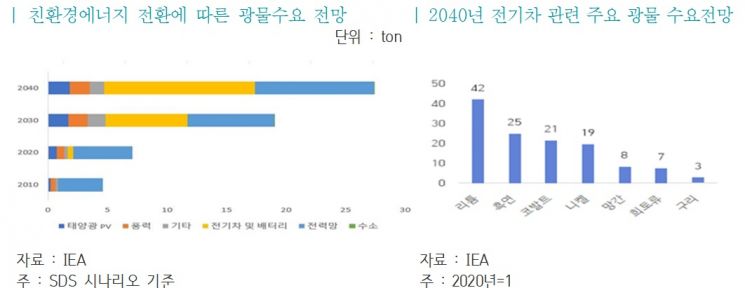
The US, EU, and China have designated essential minerals for industries such as electric vehicle batteries and eco-friendly energy sectors like solar power as 'critical minerals' and are mobilizing national capabilities. Demand for major minerals, including lithium and rare earth elements, is expected to increase by several tens of times within 20 years. Resources are limited, and resource nationalism is spreading. The competition for minerals is expected to intensify.
The report noted that the US recognizes its overdependence on China for critical minerals. It is working to stabilize supply chains by strengthening domestic production capabilities and building supply networks with allied countries.
After releasing the "Review Report on Supply Chains of Four Key Items" last year, the US is making large-scale investments to expand regional mining and secure processing technologies. A representative example is the "Infrastructure Law," announced by the Department of Energy, which provides $7 billion (approximately 9.25 trillion KRW) in support over five years. The law includes provisions to support technology development related to critical minerals, production expansion, and battery component manufacturing. Additionally, the US is striving to strengthen supply chains by establishing consultative bodies with allies, such as the Quad security dialogue among four countries and the Mineral Security Partnership (MSP) involving ten countries.
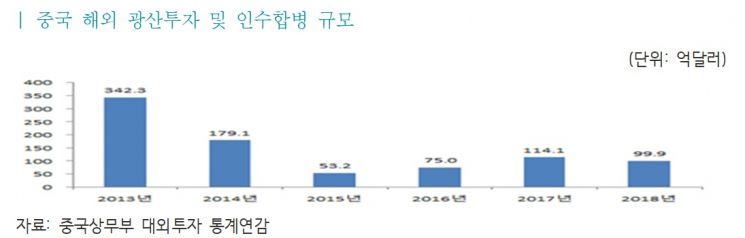
China, despite having abundant rare earth elements, is tightening controls. It is blocking sales to foreign countries to drive up prices and strengthen its influence. Related companies are being consolidated into state-owned enterprises, and foreign investment, exploration, and mining in key minerals such as tungsten are prohibited. China is also accelerating its overseas resource equity acquisitions. Between 2013 and 2018, it invested $86.2 billion (approximately 114 trillion KRW) in overseas mine investments and mergers and acquisitions.
The EU is promoting mineral production within Europe and seeking to diversify supply sources through expanded overseas cooperation. It has consecutively launched pan-European organizations such as the European Battery Alliance (EBA) and the European Raw Materials Alliance (ERMA). The EU has set a common goal of securing stable mineral supplies by overcoming differences among member states. Efforts to diversify supply sources include enhancing mineral resource accessibility through bilateral and multilateral agreements and strengthening networks with resource-holding countries. These efforts are part of risk management.
Park Gahyeon, a senior researcher at the Korea International Trade Association, said, "China is strengthening domestic resource controls, while the US and Europe are enhancing domestic production capabilities and resource alliances with allies. South Korea must also actively expand overseas resource development and support measures, increase technology development such as recycling and reuse of waste resources, carbon gas reduction, and alternative technologies, and diversify supply sources."
© The Asia Business Daily(www.asiae.co.kr). All rights reserved.



















