[Asia Economy Reporter Jeong Hyunjin] As the Chinese government abandons its three-year-long 'Zero COVID' policy, spreading expectations for economic recovery, concerns have been raised about the need to prepare for a large-scale infection outbreak due to the sudden policy change. Experts warned that increasing vaccination rates is essential to prevent a resurgence of COVID-19 originating from China.
◆ Will China's economy improve next year with eased quarantine measures?
According to Bloomberg News on the 7th (local time), the Chinese government, which announced the easing of COVID-19 quarantine policies, is internally considering setting next year's economic growth target at around 5%. The economic growth target set by the Chinese government for this year is 5.5%. However, due to the economic damage caused by COVID-19 quarantine measures and other factors, Bloomberg expects China's economic growth rate to record 3.2% this year. A source conveyed that by setting a high economic growth target, the government aims to shift the focus of local governments from COVID-19 quarantine to economic stimulus.
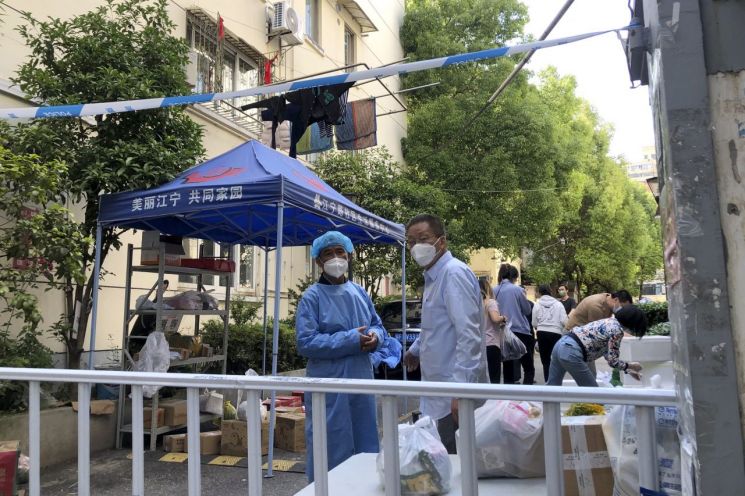
The day before, the Chinese government decided not to arbitrarily expand lockdown measures even in high-risk areas, instead applying them by building, unit, floor, or household. The principle of polymerase chain reaction (PCR) testing was also abolished. Asymptomatic or mild COVID-19 patients among confirmed cases were allowed to self-isolate. Given the worsening economic situation and ongoing blank-paper protests against strict quarantine controls since the end of last month, the government ultimately eased quarantine policies significantly. The Nihon Keizai Shimbun reported, "If economic activities normalize due to the easing of COVID-19 regulations, there could be positive effects on the global economy through domestic demand recovery."
◆ Could trigger a resurgence
However, concerns have been raised that the removal of China's quarantine barriers could trigger a resurgence of COVID-19. Anthony Fauci, director of the National Institute of Allergy and Infectious Diseases (NIAID) and White House chief medical advisor, who was the U.S. COVID-19 response chief, said at an event hosted by a foreign media outlet on the same day, "If they ease quarantine policies without prior vaccination campaigns or other measures, there will definitely be an increase in infections." He warned that retreating from quarantine policies without proper preparation could strain the national health system and lead to a large-scale outbreak.
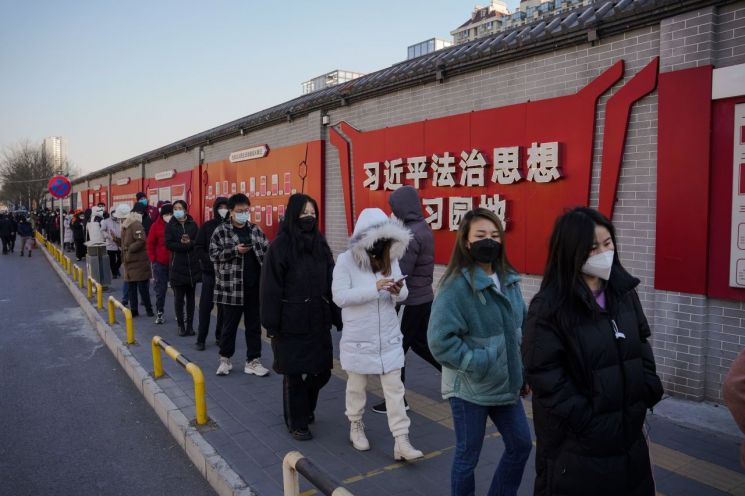
Dr. Fauci also stated that if a large-scale COVID-19 outbreak occurs in China, it would create opportunities for new variants of the virus to emerge. He pointed out, "Every time the virus spreads extensively, it provides ample opportunities for mutations," adding, "When the virus mutates, it eventually creates new variants that could impact the rest of the world."
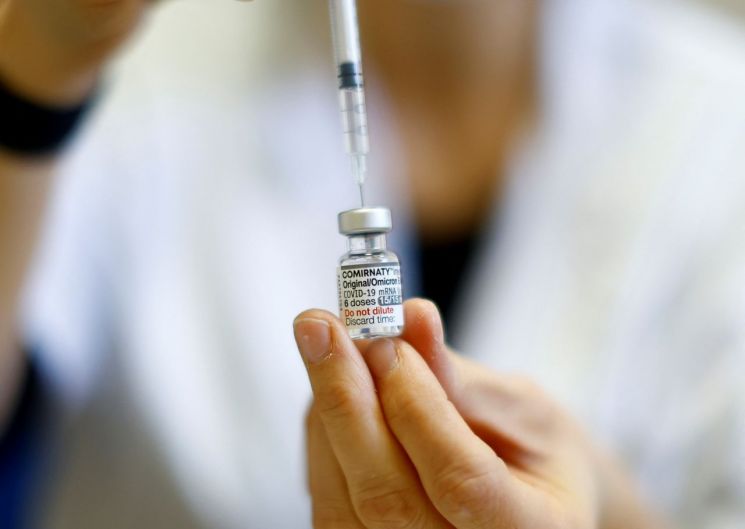
In particular, Dr. Fauci noted that the easing of lockdowns would expose elderly Chinese who have not received a third vaccine dose to the risk of chain infections. There are about 85 million people aged 60 and over. To prevent this, he emphasized that China should import mRNA vaccines from Western countries.
Western medical experts have expressed similar concerns. The Asian macroeconomic consulting firm Wigram Capital Advisors estimated through model analysis that COVID-19 deaths in China could reach one million this winter.
Associate Professor Xi Qian of Yale University School of Public Health in the U.S. expressed concern in an interview with CNN, saying, "The crisis is vaguely approaching. The timing is very bad," regarding the lifting of quarantine measures in winter. William Schaffner, an infectious disease professor at Vanderbilt University, said, "China will now have to endure a period of suffering due to severe illness, death, and pressure on the healthcare system."
Chinese experts also forecast that 80-90% of the entire population could eventually be infected with the COVID-19 virus. Feng Zijian, former deputy director of the Chinese Center for Disease Control and Prevention, said at an online meeting at Tsinghua University on the 6th, "Regardless of how COVID-19 quarantine measures are adjusted, it is inevitable that most of us will be infected at least once."
However, Eric Topol, founder and director of the Scripps Research Institute who has been analyzing COVID-19 spread trends, commented on Dr. Fauci's remarks, stating that while uncontrolled infection spread in China could lead to the emergence of new variant viruses, the probability is "very low." Nevertheless, he predicted that if China continues to insist on using only domestic vaccines and ignores the highly effective vaccines developed in the West, the number of deaths will increase sharply.
Along with the resurgence of COVID-19, some opinions point to the uncertainty of China's quarantine policy as a risk. There is a view that if a resurgence occurs, quarantine measures could be strengthened again. Jin Dongyan, professor of virology at the University of Hong Kong, told the South China Morning Post (SCMP), "Although the Zero COVID policy has been abandoned, there is no clear plan for what to do next. Public confusion is a significant problem, even worse than the virus itself." He emphasized the need to communicate with the public on various issues such as when to reopen borders and how to prepare for future resurgences.
© The Asia Business Daily(www.asiae.co.kr). All rights reserved.
!["The Woman Who Threw Herself into the Water Clutching a Stolen Dior Bag"...A Grotesque Success Story That Shakes the Korean Psyche [Slate]](https://cwcontent.asiae.co.kr/asiaresize/183/2026021902243444107_1771435474.jpg)


















