[Asia Economy New York=Special Correspondent Joselgina] Warnings about a recession next year are pouring in from CEOs in the U.S. Wall Street financial sector. Amid consecutive recession warnings, the New York Stock Exchange closed lower across the board. International oil prices fell to their lowest level since December last year.
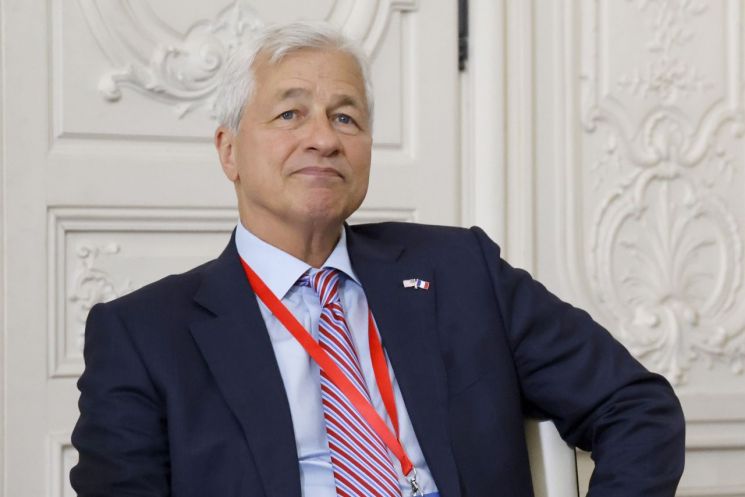
Jamie Dimon, CEO of JP Morgan Chase, known as the "Emperor of Wall Street," appeared on CNBC's Squawk Box on the 6th (local time) and said, "Inflation is eating everything up," adding that this high inflation will derail the economy and lead to a U.S. recession next year.
Recently, he began by saying that consumer and corporate conditions are okay, noting that U.S. consumers saved $1.5 trillion through COVID-19 pandemic relief programs, which allowed them to increase spending by 10% compared to 2021. However, due to high inflation, he diagnosed that by mid-next year, the capacity for consumption itself will be depleted. CEO Dimon pointed out, "These things can derail the economy and cause a mild or severe recession as people fear."
This aligns with Dimon’s earlier warnings since June that "an economic hurricane is coming soon." At that time, he diagnosed that a U.S. recession was inevitable due to soaring inflation, steeper-than-expected interest rate hikes, unknown effects of quantitative easing (QE), and the prolonged Russian invasion of Ukraine.
In particular, CEO Dimon forecasted that with the Federal Reserve’s (Fed) continued high-intensity tightening, the benchmark interest rate will exceed 5% next year, but even this "may not be enough to curb inflation." Since the beginning of the year, the Fed has continued high-intensity tightening and raised the current upper limit of interest rates to the 4% range through an unprecedented four consecutive giant steps (0.75 percentage point hikes in the benchmark rate).
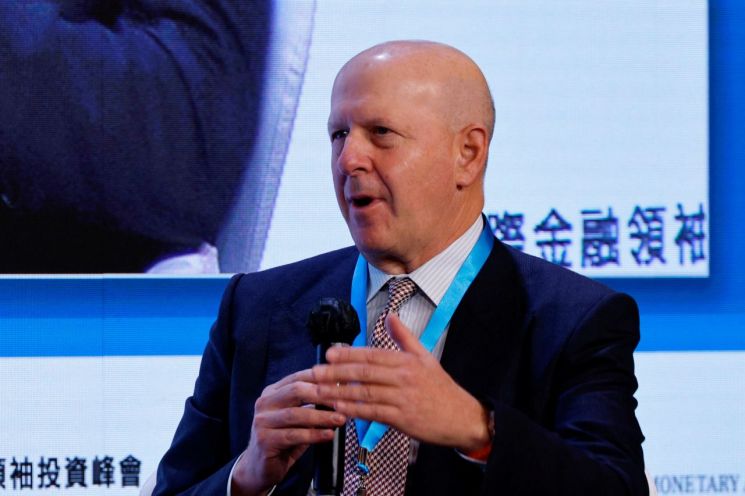
David Solomon, CEO of global investment bank Goldman Sachs, also presented a gloomy economic outlook at a Goldman Sachs-hosted financial conference held in New York on the same day, saying, "Many CEOs are watching economic indicators and waiting to see what will happen." He evaluated that recently, clients seem "tired after a very volatile year."
Additionally, Solomon mentioned that his economic outlook is "a bit more cautious" than that of Goldman Sachs economists. Considering Goldman Sachs’s earlier optimistic forecast that the U.S. economy would narrowly avoid a recession next year, Solomon’s stance is interpreted as leaning toward a recession. In an interview with foreign media released the same day, he warned that "we have to assume we are entering a rough period ahead," suggesting the U.S. may face a recession next year.
Brian Moynihan, CEO of Bank of America (BoA), also predicted mild negative growth over three quarters next year at Goldman Sachs’s financial conference. He said, "The U.S. economy will experience negative growth in the first half of next year," adding, "bond investments are better than stocks." He also diagnosed signs of weak consumption as spending has recently slowed.
On the same day, BoA’s Chief Investment Strategist Michael Hartnett stated that with the Fed continuing to raise interest rates, the U.S. economy is highly likely to fall into a recession next year. He recommended selling stocks and predicted, "The soaring unemployment rate in 2023 could shock consumers as much as inflation did in 2022." On this day, reports emerged that investment bank Morgan Stanley plans to lay off 1,600 employees, about 2% of its total workforce. Internet media BuzzFeed also announced it will reduce its workforce by 180 people, about 12% of its total staff.
Meanwhile, due to recession concerns originating from Wall Street, the New York Stock Exchange closed lower across the board on this day. The Nasdaq index, centered on technology stocks, ended trading 2.0% lower than the previous session. The Dow Jones Industrial Average fell 1.03%, and the S&P 500 index dropped 1.44%.
As the economic outlook for 2023 darkened, international oil prices returned to levels seen a year ago. On the New York Mercantile Exchange (NYMEX), West Texas Intermediate (WTI) crude oil for January delivery closed at $74.25 per barrel, down 3.5% from the previous session. It fell for three consecutive trading days, hitting its lowest level since December 23 last year.
© The Asia Business Daily(www.asiae.co.kr). All rights reserved.
![Clutching a Stolen Dior Bag, Saying "I Hate Being Poor but Real"... The Grotesque Con of a "Human Knockoff" [Slate]](https://cwcontent.asiae.co.kr/asiaresize/183/2026021902243444107_1771435474.jpg)

















