[Asia Economy Reporter Song Hwajeong] Warning signs have been raised regarding the asset soundness of the Korea Development Bank (KDB) and the Export-Import Bank of Korea (KEXIM). As of the end of the third quarter, their Basel III (BIS) capital ratios sharply declined. KEXIM fell below 13%, and KDB barely exceeded 13%.
According to the Financial Supervisory Service on the 7th, the total BIS capital ratios of KDB and KEXIM as of the end of September were 13.08% and 12.99%, respectively. These are the lowest levels among domestic banks, with KDB dropping 1.77 percentage points and KEXIM 1.15 percentage points compared to the previous quarter.
The BIS capital ratio is the bank's capital divided by risk-weighted assets, serving as an indicator of bank soundness. The increase in risk-weighted assets due to financial support for market stability, exchange rate rises, and increased corporate loans has pulled down the BIS capital ratios.
KDB's soundness was affected by support measures to stabilize the bond market amid liquidity tightening triggered by Legoland-related issues. The government announced a market stabilization plan exceeding 50 trillion KRW, with KDB participating in the Bond Market Stabilization Fund. The fund's capital structure consists of 20% from KDB, 60% from commercial banks, and 20% from insurance and securities companies. Additionally, KDB is operating a 10 trillion KRW corporate bond and commercial paper (CP) purchase program. Previously, in 2020, during the COVID-19 crisis, KDB and KEXIM's BIS ratios also declined as they provided liquidity support to companies.
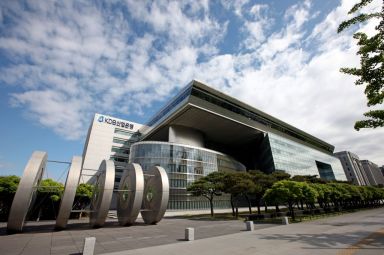
Korea Electric Power Corporation's (KEPCO) massive losses are considered the biggest factor eroding KDB's soundness. KDB holds a 33% stake in KEPCO, which recorded an operating loss of 21 trillion KRW through the third quarter this year. According to the equity method, 33% of KEPCO's losses are recorded as KDB's losses. KDB Chairman Kang Seok-hoon stated at the National Assembly audit in October that "KEPCO's 1 trillion KRW loss reduces KDB's BIS ratio by about 0.06 percentage points." Securities firms forecast KEPCO's losses to exceed 30 trillion KRW this year, raising concerns that KDB's BIS ratio will decline further. Chairman Kang reportedly expressed concerns at an internal meeting last month, saying "defending the BIS ratio at 13% will not be easy."
KEXIM, which has a large amount of foreign currency loans, saw its BIS ratio fall below 13% due to a significant increase in risk-weighted assets caused by loan growth and a sharp rise in the KRW-USD exchange rate. Earlier, KEXIM President Yoon Hee-sung stated at the recent audit, "This year, loan balances increased to 121 trillion KRW, and the KRW-USD exchange rate rose above 1,400 KRW, causing the BIS ratio to shrink," adding, "there is a possibility it will fall below 13% by the end of this year."
These soundness concerns of policy banks are expected to negatively impact their capacity to support companies. Chairman Kang explained at the audit, "If KEPCO's losses reach 21 trillion KRW, the BIS ratio will drop by 1.37 percentage points, which would reduce KDB's corporate support capacity by about 33 trillion KRW annually."
Financial authorities are also closely monitoring the soundness situation of policy banks. A financial authority official said, "We are monitoring the asset soundness of financial institutions, including KDB."
© The Asia Business Daily(www.asiae.co.kr). All rights reserved.
![Clutching a Stolen Dior Bag, Saying "I Hate Being Poor but Real"... The Grotesque Con of a "Human Knockoff" [Slate]](https://cwcontent.asiae.co.kr/asiaresize/183/2026021902243444107_1771435474.jpg)
















