Steel and Chemical Stocks Accumulate
Out-of-Stock Gas Stations Run Out of Fuel
Cement Finds Stability
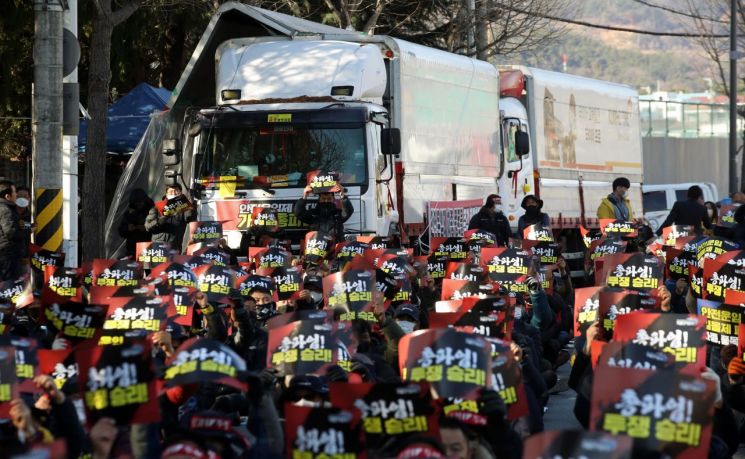
[Asia Economy Reporters Oh Hyung-gil and Kim Jong-hwa] The strike by the Cargo Solidarity Headquarters of the Korean Public Service and Transport Workers' Union (Cargo Solidarity), which began on the 24th of last month, has entered its second week, causing increasing damage across various industries.
The steel and petrochemical industries are unable to ship their products, leading to inventory buildup, and over a hundred gas stations have run out of fuel. However, the cement industry, which had suffered the most significant damage until now, has begun to stabilize following the government’s order to resume work and the normalization of shipments.
On the 6th, the steel and petrochemical industries issued statements condemning the Cargo Solidarity’s refusal to transport goods and called for an immediate resumption of transportation.
The Korea Iron & Steel Association stated, "The disruption in steel supply is not limited to steel itself but is on the verge of spreading into a crisis across all industries including construction, automotive, shipbuilding, and machinery," urging, "Cargo Solidarity must immediately resume steel transportation operations, and any demands or claims should be resolved through reasonable procedures." So far, shipment disruptions in the domestic steel industry amount to 920,000 tons and 1.2 trillion won based on the five major steel companies.
The Korea Petrochemical Industry Association also said, "The prolonged collective refusal to transport is pushing factories to the brink of shutdown," adding, "If factory operations stop, not only will there be a daily sales loss of 123.8 billion won, but various key industries such as automotive that use petrochemical materials, as well as related industries like plastics, will inevitably face a chain reaction of operational halts," and requested the resumption of transportation.
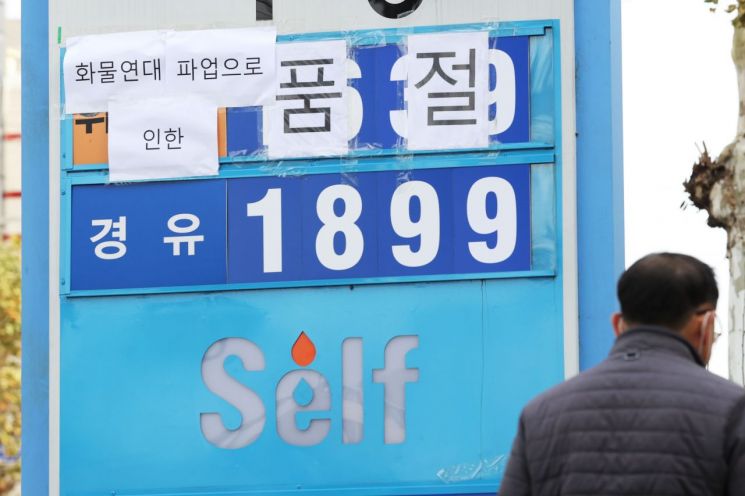
Not only the industrial sector but also consumers nationwide are at risk as gas stations running out of fuel are rapidly increasing. According to fuel price information service Opinet, as of the afternoon of the 5th, there are 96 gas stations nationwide?including 80 out of gasoline, 8 out of diesel, and 8 out of both gasoline and diesel?that have run out of fuel in Seoul, Incheon, Gyeonggi, and other regions. In Seoul alone, 35 gas stations are sold out. Some gas stations have been forced to close temporarily due to the inability to receive product supplies.
Since most gas stations usually keep about one to two weeks’ worth of sales inventory, the fuel shortage crisis is expected to reach its peak this week. In the worst-case scenario, a nationwide sales halt could occur around this weekend, raising concerns about consumer harm.
On the other hand, the cement industry, which had suffered the most from the strike, is breathing a sigh of relief as shipments have increased following the government’s order to resume work. Except for distribution (shipment) bases in the metropolitan area such as Susaek, Obong, and Suwon, cement shipments nationwide are operating normally. Of the approximately 180,000 tons scheduled for shipment that day, about 159,000 tons were shipped, recovering the shipment rate to around 88.3%.
The unsent cement amounts to about 21,000 tons, which translates to approximately 2.1 billion won, with cumulative damages reaching about 116.1 billion won.
A representative from the Cement Association said, "The cement industry is fully preparing for complete normalization following the end of Cargo Solidarity’s transportation refusal by continuously transporting cement to metropolitan distribution (shipment) bases via rail and ships to ensure smooth cement supply," adding, "The government’s order to resume work targeting the cement industry has been successful."
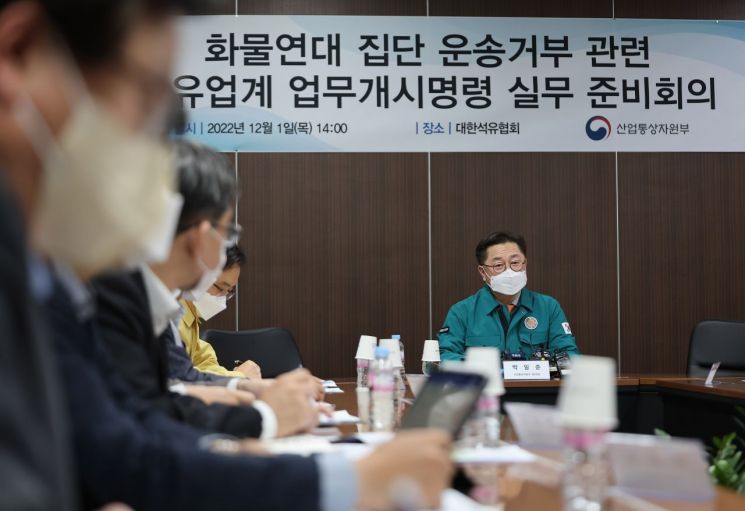
Meanwhile, the government has begun on-site inspections to verify whether cement truck drivers who received the order to resume work have restarted transportation. The Ministry of Land, Infrastructure and Transport plans to impose administrative penalties such as suspension of operation for up to 30 days (for first non-compliance) and cancellation of freight transport qualifications (for second non-compliance), along with criminal charges if truck drivers or transport companies are found not to have resumed operations.
© The Asia Business Daily(www.asiae.co.kr). All rights reserved.



















