Strengthening Distribution and Use of Mechanical Chest Compression Devices to All Ambulance Teams Nationwide
Only 46 of 149 Ambulance Teams Dispatched During Itaewon Disaster Equipped with Devices
 On the 3rd, during the third match of Group H in the 2022 Qatar World Cup between South Korea and Portugal, Red Devils and citizens at Gwanghwamun Square in Seoul cheered as the national team secured their place in the round of 16. Photo by Hyunmin Kim kimhyun81@
[Asia Economy Reporter Kim Junran] The National Fire Agency announced on the 5th that it will prepare measures to expand the distribution and utilization of mechanical chest compression devices in preparation for situations where multiple cardiac arrest patients occur.
Mechanical chest compression devices are equipment used to minimize interruptions in chest compressions in special situations such as when a patient occurs in confined spaces like trains or airplanes, or when resuscitation is prolonged and manpower is insufficient.
Among the 149 ambulances dispatched during the Itaewon disaster, only 46 were equipped with mechanical chest compression devices, and it is known that only 3 of these devices were used on site. Accordingly, there are criticisms that the distribution rate and usage rate of the devices are low.
Currently, out of 1,601 ambulances nationwide, 1,059 are equipped with mechanical chest compression devices. These devices are optional equipment stocked considering the frequency of use and necessity of function at the scene.
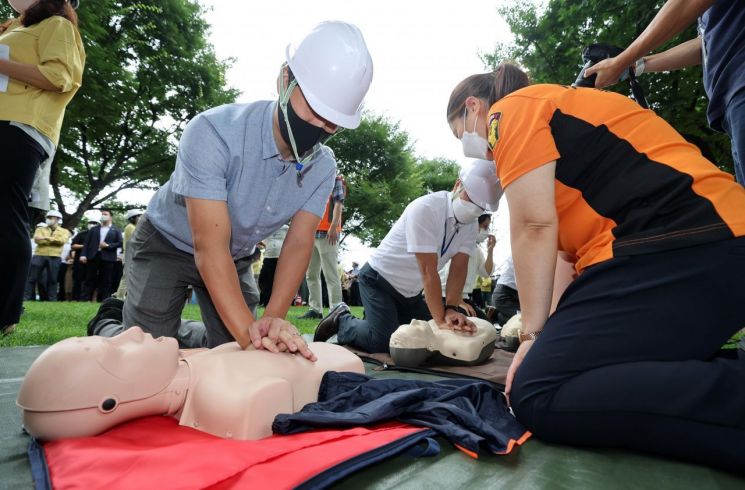
According to the '119 Ambulance Crew On-site Emergency Treatment Standard Guidelines,' there is no evidence that chest compressions using equipment are superior to manual compressions. Also, rather than using the device immediately when a cardiac arrest patient occurs, it is often applied just before transport while monitoring the patient's condition. The National Fire Agency explained that this is why the usage rate was low at the Itaewon disaster site.
Among 32,634 patients who received cardiopulmonary resuscitation from ambulance crews last year, the rate of using mechanical chest compression devices was 29.4% (9,607 cases). This has steadily increased over the past three years, with 20.2% in 2019 and 25.7% in 2020.
Accordingly, the National Fire Agency stated that it plans to prepare measures to actively utilize mechanical chest compression devices in the event of multiple casualties. It will secure related budgets to expand distribution to all ambulances and strengthen education and training by distributing equipment utilization videos within this month, enabling active use during initial response or manpower shortages.
Additionally, to facilitate decisions on performing or withholding cardiopulmonary resuscitation for cardiac arrest patients on site and guidance on the use of mechanical chest compression devices by attending physicians, the agency plans to consult with the Korean Society of Emergency Medicine and others.
© The Asia Business Daily(www.asiae.co.kr). All rights reserved.
![Clutching a Stolen Dior Bag, Saying "I Hate Being Poor but Real"... The Grotesque Con of a "Human Knockoff" [Slate]](https://cwcontent.asiae.co.kr/asiaresize/183/2026021902243444107_1771435474.jpg)

















