Analysis of Recent Short-term Finance and Bond Market Conditions by the Bank of Korea
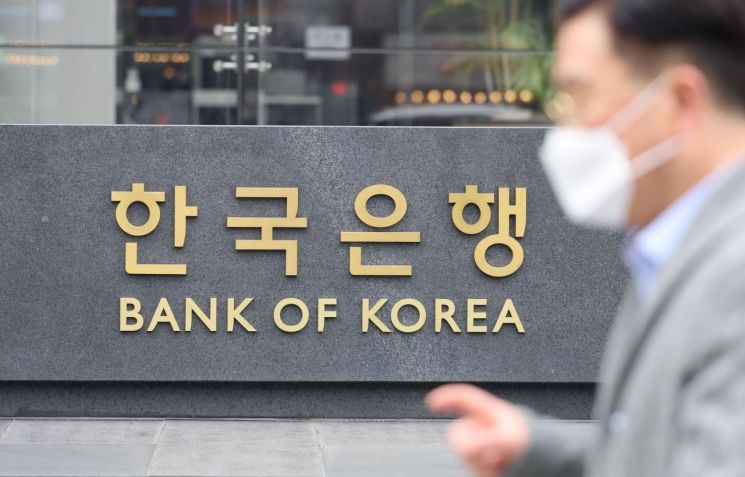
The Bank of Korea explained that although the short-term finance and bond markets are recovering due to liquidity supply measures by the government and the Bank of Korea, the commercial paper (CP) market still faces high credit caution, and there is a possibility that instability could expand depending on the severity of the real estate downturn.
On the 5th, the Bank of Korea analyzed the recent situation of the short-term finance and bond markets in its 'Financial and Economic Issue Analysis' report. At the end of September, following the Gangwon-do Legoland incident which spread instability across the CP and short-term finance markets, the Bank of Korea and the government announced market stabilization measures amounting to 50 trillion won plus alpha (α).
However, since then, CP interest rates have remained above 5%, reflecting persistent high credit caution. Although issuance of CP and short-term bonds has resumed, issuance remains sluggish, particularly for securities firms’ CP and project financing asset-backed commercial paper (PF-ABCP).
The Bank of Korea stated, "While the liquidity vicious cycle situation in October appears to have been overcome, the level of illiquidity remains high compared to the beginning of the year," and explained, "Trading volume in the secondary market for credit bonds has not recovered, especially for low-credit corporate bonds and non-prime financial company bonds."
The Bank of Korea forecasted that even as policy effects gradually become visible, considerable time will be needed for recovery given year-end funding conditions, residual risks, and past experience. According to the Bank of Korea, past crises took more than 3 to 6 months to recover to pre-crisis levels.
Furthermore, the Bank of Korea predicted that the CP and credit bond markets’ recovery trend will be influenced by ▲ increased volatility in interest rates and exchange rates ▲ smooth refinancing at year-end ▲ sluggishness in the real estate PF market.
In particular, the Bank of Korea pointed out, "If the real estate market experiences a hard landing, concerns over PF defaults will increase, especially in vulnerable sectors such as PF bridge loans, potentially worsening liquidity conditions for related securities firms and intensifying instability in the PF-ABCP market."
Regarding the repurchase agreement (RP) market, the Bank of Korea noted that despite short-term market instability, it has functioned smoothly as a buffer, but warned that if risks expand in the future, there is a possibility that instability could spread.
The Bank of Korea emphasized, "It is necessary to monitor the RP market carefully, paying attention to the possibility that investment sentiment in money market funds (MMFs), a major source of funding, could sharply deteriorate or that liquidity risks for securities firms could greatly increase due to PF-related debt guarantees."
© The Asia Business Daily(www.asiae.co.kr). All rights reserved.

















