Distribution Industry Outlook for Next Year Also Pessimistic
High Inflation Impact to Continue in Food and Fashion Sectors
Large Supermarkets and Convenience Stores See Subsistence-Oriented Consumption
Experts Say "Polarization Deepens... International Environment Must Improve"
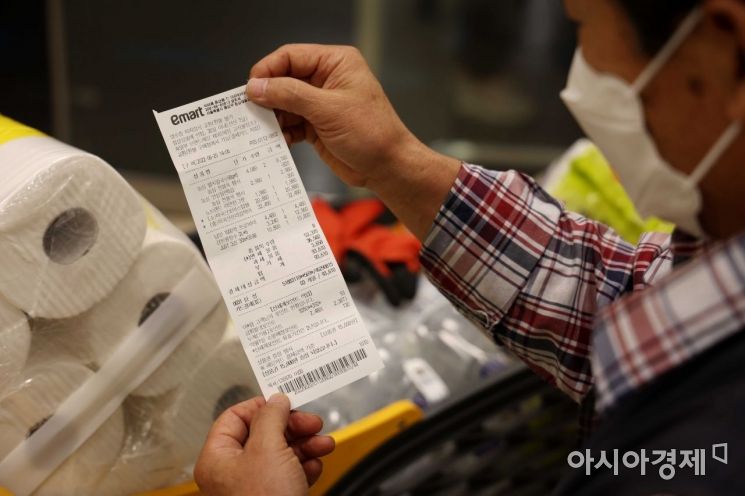
[Asia Economy Reporter Song Seung-yoon] The domestic distribution market, which has undergone significant changes since COVID-19, is expected to be greatly affected by both domestic and international uncertainties next year, such as the rise in global raw material prices and the impact of a strong dollar. Given the distribution industry's sensitivity to consumer sentiment, experts predict that the outlook for next year will not be entirely optimistic, as rapid inflation is likely to dampen consumer confidence.
According to industry sources on the 5th, the domestic retail market is projected to grow by 5.7% this year, driven by concentrated domestic consumption due to the slow recovery of overseas travel. However, from next year, as overseas travel fully recovers and high inflation and high interest rates persist, consumer purchasing power is expected to decline, leading to a slowdown in growth compared to this year.
The food industry remained a "safe zone" despite the shock of COVID-19, thanks to increased demand for home dining and K-food. Growth is expected to continue next year, centered on home meal replacements (HMR) and frozen meal kits, which expanded during the pandemic. With raw material prices and logistics costs continuing to rise, product price increases to offset cost burdens are expected to continue into next year, following this year's trend.
The fashion industry benefited significantly this year from the reopening effect, including increased outdoor activities due to the lifting of social distancing and expanded demand for luxury brands. Most companies recorded strong performances, but it is uncertain whether this upward trend will continue into next year. Similarly, if high inflation persists, spending on clothing is likely to be cut first, potentially leading to a contraction in consumption itself. This could also result in increased inventory burdens.
Department stores, despite the polarization of consumption, have maintained relatively defensive performance due to high-end consumption, but growth is expected to slow somewhat due to reduced spending by consumers in their 20s and 30s who entered the market after COVID-19. Large discount stores also saw increased sales in outing-related categories following the lifting of social distancing, but consumption is predicted to slow next year except for essential items. However, with continued home dining, sales in the grocery category are expected to remain strong.
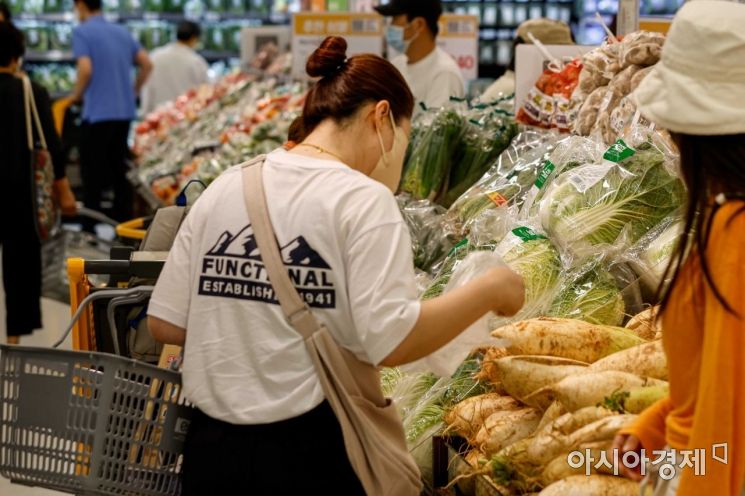 Customers are shopping at a large supermarket in Seoul on the 3rd, as vegetable prices surge due to the recent heavy rains and the monsoon season./Photo by Kang Jin-hyung aymsdream@
Convenience stores are likely to shift their focus to products and differentiated marketing emphasizing proximity and convenience, in line with ongoing cost-conscious and livelihood-focused consumption patterns. In particular, products targeting the MZ generation (Millennials + Generation Z), reflecting the Healthy Pleasure trend and value-driven consumption culture that persisted throughout the COVID-19 pandemic, are expected to gain prominence.
The duty-free industry is expected to place greater importance on resolving uncertainties such as high exchange rates and China's lockdown measures. Although the domestic and international environment has improved significantly with increased overseas travel demand, the resumption of international exchanges, and policy support such as the removal of purchase limits and increased duty-free allowances, external uncertainties remain due to China's continued zero-COVID policy, the prolonged Ukraine crisis, and ongoing COVID-19 concerns, which may still dampen consumer sentiment.
Professor Lee Seong-hoon of the Graduate School of Business at Sejong University stated, "Various factors are acting in combination, but primarily, with rising interest rates and unstable exchange rates, companies are facing poor overall indicators such as high inventory levels," adding, "Therefore, economic recovery is also likely to be slow." He further noted, "Disposable income for consumers is decreasing, and consumption polarization is intensifying," and added, "If viewed pessimistically, the point at which these indicators improve and translate into consumption may not come until the second half of next year."
© The Asia Business Daily(www.asiae.co.kr). All rights reserved.
![Clutching a Stolen Dior Bag, Saying "I Hate Being Poor but Real"... The Grotesque Con of a "Human Knockoff" [Slate]](https://cwcontent.asiae.co.kr/asiaresize/183/2026021902243444107_1771435474.jpg)

















