Combining Existing 1st Generation Satellites Likely Exceeds 10,000 Units
Competitors Oppose Additional Launch Applications... "Safety Risks"
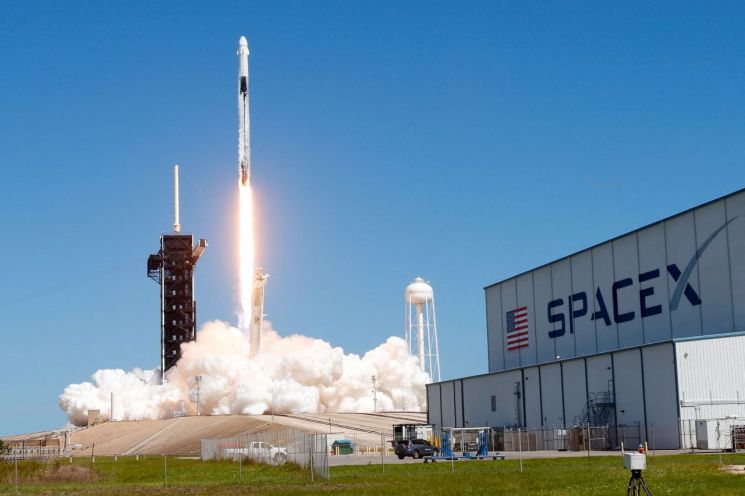
[Asia Economy Reporter Hyunwoo Lee] The U.S. Federal Communications Commission (FCC) has approved the launch of 7,500 second-generation satellites for SpaceX's satellite internet service, Starlink. The approval for the launch of all 30,000 planned second-generation satellites has been delayed due to concerns about collision risks with other satellites.
According to Bloomberg on the 1st (local time), the FCC approved the launch of 7,500 out of the 29,988 second-generation Starlink satellites that SpaceX is planning to launch. The FCC explained, "This launch approval means allowing SpaceX to begin deploying the second-generation Starlink satellites." The second-generation Starlink satellites are expected to be launched into three low Earth orbits at altitudes between approximately 525 and 534 km.
Besides this satellite launch, the FCC stated that it has postponed approval for other satellite launches requested by SpaceX. As SpaceX has already launched over 3,400 small satellites for the first-generation Starlink network and plans to add 7,500 more, exceeding 10,000 satellites, the risk of collisions with existing satellites from other companies or countries has increased.
Previously, SpaceX requested additional launch approvals from the FCC, stating that expanding its large-scale satellite network would enhance broadband internet capabilities and increase users in rural and remote areas. However, European countries as well as other satellite communication service providers in the U.S. have collectively opposed this, arguing that the number of satellite launches should be limited due to excessive volume.
In particular, competitors such as ViaSat and Amazon, which is pursuing the space internet project "Project Kuiper," have opposed SpaceX's additional satellite launches, citing serious risks to space safety and competition, including the potential for satellite collisions.
© The Asia Business Daily(www.asiae.co.kr). All rights reserved.

















