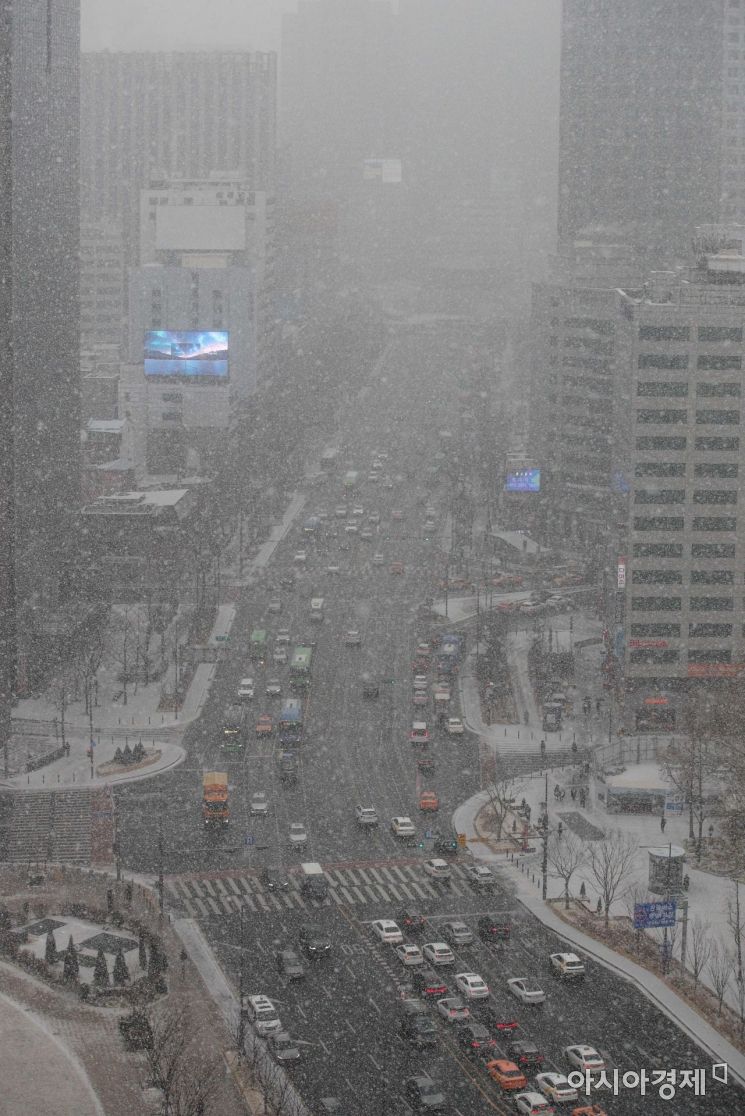
[Asia Economy Reporter Changhwan Lee] Just as people get vaccinated and prepare winter clothing to maintain body temperature before winter, cars also require meticulous winter preparation to stay healthy through the cold season.
We explored winter car care and safe driving methods together with Samsung Fire & Marine Insurance.
Winter Vehicle Care Starts with the Battery
In cold winter weather, car batteries often naturally discharge, causing the engine not to start. As the temperature drops, more power is needed to turn the engine, while battery output decreases.
Since car batteries are sensitive to temperature, extra attention is needed for their care during winter. To prevent battery discharge, it is necessary to regularly check the battery’s condition.
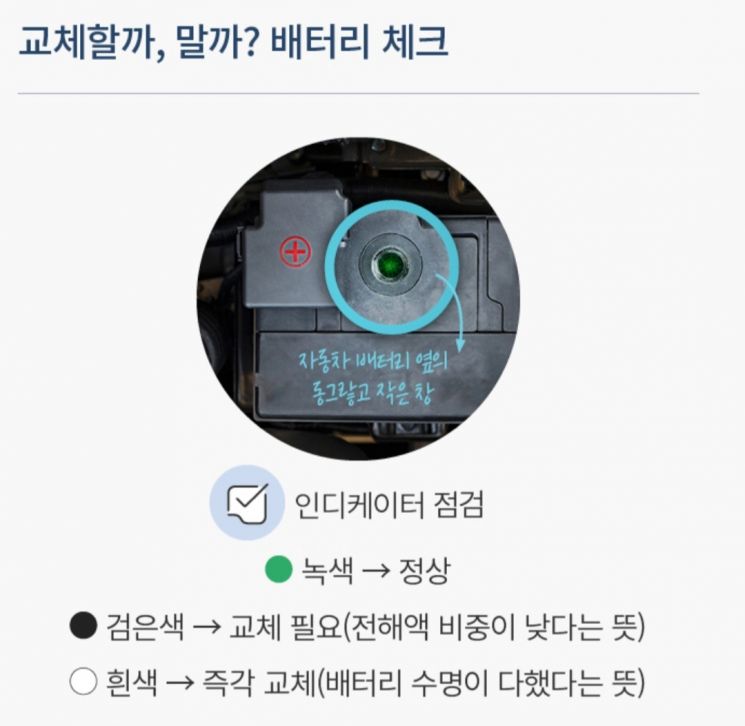
When you open the car hood, you can check the battery’s remaining charge and condition through the indicator on the battery by its color. Green means normal, black indicates charging is needed, and white means replacement is required.
Car batteries typically need to be replaced after 3 to 4 years or 50,000 km, but they can discharge faster. Besides cold weather, causes include continuous recording by black boxes, long-term parking, and alternator malfunctions.
Turning off the engine while using electrical devices like audio or heater can prevent the battery from fully charging and affect its lifespan, so caution is necessary. Especially for black boxes, which have become essential for drivers, it is recommended to switch to a ‘low voltage setting’ to reduce battery consumption or install a dedicated auxiliary battery for the black box.
If a car is left unused for a long time, the battery performance deteriorates to the point where the starter motor cannot turn, so it is advised to start the engine at least once a week.
Check Antifreeze and Prepare Chains
As important as the battery for winter driving preparation is checking the antifreeze. Antifreeze prevents the engine coolant from freezing and protects the radiator and related parts from corrosion. If antifreeze freezes, there is a risk of fire from engine heat or damage such as radiator freezing, so inspection is essential.
In winter, roads become slippery due to ice forming easily from snow and rain. Nowadays, all-season tires are commonly used on cars, but if driving for extended periods in areas with heavy snowfall, it is better to switch to snow tires.
Snow tires are optimized for snowy or icy roads, maintaining softness without freezing even at low temperatures, which improves grip on the road surface. Additionally, thanks to the grooves on their surface, snow tires reduce braking distance by 18% compared to regular tires. Tires that have exceeded the wear limit must be replaced to prepare for emergencies.
Chains are also essential on icy roads. If only two wheels are fitted, it is advantageous to install them on the drive wheels.
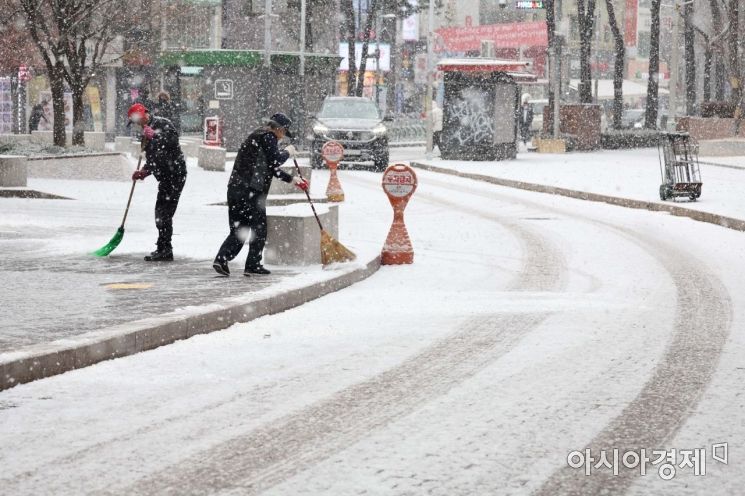 The scene in downtown Seoul where a heavy snow warning was issued earlier this year / Photo by Mun Ho-nam munonam@
Car Care and Safe Driving During Heavy Snowfall
A heavy snow advisory is issued when snowfall accumulation is expected to exceed 5 cm within 24 hours. Heavy snow is a dangerous weather phenomenon that can cause human and property damage, so caution is required in driving and vehicle management.
Before heavy snow, it is best to use underground parking lots when parking cars, and if parking outdoors, cover the front and rear windshields.
If the car has not been driven for more than 15 days, the battery may be discharged or have a low charge. If the engine starts, drive for more than 30 minutes to recharge the battery.
When driving in heavy snow, it is necessary to turn on the headlights.
Abrupt starts and sudden braking are strictly prohibited, and since the road surface is often slippery, avoid sudden accelerator or brake operations even if the vehicle feels less responsive than usual.
Drive at least 50% slower than the posted speed limit on the road. During heavy snow, maintain a safety distance at least twice as long as usual from the vehicle ahead.
Do not overly rely on vehicle safety assistance systems (such as automatic emergency braking and ADAS). Also, it is advisable to follow the tire tracks of the vehicle in front on the road.
© The Asia Business Daily(www.asiae.co.kr). All rights reserved.
!["The Woman Who Threw Herself into the Water Clutching a Stolen Dior Bag"...A Grotesque Success Story That Shakes the Korean Psyche [Slate]](https://cwcontent.asiae.co.kr/asiaresize/183/2026021902243444107_1771435474.jpg)


















